When knee pain flares up, it can bring your entire day to a grinding halt. Whether it's a dull, constant ache from arthritis or a sharp, sudden pain from an auto injury, your first thought is always the same: "How do I make this stop?" If you're looking for a knee pain chiropractor in Cedar Park, TX, you've come to the right place. The good news is that while immediate relief often starts with simple at-home care, lasting solutions are available right here in our community.
Understanding Your Knee Pain And Finding Quick Relief
The best first step for acute pain is usually the classic R.I.C.E. method—that’s Rest, Ice, Compression, and Elevation. Think of this as first aid for your knee. It’s a foundational approach designed to calm down initial swelling and stiffness, which is crucial for managing that immediate pain and setting the stage for real recovery.
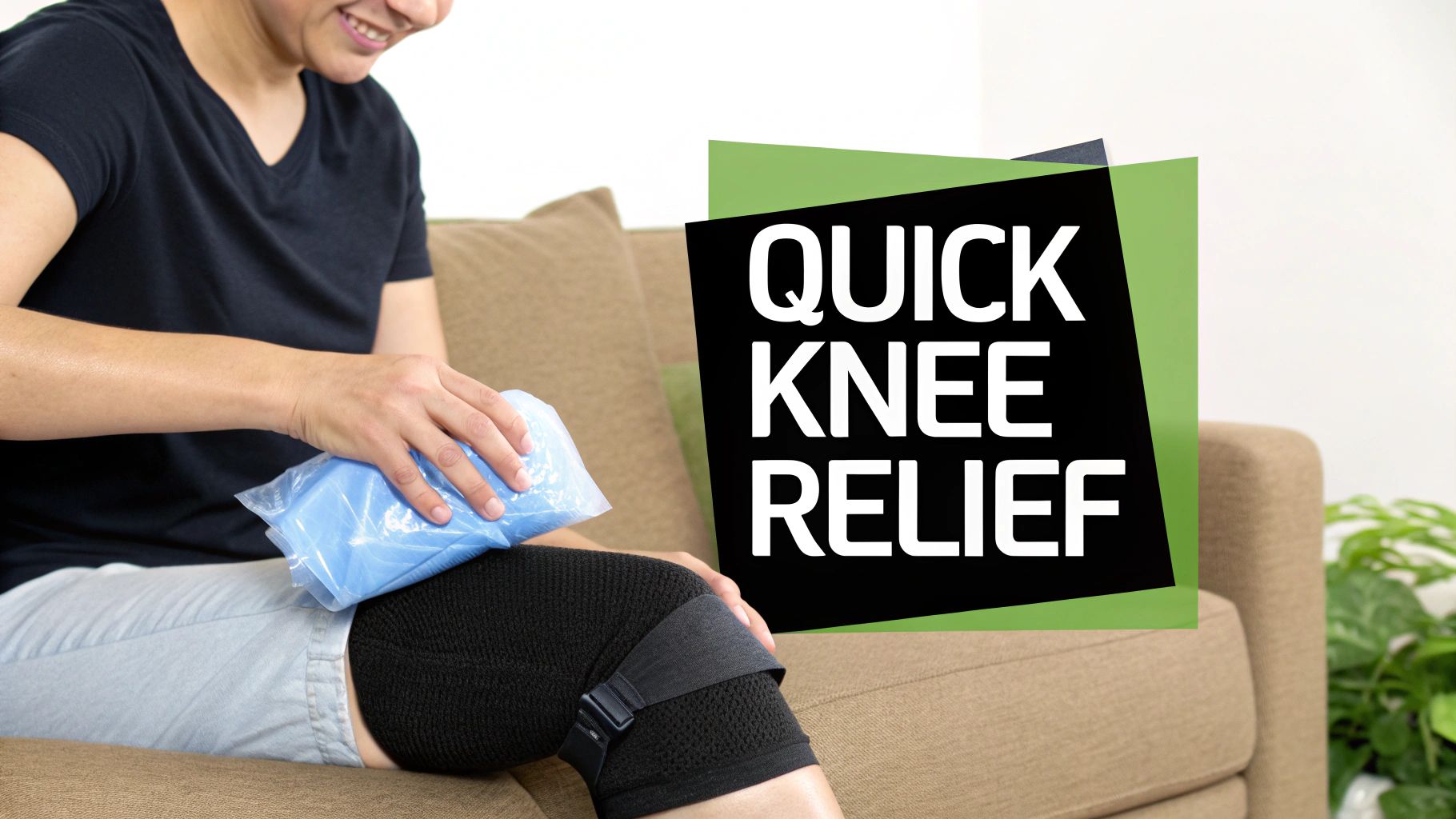
While these at-home strategies are your first line of defense, they primarily manage symptoms. They won't necessarily fix the root cause of the pain, which could be anything from joint misalignment and muscle imbalances to biomechanical issues stemming from your spine or hips. This is where a trusted Cedar Park chiropractor can make all the difference.
Identifying the Source of Your Discomfort
Knee pain can come from a surprising number of places. It could be a direct injury to a ligament or cartilage, chronic inflammation from a condition like osteoarthritis, or even referred pain from an issue in your back, hips, or feet. For some, the pain is very specific, and it helps in understanding back of knee pain and its unique causes.
One of the most common culprits we see at our Cedar Park clinic is knee osteoarthritis (OA). It’s a significant issue, affecting an incredible 654.1 million people worldwide over 40. This explains why so many active individuals and seniors right here in communities like Cedar Park, Leander, and North Austin are looking for effective, non-surgical solutions.
Interestingly, women are more often affected than men, which is tied to a mix of hormonal and biomechanical factors.
First Steps You Can Take at Home
For that immediate, "I need relief now" moment, the R.I.C.E. protocol is a time-tested method for dialing down pain and swelling, especially in the first 24-48 hours after an injury or flare-up.
When your knee is aching, knowing what to do can make all the difference. The table below breaks down the R.I.C.E. method into simple, actionable steps you can follow immediately.
| At-Home Knee Pain Relief First Steps |
| :— | :— | :— |
| Action | What It Does | How to Do It Safely |
| Rest | Gives the joint a break from stress and prevents further injury. | Avoid strenuous activities like running or heavy lifting. Gentle movement is okay, but don't push through the pain. |
| Ice | Reduces swelling and numbs the area to provide pain relief. | Apply a cold pack (wrapped in a towel) for 15-20 minutes every few hours. Don't apply ice directly to the skin. |
| Compression | Provides support and helps control swelling by limiting fluid buildup. | Use an elastic bandage to gently wrap the knee. It should be snug, but not so tight that it causes numbness or tingling. |
| Elevation | Uses gravity to help drain excess fluid away from the injured joint. | Prop your leg up on pillows so your knee is above the level of your heart, especially when sitting or lying down. |
Following these steps provides a solid starting point for managing acute pain.
While these at-home strategies are a vital first step, lasting relief often requires a deeper look at what's really going on. Here in Cedar Park, our team at Bell District Spine and Rehab helps patients move beyond these temporary fixes to find real, sustainable solutions that get to the root of the problem.
Gentle Movements To Restore Knee Mobility
When your knee hurts, your first instinct might be to stop moving it altogether. But believe it or not, gentle, controlled movement is often exactly what a stiff, aching joint needs to start feeling better. We’re not talking about a strenuous workout; this is about carefully reintroducing motion to improve flexibility, reduce stiffness, and help lubricate the joint.
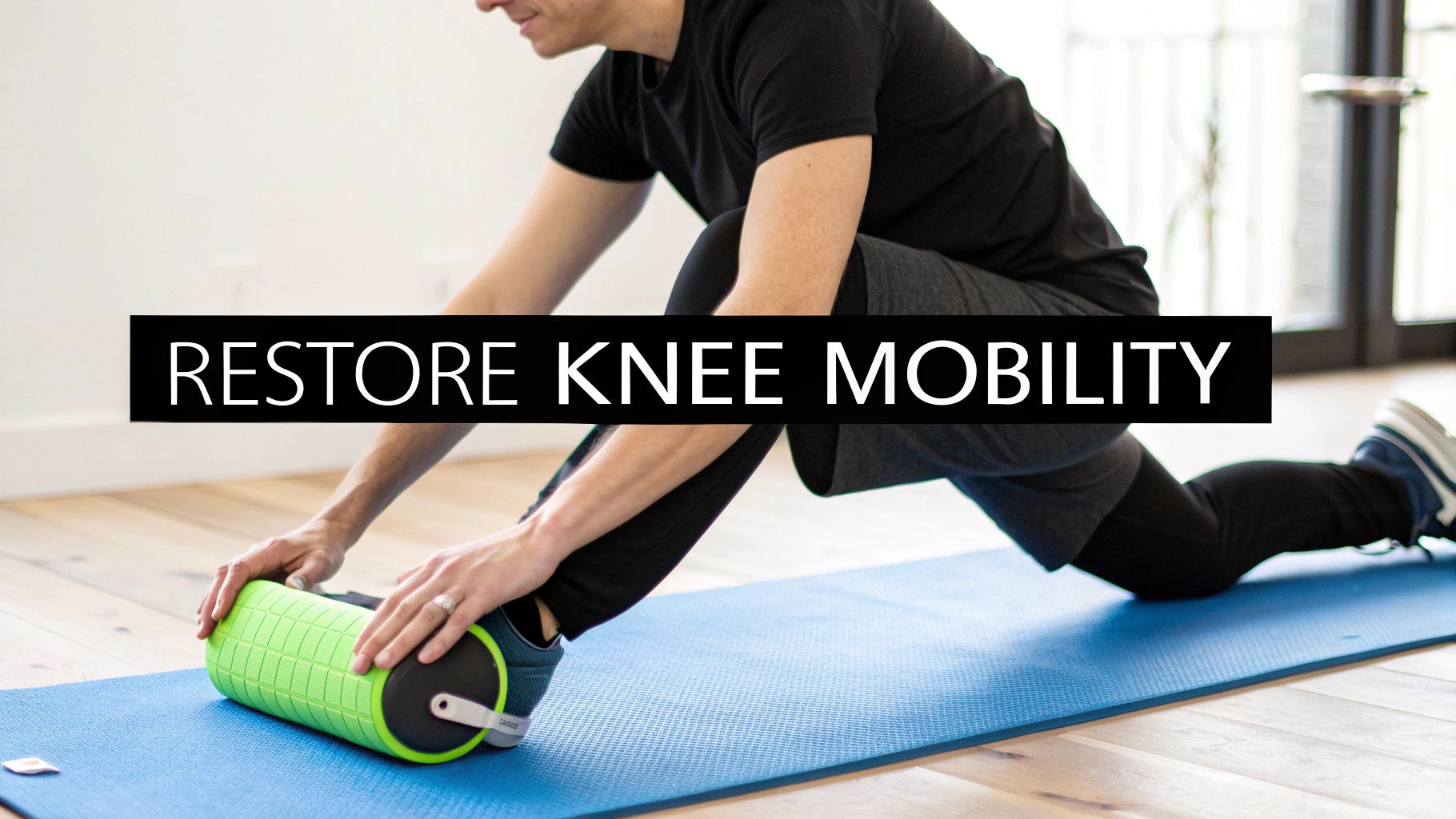
Small, consistent actions will always beat occasional, intense efforts. Think of these movements as a gentle wake-up call for the muscles that support your knee, especially if they've gotten weak or tight from inactivity or an injury. For our patients from Leander to North Austin, making these simple exercises part of a daily routine can make a world of difference.
Foundational Movements For Knee Health
The goal here is to move the knee through its natural range of motion without putting significant weight or stress on it. These exercises get key muscle groups firing again and improve blood flow to the area, which is absolutely essential for healing.
Here are a few foundational movements to get you started:
- Quad Sets: Lie down or sit with your leg straight. Gently tighten the large muscle on the front of your thigh (your quadriceps). Hold for 5 seconds, then release. This simple move helps keep that muscle toned without bending your sore knee.
- Hamstring Curls: Stand and hold onto a chair or counter for balance. Slowly bend one knee, bringing your heel up toward your glutes. Keep the movement slow and controlled, and only go as far as you feel comfortable.
- Calf Stretches: Stand facing a wall with your hands on it for support. Step one foot back, keeping that leg straight with your heel flat on the floor. Gently lean into the wall until you feel a good stretch in your calf.
Key Takeaway: The golden rule for these movements is consistency over intensity. Doing these for just a few minutes every day is far more powerful than one long, painful session a week. It’s the safest way to build back strength and mobility over time.
The Importance Of Proper Form And Listening To Your Body
As you begin exploring these gentle movements, it’s critical that you perform them safely to avoid making things worse. Your body is the expert—pain is a clear signal to stop or ease off, not to push harder. For extra guidance, check out these 5 tips for exercising safely with joint issues to ensure your efforts are helping, not hurting.
Here at Bell District Spine and Rehab, a personalized movement analysis is a core part of any successful recovery plan. The right exercises for you depend on the specific cause of your knee pain. To help our Cedar Park patients, we’ve put together a library of guided exercises. You can find more movements and detailed instructions by exploring our comprehensive exercise videos. These resources are designed to help you regain mobility and build a stronger foundation for long-term knee health.
Everyday Habits To Protect Your Knees
Beyond targeted exercises and stretches, it’s the small, consistent choices you make every day that truly protect your knees for the long haul.
We often overlook the simple things—how we sit at a desk, the shoes we wear for a walk, or the way we stand while waiting in line. But these are the very habits that add cumulative stress to our knee joints over time. By making a few mindful adjustments, you can dramatically reduce that daily strain and build a more resilient foundation for joint health.
This is all about creating a knee-friendly environment. For many of our patients in Cedar Park who commute along the 183A Toll or work from home, this starts at their workspace. A poorly arranged desk forces your body into awkward positions, putting silent but significant pressure on your knees, hips, and lower back.
Optimizing Your Posture And Positioning
Good posture is so much more than just “sitting up straight.” It’s about maintaining a natural alignment that lets your body function without unnecessary strain. When you slouch or sit with your legs crossed for long periods, you throw off the natural curve of your spine, which in turn shifts weight unevenly down to your knees.
A few simple changes can make a world of difference:
- Mind Your Feet: Keep both feet flat on the floor when you're sitting. This simple act helps distribute your weight evenly and keeps your knees and hips at a healthy, neutral angle. If your feet don't reach, use a small stool or footrest.
- Check Your Chair Height: Your hips should be just slightly higher than your knees. This position takes stress off your hip flexors and prevents strain on the knee joint.
- Take Movement Breaks: This one is non-negotiable. Set a timer to get up, stretch, and walk around for a few minutes every hour. It prevents your joints from getting stiff and keeps circulation flowing.
This decision tree gives you a great visual of how small choices in your daily activities—sitting, standing, and moving—can protect your knees from unnecessary wear and tear.
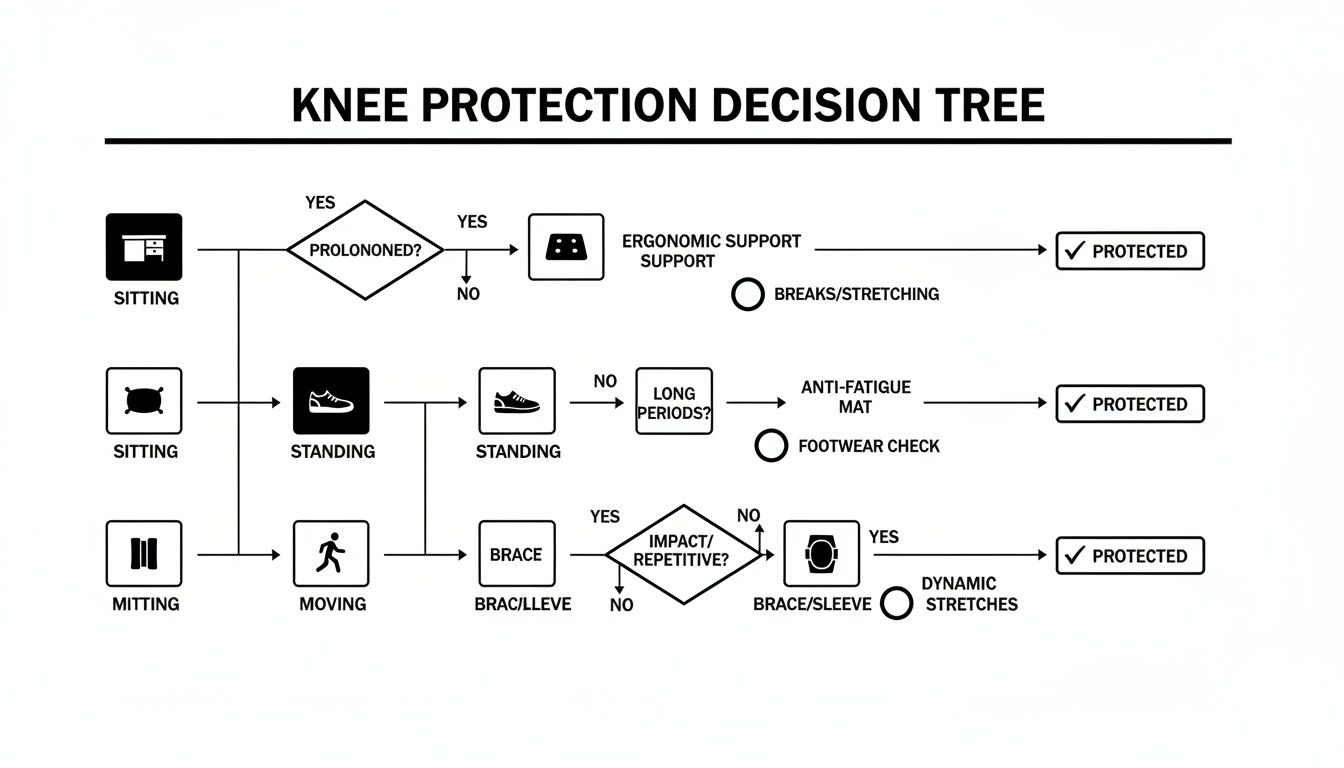
As you can see, proactive adjustments, like choosing supportive footwear or an ergonomic chair, are fundamental to preventing knee strain before it even starts.
Choosing The Right Footwear
The connection between your feet and your knees is direct and powerful. Think of your shoes as the primary shock absorbers for your body. When you wear unsupportive footwear, you force the muscles and tendons around your knees to work overtime to stabilize your body with every step.
Your shoes are the foundation for your entire body. When they lack proper support, the stress travels straight up the kinetic chain, often ending right at your knees. This is especially true on hard surfaces or uneven terrain.
For our patients who love walking the beautiful trails at Brushy Creek Lake Park, supportive shoes are absolutely non-negotiable. Look for footwear that has good arch support and ample cushioning to absorb impact.
This doesn't just apply to when you're out and about. Even around the house, avoid walking barefoot on hard tile or wood floors for long periods if you have sensitive knees. Instead, opt for a pair of supportive slippers or house shoes. Making these conscious choices every day is how you protect your knees for the long haul.
When To Seek Professional Chiropractic Care in Cedar Park
At-home care is a great first line of defense, but sometimes, your knee needs more support to truly heal. So how do you know when it’s time to move on from ice packs and gentle stretches to professional care from a chiropractor near you? The signs are often clear if you know what to look for.
If your pain sticks around for more than a few days despite your best efforts—or if it gets worse—that's a major signal that an underlying issue needs attention.
Pay close attention to noticeable swelling that doesn’t go down, a popping or grinding sensation, or that unnerving feeling that your knee might "give out." These are your body's ways of telling you it's time to bring in a professional.
Advanced Non-Invasive Treatments Available In Cedar Park
When you're ready for that next step, you don't have to jump straight to injections or surgery. Here at Bell District Spine and Rehab, we specialize in advanced, non-invasive therapies designed to get to the root cause of your knee pain and kickstart your body's natural healing processes.
These modern therapies are already helping your neighbors in Cedar Park, Leander, and Round Rock get back to their active lives, all without the risks and downtime of more aggressive procedures. Our approach blends state-of-the-art technology with proven chiropractic principles to restore function and deliver lasting relief.
You can learn more about our specific knee pain relief programs and see how they are customized for each person who walks through our doors.
The global prevalence of knee osteoarthritis skyrocketed by an incredible 136% between 1990 and 2021, impacting millions. This surge is felt daily by athletes and commuters in Austin-area communities. At our clinic on South Bell Blvd in Cedar Park, TX, therapies like laser and soft tissue techniques provide proven, non-surgical relief, earning us recognition as a top chiropractic spot for seven years running. Dr. John Tuggle’s tailored plans have successfully alleviated pain from sports injuries and arthritis for patients from Lago Vista to Brushy Creek. You can read the full research on this growing health trend to understand its widespread impact.
How Our Modern Therapies Work
We use several key technologies to tackle knee pain from multiple angles, allowing us to build a personalized and effective treatment plan just for you.
Here's a closer look at a few of the powerful, drug-free options we offer:
Knee Decompression
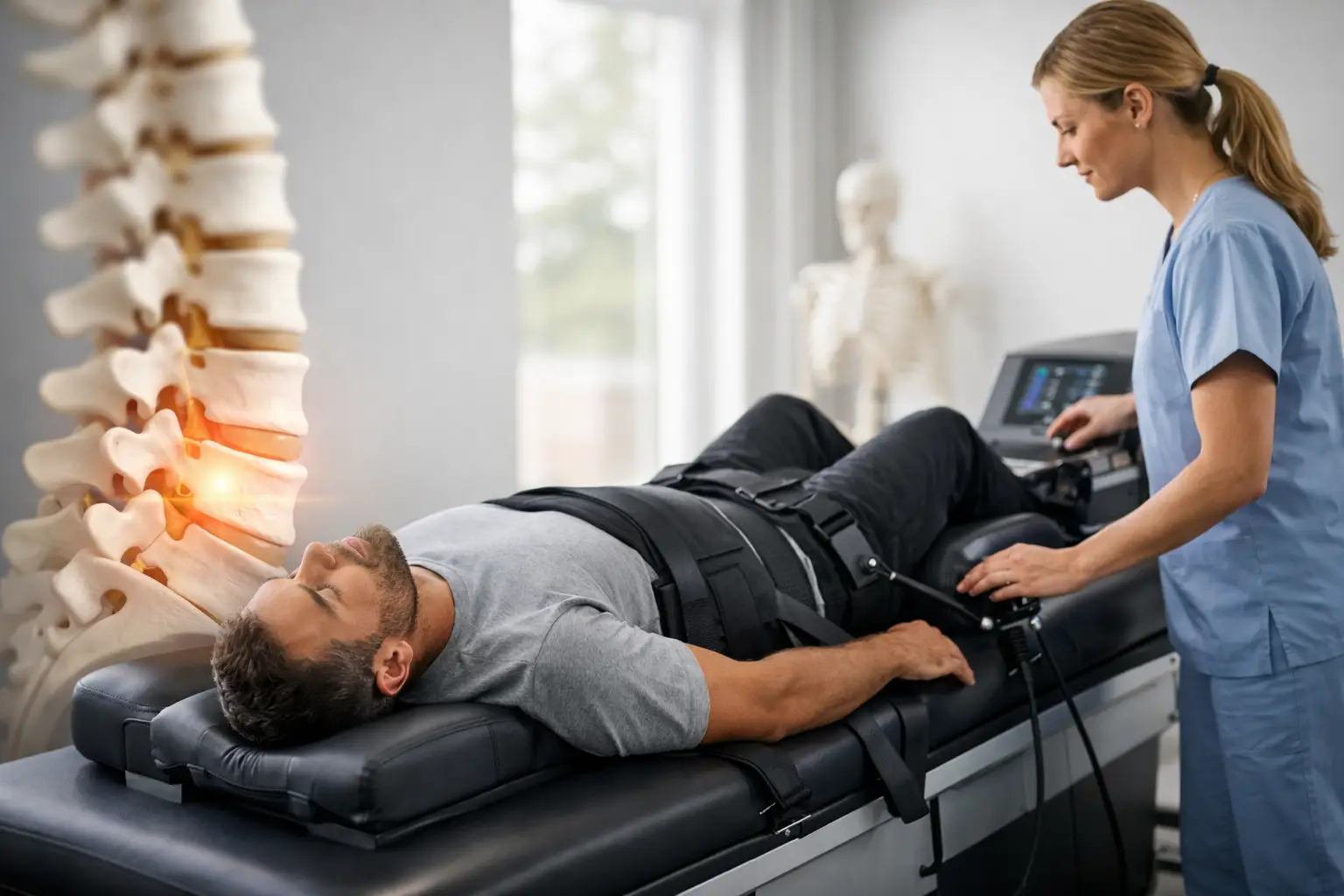
This is a gentle, FDA-cleared therapy that uses a specialized system to create negative pressure inside the knee joint. This action carefully separates the joint space, which helps reduce pressure on cartilage, boost circulation, and allow healing nutrients to flood the area.
Shockwave Therapy
This therapy uses acoustic waves to zero in on damaged tissue deep within the knee. It stimulates a powerful, natural healing response, breaking up old scar tissue and promoting the regeneration of healthy new cells. It’s fantastic for stubborn, chronic injuries.
Laser Therapy
Also known as photobiomodulation, this treatment uses specific wavelengths of light that penetrate the skin to stimulate cellular repair. It’s incredibly effective at taming inflammation, easing pain, and speeding up the healing process right where it's needed most.
By combining these therapies, we can create a powerful healing environment within your knee. Our goal isn't just to mask the pain but to fix the underlying problem, restoring function so you can get back to doing what you love without limitations.
Comparing Non-Invasive Knee Pain Treatments
To help you understand your options, we've put together a simple overview of the drug-free therapies we offer at Bell District Spine and Rehab. Each one has a unique way of promoting healing and is suited for different types of knee conditions.
| Therapy | How It Works | Best For |
|---|---|---|
| Knee Decompression | Creates negative pressure in the joint to reduce cartilage compression, increase blood flow, and allow nutrients to enter. | Arthritis, "bone on bone" pain, meniscus tears, general joint stiffness. |
| Shockwave Therapy | Uses acoustic waves to break up scar tissue and stimulate the body's natural healing and cell regeneration processes. | Chronic tendinopathies (e.g., patellar tendonitis), plantar fasciitis, runner's knee. |
| Laser Therapy | Applies specific light wavelengths to reduce inflammation, alleviate pain, and accelerate tissue repair at a cellular level. | Acute injuries, bursitis, muscle strains, post-surgical recovery, widespread inflammation. |
Choosing the right therapy—or combination of therapies—depends entirely on your specific diagnosis. During your consultation, we'll determine the best path forward to get you out of pain and back on your feet for good.
What To Expect On Your First Visit to Our Cedar Park Clinic
Deciding to seek professional help for your pain is a big step, especially when you're not sure what to expect. We get that. That's why your first visit to Bell District Spine and Rehab in Cedar Park is designed to be straightforward, comfortable, and reassuring. Our primary goal is simple: to listen, understand exactly what’s causing your knee pain, and show you a clear path forward.

From the moment you walk into our clinic, you'll be greeted by a team that genuinely cares about your recovery. This first appointment is much more than a quick adjustment; it’s a conversation. Dr. Tuggle will sit down with you to go over your health history, talk about your current symptoms, and, most importantly, understand how this knee pain is affecting your day-to-day life.
Your Comprehensive Evaluation
After our initial talk, we dive into a detailed diagnostic process. This isn't just about looking at your sore knee; it's about seeing how your entire body moves as a unit. We'll perform a functional movement analysis to pinpoint any imbalances or misalignments in your hips, back, or feet that could be putting extra strain on your knee.
This thorough evaluation lets us see the bigger picture. After all, the knee is the joint most commonly affected by osteoarthritis, which accounted for 364.6 million prevalent cases globally in 2019. Here in Texas, this hits home for our active community—from weekend warriors to aging boomers—all looking for effective, non-invasive solutions. Therapies like spinal decompression and targeted rehab get right to the root causes of OA, like misalignment and inflammation, and can dramatically improve mobility. To read more about the global impact of this condition, you can discover more insights about knee osteoarthritis on Frontiersin.org.
Your treatment plan is built with you, not for you. We combine Dr. Tuggle's 24+ years of experience with your personal goals to create a roadmap to recovery that actually fits your lifestyle.
Creating Your Personalized Treatment Plan
Once we have a complete understanding of your condition, Dr. Tuggle will walk you through his findings in plain English—no confusing medical jargon. He'll then outline a personalized treatment plan, recommending the specific therapies that are best suited to help you heal, whether that’s knee decompression, laser therapy, or a combination of approaches.
We believe in empowering our patients. You’ll leave your first visit with a clear understanding of what’s causing your pain, what our plan is to fix it, and what you can expect along the way. Our patient-first approach is why we’ve been a top-rated chiropractor in the Cedar Park community for seven years. We’re here to make you feel confident and supported from day one.
Got Questions About Knee Pain Relief? We Have Answers.
When you're dealing with nagging knee pain, you're bound to have questions. Making a smart, informed decision about your care is the first step toward feeling confident and getting the results you deserve. We've put together some of the most common questions we hear from patients right here in Cedar Park to give you clear, straightforward answers.
How Long Until My Knee Starts Feeling Better?
This is probably the most common question we get, and the honest answer is: it’s unique to you. Your recovery timeline really depends on the severity of your condition, how long the issue has been going on, and how committed you are to your recovery plan.
While many of our patients report feeling a noticeable difference after just a few sessions, our focus at Bell District Spine and Rehab is on creating lasting change, not just a temporary fix. During your first consultation, Dr. Tuggle will give you a realistic timeline based on your specific diagnosis and goals. We aim for steady, sustainable progress that gets you back to your life for good.
Is Chiropractic Care For My Knee Covered By Insurance?
We believe high-quality care should be accessible, which is why we accept Medicare and most major insurance plans.
Because every insurance plan is a little different, we strongly encourage you to call our Cedar Park office. Our team is more than happy to do a complimentary benefits check for you. We'll help you navigate your coverage so you know exactly what to expect before you even walk in the door. Our goal is to make care as affordable as possible for our neighbors in Cedar Park, Leander, and the surrounding communities.
Will The Knee Treatments Hurt?
Absolutely not. The entire point of our care is to reduce your pain, not add to it. The non-invasive therapies we offer, like Knee Decompression and Laser Therapy, are specifically designed to be gentle, comfortable, and restorative.
We prioritize your comfort at every single step of the healing process. Our advanced treatments work with your body’s natural healing mechanisms to provide relief without causing additional discomfort or stress to the joint.
Do I Need A Doctor's Referral To See A Chiropractor?
Good news! In Texas, you generally do not need a referral from a medical doctor to see a chiropractor for knee pain. This direct access makes it so much easier for you to take control of your health and get the help you need, right when you need it.
This means you can book a consultation directly with us at Bell District Spine and Rehab and start your journey to recovery without any frustrating delays. We invite you to schedule a complimentary phone consultation with our team to discuss your knee pain and find out how we can help you get moving again.
Ready to take the first step toward lasting knee pain relief in Cedar Park? The team at Bell District Spine and Rehab is here to provide the expert care you deserve. Schedule your appointment online today and start your journey back to a pain-free life.