
A sharp pull into the leg when you stand up, pain that builds after a day at your desk, or a back that seems to “catch” during a simple bend can make everyday movement feel uncertain. Understanding how spinal decompression works can help you see why this non-surgical treatment may be recommended for certain disc-related back and leg symptoms – and why it is most effective as part of a personalized recovery plan.
What Spinal Decompression Is Designed to Do
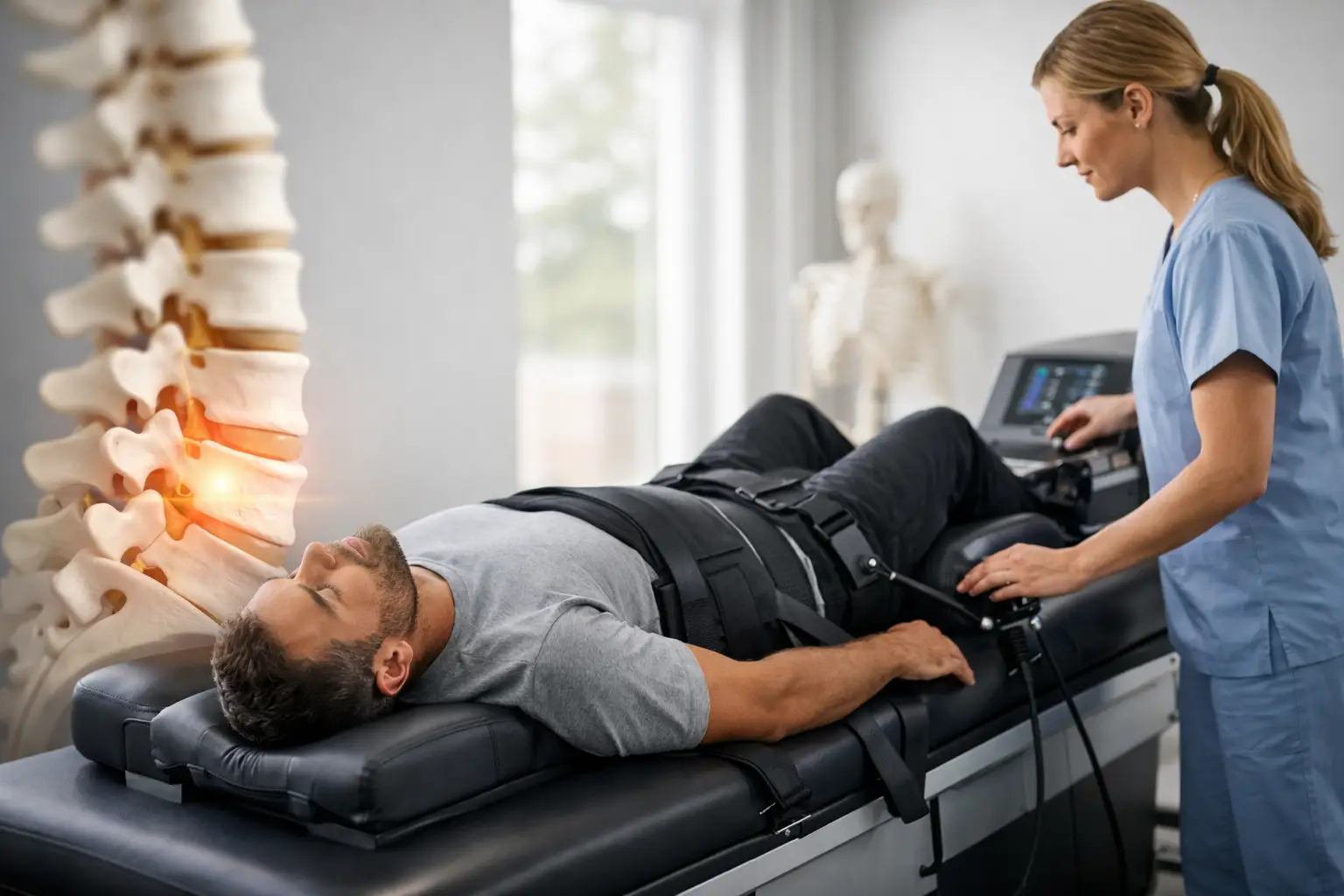
Spinal decompression is a controlled, computer-guided form of traction that gently changes the forces acting on the spine. During treatment, the patient lies comfortably on a specialized table while a harness supports the pelvis and lower body. The system applies carefully calibrated pulling and relaxation cycles to the lumbar spine, or lower back.
The goal is not to force the spine into place or simply stretch the muscles. The goal is to reduce pressure within and around irritated spinal discs while improving the conditions that support movement, circulation, and healing. A disc is the cushion between the bones of the spine. It has a tough outer layer and a softer, gel-like center that helps absorb load during walking, bending, lifting, and sitting.
When a disc is injured, dehydrated, bulging, or herniated, it may irritate nearby tissues or place pressure on a nerve root. That can lead to localized low back pain, stiffness, sciatica, numbness, tingling, or weakness that travels into the hip, buttock, leg, or foot. Not every case of back pain comes from a disc, but disc involvement is a common reason a provider may consider decompression.
How Spinal Decompression Works in the Body
A healthy spine handles changing loads throughout the day. Sitting, lifting, twisting, and repetitive work can all increase compressive forces on the lower back. For a painful or irritated disc, that added load can aggravate symptoms.
Spinal decompression uses gradual traction to create a small unloading effect across targeted spinal segments. The treatment cycles between a gentle pull and a partial release rather than applying one constant force. This is a key difference from basic traction. By varying the pull, the treatment is intended to limit the body’s tendency to tighten defensively against the force.
That controlled unloading may create what clinicians often describe as negative pressure within the disc. In practical terms, it may help reduce the mechanical stress contributing to a disc bulge or herniation and encourage movement of fluids, oxygen, and nutrients into the disc area. Discs have a limited direct blood supply, so their ability to exchange nutrients depends in part on regular movement and changes in pressure.
Decompression does not “suck” a disc back into position in one appointment, and it is not a cure for every source of back pain. Healing is more gradual than that. However, reducing irritation and improving tolerance for movement can create a window for the body to recover and for rehabilitation to be more productive.
Why Symptoms Can Travel Down the Leg
The sciatic nerve is formed by several nerve roots that exit the lower spine. If a bulging disc, disc herniation, narrowing around the nerve, or inflammation affects one of those roots, symptoms may be felt far from the lower back itself. Some people feel burning in the buttock, tingling in the calf, or numbness in the foot. Others notice leg pain more strongly than back pain.
When decompression is appropriate, reducing pressure and inflammation around the affected area may help calm these symptoms. Results vary based on the severity and duration of the condition, the specific tissue involved, daily activity demands, and whether nerve damage is already present.
What a Decompression Appointment Feels Like
Most patients remain fully clothed during a spinal decompression session. A provider positions the body and secures a comfortable harness around the pelvis and torso. The treatment table then moves through programmed traction cycles based on the individual’s condition, size, symptoms, and comfort level.
Patients commonly describe a mild pulling or lengthening sensation in the low back. The treatment should not feel sharp, alarming, or unbearable. Some people feel more relaxed after the session, while others notice temporary soreness similar to what can occur after a new therapeutic exercise. Communicating clearly during treatment matters. The settings can be adjusted when needed to keep care comfortable and appropriate.
A decompression plan is generally delivered as a series of appointments rather than a one-time visit. The number and frequency of sessions depend on the diagnosis, symptom severity, response to care, and overall treatment goals. Someone with a recent disc flare may require a different plan than someone managing long-standing degenerative changes and recurrent stiffness.
Who May Benefit From Spinal Decompression?
Spinal decompression may be considered for patients whose evaluation suggests disc-related or pressure-sensitive low back symptoms. It is often used in conservative care plans for herniated or bulging discs, degenerative disc changes, sciatica, certain cases of spinal stenosis, and persistent low back pain that has not improved with rest alone.
It can also be useful for people who feel limited by sitting, driving, bending, lifting, or returning to exercise after a back injury. For working professionals, active adults, and athletes, the aim is usually not just lower pain levels. It is a more reliable ability to move through work, training, household tasks, and family life.
That said, a diagnosis should come before a decompression recommendation. Back pain has many possible causes, including joint irritation, muscular strain, hip dysfunction, arthritis, fracture, infection, and medical conditions outside the spine. The right treatment depends on identifying the likely driver of symptoms rather than applying the same protocol to everyone.
When Spinal Decompression May Not Be the Right Choice
Non-surgical care should still be clinical and cautious. Spinal decompression is not appropriate for every patient. Certain conditions may require a modified approach, another type of treatment, imaging, or prompt medical referral.
A thorough evaluation is especially necessary for patients with significant osteoporosis, spinal instability, a recent fracture, some types of spinal hardware, active cancer affecting the spine, infection, or an abdominal aortic aneurysm. Pregnancy may also change which treatment options are appropriate. New or worsening bowel or bladder changes, saddle numbness, progressive leg weakness, fever with back pain, or pain following major trauma require urgent medical attention rather than routine decompression care.
These precautions are not a reason to avoid getting help. They are a reason to choose a provider who evaluates the full picture and knows when another course of care is needed.
Why Decompression Works Best With Rehabilitation
Reducing pressure is only one part of recovering from a back condition. If poor movement patterns, weak stabilizing muscles, limited hip mobility, or repetitive work demands contributed to the problem, those factors need attention too. Otherwise, pain may improve temporarily without building the capacity needed to stay active.
At Bell District Spine and Rehab, decompression may be combined with chiropractic care, soft tissue treatment, movement analysis, and progressive rehabilitation when clinically appropriate. This approach helps address both symptom relief and the mechanical habits that can keep the lower back under unnecessary strain.
Rehabilitation may begin with simple, low-irritation exercises that restore comfortable motion and improve core, hip, and glute support. As symptoms settle, the plan can progress toward better lifting mechanics, balance, endurance, and return-to-activity goals. The exact exercises matter less than choosing movements that match the patient’s current tolerance and progress safely over time.
Daily habits also influence results. A customized plan may include guidance on taking movement breaks during long periods of sitting, adjusting lifting strategies, returning to walking or exercise gradually, and recognizing which activities need temporary modification. Avoiding all movement for too long can increase stiffness and fear of activity, while doing too much too soon can trigger another flare. The right pace is individual.
What Results Should You Expect?
Some patients notice changes in pain, stiffness, or leg symptoms early in care. For others, progress is more gradual. A meaningful result may look like sitting through a work meeting with less discomfort, sleeping more comfortably, walking farther, or putting on shoes without guarding your back.
The honest answer is that no treatment can guarantee a specific outcome. The best candidates are identified through an exam, symptom history, and, when appropriate, imaging review. Progress should be measured over time and the treatment plan adjusted if the expected response is not occurring.
If back or leg pain is limiting the way you work, move, or care for your family, a professional evaluation can clarify whether spinal decompression fits your condition. The most useful next step is not guessing at the source of pain, but getting a plan that helps you move forward with greater comfort and confidence.