
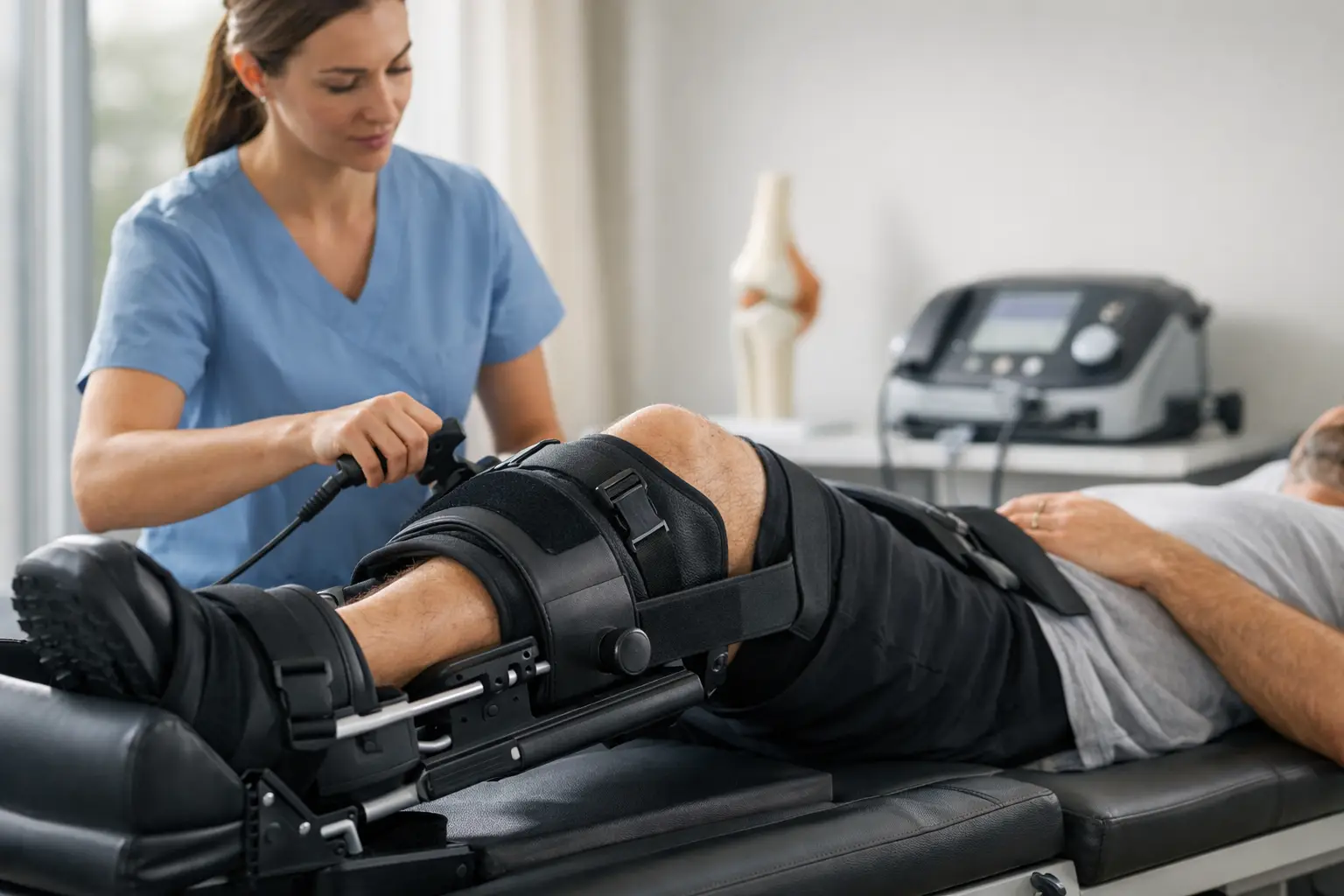
When your knee hurts every time you stand up, walk the dog, climb stairs, or try to get through a workout, you stop thinking about performance and start thinking about basic function. That is why non surgical knee decompression therapy gets so much attention from people who want real relief without jumping straight to injections, long-term medication, or surgery.
For many patients, knee pain is not just about one bad movement or one rough week. It can build over time from arthritis, wear and tear, old sports injuries, poor joint mechanics, repetitive strain, or compensation from problems in the hips, feet, or low back. The result is often the same – stiffness, swelling, limited range of motion, and pain that starts to shape daily life.
What is non surgical knee decompression therapy?
Non surgical knee decompression therapy is a conservative treatment designed to reduce pressure within the knee joint. The goal is to create a gentler mechanical environment for irritated tissues, improve joint motion, and support the body’s healing process without invasive procedures.
In simple terms, decompression uses controlled traction or unloading of the knee joint. By slightly separating the joint surfaces in a precise and measured way, treatment may help reduce compressive stress on structures that are already inflamed or worn down. That can matter for patients dealing with degenerative joint changes, chronic stiffness, meniscus irritation, or pain related to joint overload.
This is not a cure-all, and it is not the same thing as surgery. It is one tool within a broader rehabilitation strategy. When used appropriately, it can help create a window where movement becomes easier, pain settles down, and rehab exercises become more productive.
Who may benefit from knee decompression?
The best candidates are usually people whose symptoms are driven by joint compression, reduced mobility, or mechanical stress. That can include adults with osteoarthritis, active individuals with overuse-related knee pain, and patients recovering from strain patterns that changed how they move.
Some people seek care because they have sharp pain when they squat or pivot. Others have a dull ache that gets worse after sitting, then flares when they stand. Older adults may notice morning stiffness, grinding, or a steady decline in walking tolerance. In each case, the question is not just where the pain is, but why the knee is being overloaded in the first place.
That is where a proper evaluation matters. Knee pain can come from the joint itself, but it can also be influenced by tight surrounding tissues, weak stabilizing muscles, altered gait, or poor movement control. Decompression may help, but the right plan depends on the full picture.
How non surgical knee decompression therapy works in practice
Treatment usually involves placing the knee in a supported position while a specialized device or manual technique applies a controlled decompressive force. The force is not random. It is selected to match the patient’s tolerance, condition, and treatment goals.
Most patients describe the sensation as a gentle pulling or unloading, not a painful stretch. Sessions are typically brief and are often combined with other therapies that address the muscles, connective tissue, and movement patterns around the joint.
That combined approach matters. If the knee joint is decompressed but the quadriceps remain weak, the hip lacks control, and the calf and hamstrings are overly tight, the relief may not last. Lasting change usually comes from pairing symptom relief with better mechanics.
What conditions may respond well?
Non surgical knee decompression therapy is often considered for patients with osteoarthritis, chronic knee stiffness, degenerative joint irritation, patellofemoral stress, and some cases of meniscus-related discomfort where conservative care is appropriate. It may also be useful after flare-ups caused by repetitive loading, sports activity, or physically demanding work.
That said, not every painful knee should be decompressed. A major ligament injury, fracture, active infection, severe instability, or certain post-surgical situations may require a different path. This is one reason self-diagnosing from symptoms alone can be misleading.
A careful exam helps determine whether the pain is mostly compressive, inflammatory, instability-driven, or referred from another region. Treatment works best when the diagnosis is clear.
Non surgical knee decompression therapy and rehab
The most effective care plans rarely rely on one therapy by itself. In a rehab setting, decompression is often used to make movement easier so the patient can progress into corrective treatment.
That may include hands-on therapy to improve soft tissue mobility, targeted exercises to strengthen the quadriceps and glutes, gait analysis, balance work, and movement retraining. If the knee is painful because the body has been moving around the problem for months, rehab has to address those patterns too.
At Bell District Spine and Rehab, this kind of care is built around the patient, not a preset protocol. One person may need decompression plus soft tissue work and progressive strengthening. Another may need treatment focused on joint unloading, mobility restoration, and better lower-body mechanics to reduce repeat irritation.
What patients often notice
Some patients feel looser after the first few sessions. Others notice that they can walk longer, bend the knee more comfortably, or recover faster after activity. For patients with chronic pain, even a modest reduction in pressure can make daily tasks feel much more manageable.
Still, results vary. A mildly irritated knee in an active adult may respond faster than a knee with advanced degeneration and years of compensation. Age, severity, activity level, inflammation, and consistency with rehab all influence progress.
This is where realistic expectations help. The goal is not usually a dramatic overnight fix. The goal is to reduce pain, improve mobility, and build better function over time.
Why some knees keep hurting without the right treatment plan
A common mistake is treating knee pain as if it exists in isolation. Patients often rest, use over-the-counter medication, wear a brace, and try to push through. That may calm symptoms briefly, but it does not always change the forces stressing the joint.
If the hip is weak, the foot collapses inward, or the low back changes the way you load one leg, the knee keeps absorbing the problem. If swelling and stiffness reduce motion, the surrounding muscles stop doing their job well. That cycle can drag on for months.
Decompression can help interrupt that cycle by reducing stress at the joint, but the larger win comes from correcting what keeps recreating the pain.
Is it a replacement for surgery?
Sometimes yes, sometimes no. For many patients, conservative care is the right first step and can delay or even eliminate the need for more invasive treatment. That is especially true when symptoms are moderate, function is still recoverable, and the condition responds to mechanical unloading and rehab.
But there are cases where surgery is still the better option, especially when there is significant structural damage, major instability, or severe degeneration that no longer responds to non-invasive care. Good providers do not force every patient into the same solution. They look at the whole case and recommend what makes sense.
That balanced approach is important. Patients deserve both optimism and honesty.
What to expect at an evaluation
A useful knee evaluation should look beyond the painful spot. It should include how the knee moves, how the surrounding muscles function, whether the joint is swollen or restricted, and how you walk, squat, or shift weight.
Your provider may assess the hips, ankles, and low back as well, because those areas often influence knee mechanics. From there, the treatment plan should be specific. How often you come in, which therapies are used, and how rehab progresses should all reflect your condition, goals, and response to care.
That is the difference between generalized pain management and personalized musculoskeletal treatment. One chases symptoms. The other works to improve function.
When to consider non surgical knee decompression therapy
If your knee pain has lasted more than a few weeks, keeps returning, limits walking or exercise, or makes stairs and standing uncomfortable, it may be time for a more complete assessment. The same is true if you have been told to just wait, rest, or rely on medication but your mobility is still slipping.
Non surgical knee decompression therapy is not about masking pain so you can ignore the problem. At its best, it helps create the conditions for better movement, less irritation, and a stronger recovery plan.
A painful knee can make life smaller in subtle ways before it makes it smaller in obvious ones. Getting the right conservative care early can help you protect your mobility while there is still plenty of room to improve.