
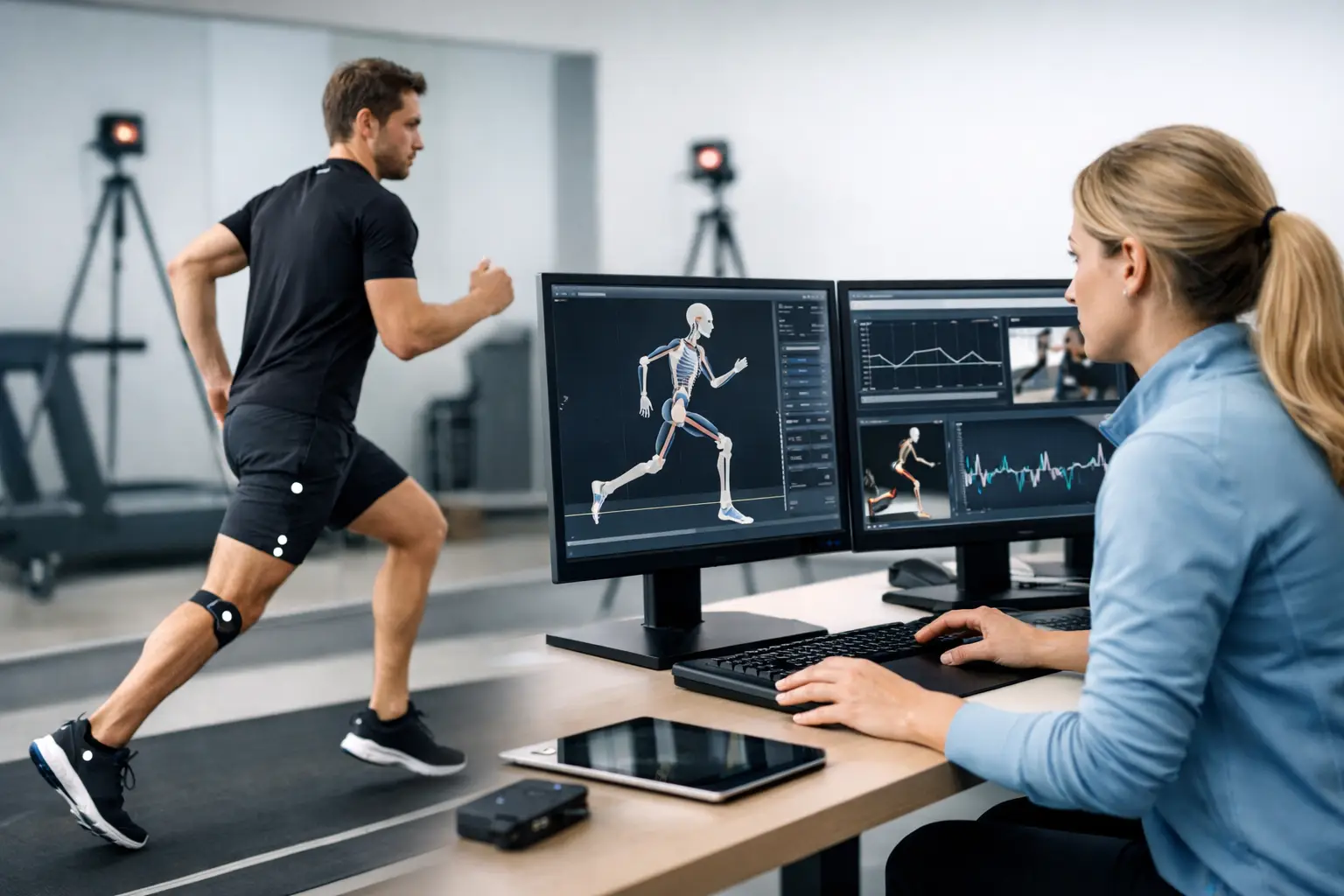
A lot of injuries do not start with one dramatic moment. They build quietly through repeated strain – a knee drifting inward on every squat, a stiff ankle forcing the hip to compensate, or a shoulder blade that never quite moves the way it should. That is why movement analysis for injury prevention matters. It helps identify the mechanical problems behind pain, overuse, and recurring setbacks before they turn into something harder to treat.
For many people, the frustrating part is not just getting injured. It is getting injured again. You rest, the pain eases, and then the same problem shows up during a workout, at work, or even while doing routine tasks at home. In many cases, the missing piece is not motivation or toughness. It is a clear look at how your body is moving and where it is being overloaded.
What movement analysis actually looks at
Movement analysis is the process of observing how your body performs specific tasks and identifying patterns that increase stress on joints, muscles, tendons, and connective tissue. That can include walking, bending, squatting, reaching, lifting, rotating, balancing, or changing direction. The goal is not to judge whether you move perfectly. The goal is to find the breakdowns that may be contributing to pain or raising your injury risk.
A thorough analysis looks beyond the area that hurts. If your knee is painful, the problem may involve limited ankle mobility, weak hip control, poor trunk stability, or asymmetry between sides. If your lower back keeps tightening up, the issue may be related to hip restriction, poor bracing mechanics, or the way you hinge and lift. Pain often shows up at the end of the chain, not at the beginning.
This is one reason generic exercise advice can fall short. Two people may both have shoulder pain, but one has limited thoracic mobility while the other lacks scapular control. Giving them the same plan ignores the reason each person is struggling in the first place.
Why movement analysis for injury prevention is so valuable
Injury prevention is not just about avoiding sports injuries. It matters for active adults, runners, golfers, desk workers, parents lifting children, and older adults trying to stay independent. When movement quality declines, the body starts borrowing motion from places that should be stable and overloading tissues that were not meant to absorb that stress repeatedly.
That is where movement analysis for injury prevention becomes useful. It can reveal early warning signs before imaging is ever needed and before pain becomes constant. Small issues such as reduced hip rotation, poor single-leg balance, or limited overhead mobility may not seem urgent on their own. Over time, though, they can change the way force moves through the body and create a much bigger problem.
There is also a performance benefit. Better movement mechanics often mean better efficiency. You may notice improved balance, stronger lifting form, easier walking, less post-workout soreness, or less fatigue during normal daily activity. Prevention and performance are closely connected because the body functions best when joints, muscles, and nerves are working together the way they should.
Common movement patterns that raise injury risk
Some of the most common red flags are easy to miss unless someone is trained to look for them. A knee collapsing inward during stepping or squatting can place extra stress on the knee and hip. A person who cannot control their pelvis during single-leg movement may be more likely to strain the low back or develop recurring hip irritation.
Poor ankle mobility is another frequent issue. If the ankle does not move well, the body may compensate by twisting through the foot, knee, or lower back. Limited thoracic spine mobility can affect shoulder motion, neck tension, and even breathing mechanics. Weakness is part of the picture sometimes, but not always. In many cases, the bigger issue is coordination – the body is using the wrong strategy to complete the task.
It also depends on your lifestyle. A runner may need analysis of stride mechanics, loading tolerance, and hip stability. A warehouse worker may need assessment of bending, lifting, carrying, and rotational control. An older adult may benefit most from gait analysis, balance testing, and joint mobility screening. Prevention is not one-size-fits-all because daily demands are not one-size-fits-all.
How movement analysis guides treatment
A useful movement analysis should lead to a practical plan. If it only labels a problem without showing how to correct it, it is incomplete. The next step is using those findings to build care around the actual cause of stress.
For example, if someone has recurring back pain during lifting, treatment may include hands-on care to improve restricted spinal or hip motion, soft tissue work to reduce tension, and progressive rehab to retrain hip hinging and trunk stability. If the problem is shoulder irritation during overhead activity, the plan may focus on thoracic mobility, scapular control, rotator cuff support, and changes in movement pattern during work or exercise.
This is where a combined chiropractic and rehab approach can be especially effective. Improving joint motion without retraining movement can leave the same faulty pattern in place. On the other hand, prescribing exercise without addressing pain, stiffness, or tissue irritation can make progress slower and more frustrating. The best results usually come from treating both the mechanical restriction and the movement habit that developed around it.
Who should consider a movement analysis
You do not need to be an athlete to benefit from one. Movement analysis can help if you have frequent flare-ups, recurring sports injuries, stiffness that changes how you move, or pain that keeps returning even after rest. It is also useful if you are starting a new training routine, returning to exercise after an injury, or noticing that one side of your body feels weaker, tighter, or less coordinated than the other.
Many patients seek care only after pain becomes intense. That is understandable, but it is not the only time to act. If you notice early signs such as reduced range of motion, poor balance, instability, or discomfort during specific movements, those changes are worth paying attention to. Catching them earlier often means a shorter and more targeted recovery process.
Parents sometimes think this only applies to adults with chronic pain, but it can also be helpful for active teens involved in sports. Repetitive jumping, sprinting, cutting, or overhead activity can expose poor mechanics quickly, especially during growth spurts when coordination changes.
What to expect during a clinical assessment
A clinical movement analysis usually starts with a conversation about your symptoms, health history, activity level, and goals. From there, the provider observes how you move during selected tasks that match your condition and lifestyle. That may include walking, squatting, stepping, balancing, reaching, bending, or sport-specific motions when appropriate.
The provider is looking for asymmetries, compensation patterns, mobility restrictions, control deficits, and signs that one region is overworking for another. In some cases, pain appears only during a certain phase of movement. In others, the problem is visible even without pain because the body is shifting, rotating, or bracing in a way that creates unnecessary stress.
At Bell District Spine and Rehab, movement analysis can be part of a broader treatment strategy designed to reduce pain, improve mechanics, and support long-term recovery without relying on surgery or heavy medication. That matters because lasting relief usually depends on more than temporary symptom control.
Prevention works best when it becomes part of recovery
One of the biggest mistakes people make is treating prevention as something separate from rehabilitation. In reality, the best rehab should prevent the next injury, not just calm the current one down. If your pain improves but your movement pattern does not, the same stress is still there waiting for activity to ramp back up.
That does not mean every imperfect movement needs to be corrected. Human movement is naturally variable, and there is no single ideal form for everyone. But when a pattern consistently causes pain, overloads a tissue, or limits function, it needs attention. The answer is not chasing perfection. It is building enough mobility, control, strength, and coordination for your real life.
That is why personalized care matters. The right plan depends on your age, work demands, exercise habits, injury history, and current symptoms. A runner training for a race needs a different strategy than someone trying to get through an eight-hour desk day without neck pain or a parent trying to lift a toddler without triggering low back spasms.
Better movement does more than lower injury risk. It can make daily life feel less guarded, exercise feel more productive, and recovery feel less uncertain. When you understand how your body is compensating and what to do about it, prevention stops being guesswork and starts becoming part of how you stay active.