
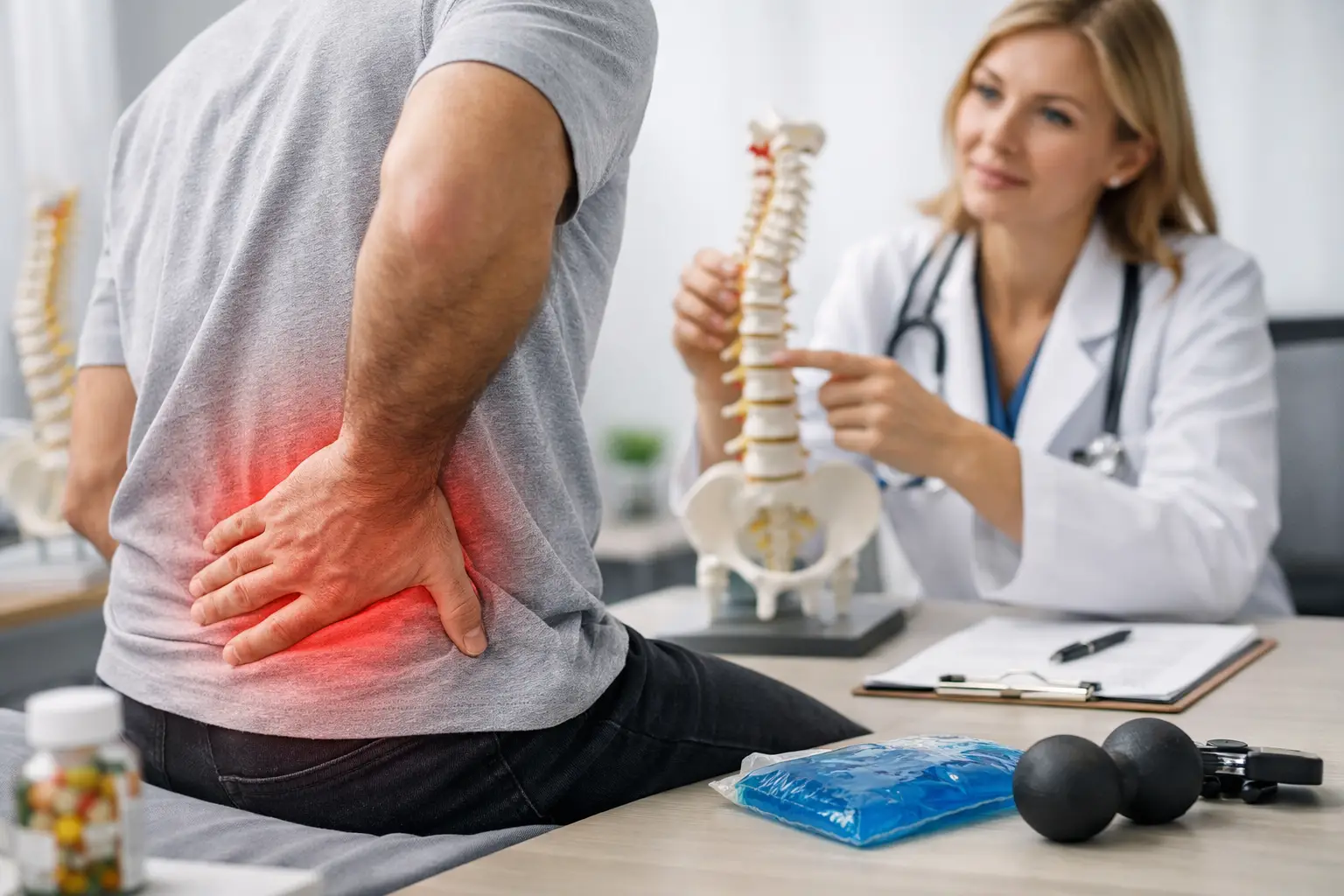
That sharp pain running from your low back into your hip, leg, or foot is hard to ignore. When symptoms start affecting sleep, work, driving, or even simple walks around the house, most people want clear answers fast. The good news is that many sciatica treatment options can reduce nerve irritation, improve mobility, and help you get back to normal activity without jumping straight to injections, strong medication, or surgery.
What sciatica actually is
Sciatica is not a diagnosis by itself. It is a pattern of symptoms that happens when the sciatic nerve, or one of the nerve roots that feeds into it, becomes irritated or compressed. That can create pain, tingling, burning, numbness, or weakness that travels from the lower back into the buttock and down the leg.
For some people, the problem starts after lifting something awkwardly or spending too many hours sitting. For others, it develops more gradually because of a disc issue, spinal joint dysfunction, muscle tightness, inflammation, or age-related changes in the spine. The exact source matters because the right treatment depends on what is driving the nerve irritation.
Sciatica treatment options depend on the cause
This is where many people get stuck. They look for one fix, but sciatica is not a one-size-fits-all condition. A treatment that works well for one person may do very little for another if the underlying cause is different.
A disc bulge that is crowding a nerve root may respond well to decompression-based care and movement correction. Sciatica tied to poor mechanics, muscle imbalance, or restricted spinal motion may improve more with hands-on treatment and guided rehab. If the pain is severe, progressive, or paired with significant weakness, the situation needs a more urgent medical evaluation.
That is why a proper exam matters. Good care starts with identifying whether the issue is coming from the lumbar discs, spinal joints, surrounding soft tissue, movement patterns, or a combination of factors.
Conservative sciatica treatment options often work well
For many patients, the best first step is conservative care. That means treatment designed to lower irritation, restore normal function, and support healing without invasive procedures.
Chiropractic care and spinal adjustments
When spinal joints are not moving well, nearby nerves and tissues can become more irritated. Chiropractic adjustments may help improve joint motion, reduce mechanical stress, and make movement feel easier. This can be especially useful when low back stiffness and postural strain are part of the problem.
That said, not every sciatica case should be approached the same way. The technique, force, and treatment plan should match the patient. A careful provider will adapt care based on symptoms, exam findings, and tolerance.
Spinal decompression
If disc involvement is suspected, spinal decompression may be a strong option. This treatment is designed to gently reduce pressure in the lumbar spine, which can help relieve stress on irritated nerve roots. Patients with radiating leg pain, disc-related back pain, or symptoms that worsen with sitting often respond well when decompression is used as part of a broader plan.
It is not magic, and it is not right for every case. Still, when the issue is tied to disc compression, decompression can be a very practical non-surgical tool.
Soft tissue therapy and muscle release
Tight muscles in the lower back, glutes, and hips can add tension around the sciatic nerve pathway and change how the body moves. Soft tissue treatment may help reduce that tension, improve blood flow, and make other treatments more effective.
This matters because sciatica is rarely just a spine problem. When surrounding muscles are guarding or compensating, they can keep symptoms going even after the initial irritation starts to calm down.
Functional dry needling
For some patients, trigger points and deep muscle tension contribute to pain patterns that overlap with sciatica. Functional dry needling may help reduce muscle guarding and improve mobility, especially in the gluteal muscles, hip rotators, and lumbar stabilizers. It is usually most effective when combined with corrective exercise rather than used as a stand-alone solution.
Rehab exercise and movement correction
This is one of the most important parts of lasting recovery. Pain relief matters, but if movement patterns stay the same, symptoms often come back.
A good rehab program helps restore core control, hip mobility, spinal stability, and posture under real-life demands. That may include directional exercises, nerve mobility work, glute strengthening, gait correction, and strategies for sitting, bending, lifting, and standing more comfortably. The goal is not just to feel better on the table. The goal is to move better in daily life.
Supportive therapies that may help sciatica recovery
Some patients benefit from additional therapies that help calm inflammation and support tissue healing.
Laser therapy is often used to reduce inflammation and encourage recovery in irritated tissues. Shockwave therapy may be useful in cases where chronic soft tissue dysfunction is contributing to the problem, though it is generally more condition-specific and not a primary treatment for every sciatic presentation. The value of these therapies depends on what the exam shows and how your body responds.
This is where personalized care makes a real difference. The best results usually come from combining therapies with a clear purpose rather than stacking treatments just to do more.
When medication or injections may be considered
Some patients do use over-the-counter anti-inflammatory medication or prescription medication to manage severe flare-ups. This can provide short-term symptom relief, especially when pain is intense enough to interfere with sleep or basic activity.
But medication has limits. It may reduce discomfort, yet it does not correct disc pressure, joint dysfunction, poor movement mechanics, or muscle imbalance. Injections can also play a role in certain cases, particularly when pain is severe or progress has stalled, but they are usually better viewed as a support measure rather than a complete answer.
If symptoms keep returning after temporary relief, it is worth asking what is still driving the irritation.
When surgery enters the conversation
Most people with sciatica do not need surgery, but there are situations where it becomes more appropriate. Progressive muscle weakness, major neurologic loss, loss of bowel or bladder control, or severe symptoms that do not respond to appropriate conservative care all deserve prompt medical attention.
Surgery can be necessary in select cases, particularly when structural compression is significant. But many people seek conservative treatment first because they want to avoid the cost, downtime, and risks of an invasive procedure if a non-surgical path can still help.
What to expect from a personalized care plan
The most effective sciatica treatment options are usually not built around a single visit or a single technique. They involve a plan. That plan should start with a detailed history, physical exam, and movement assessment, then adjust based on how symptoms behave.
Early care often focuses on calming pain and reducing nerve irritation. As symptoms improve, treatment should shift toward restoring mobility, correcting mechanical stress, and rebuilding strength so the problem is less likely to return. That progression matters. If care stays stuck in passive pain relief only, patients often improve for a while and then flare up again.
At Bell District Spine and Rehab, that kind of progression is central to care. Non-invasive treatment works best when it is specific, practical, and designed around how you actually live and move.
How to know it is time to get evaluated
If your leg pain is traveling below the knee, getting worse with sitting, causing numbness or tingling, or limiting how you walk, work, or sleep, it is time to get it checked. The same is true if back pain keeps recurring and you have not identified why.
Waiting can sometimes be reasonable for a mild, short-lived flare-up. But when symptoms are persistent or interfering with daily life, guessing usually delays recovery. The sooner you identify the source, the easier it is to choose the right treatment path.
Pain that shoots down the leg can make everything feel smaller – shorter walks, worse sleep, more caution, less confidence. The right care should do more than dull symptoms for a few days. It should help you move with less pain, understand what caused the problem, and give you a realistic path back to normal life.