
Lower back pain is one of the most prevalent reasons people seek medical care, affecting up to 80% of adults at some point in their lives. For residents in Cedar Park, Leander, and the greater North Austin area, finding the source of this persistent discomfort can feel like an overwhelming challenge. The ache might be a dull throb that worsens after a day at the desk, a sharp, shooting pain that stops you in your tracks, or a constant stiffness that makes getting out of bed a chore.
If you’re tired of lower back pain and searching for a “chiropractor near me” you can trust, you’ve come to the right place. Discovering the root cause often involves evaluating everything from your daily movements to your sleep environment; this includes a guide to finding your best mattress for back pain that provides essential support and comfort. At Bell District Spine and Rehab, our experienced team is dedicated to identifying the precise origin of your pain and providing effective, non-surgical solutions right here in Cedar Park, TX.
This comprehensive guide will explore the most common causes of lower back pain we diagnose and treat. We’ll break down each condition, from muscle strains and disc issues to more complex problems like sciatica and arthritis, explaining how they impact your body and how our chiropractic care helps. Our goal is to empower you with knowledge so you can take the first step toward lasting relief. For those searching for a “back pain chiropractor in Cedar Park” who provides personalized care, this list will illuminate the path from diagnosis to recovery, helping you regain mobility and get back to living pain-free.
1. Muscle Strain and Ligament Sprain
Of all the common causes of lower back pain, muscle strains and ligament sprains are perhaps the most frequent culprits. These acute injuries happen when the soft tissues supporting your lumbar spine are stretched beyond their limits or torn. This can result from a single event, like lifting a heavy box with improper form, or from repetitive stress over time, such as poor posture at your desk or repeated twisting motions in sports.
While often considered minor, these injuries can cause significant pain, inflammation, and muscle spasms that limit your mobility. The pain is typically localized to the lower back and can range from a dull ache to a sharp, debilitating sensation. If your lower back pain is due to a muscle strain or ligament sprain, learning how to treat sprains and strains is a vital step toward recovery.
How Our Cedar Park Chiropractor Helps
Preventing strains and sprains involves a combination of awareness and proactive habits. Focus on strengthening your core muscles to better support your spine and always use proper lifting techniques by bending at your knees, not your waist.
- Warm-up: Always perform dynamic stretches before physical activity.
- Lift Smart: Keep heavy objects close to your body and engage your leg muscles.
- Stay Active: Regular, low-impact exercise like walking or swimming keeps back muscles flexible.
- Work Ergonomically: Take frequent breaks from sitting to stand and stretch.
Key Insight: Many chronic back issues begin as untreated acute strains. Addressing the initial injury with proper rest, ice for the first 48 hours, and gentle movement can prevent a minor problem from becoming a long-term one.
At Bell District Spine and Rehab, we help Cedar Park residents recover from strains and sprains with chiropractic adjustments to restore proper joint function and specialized soft tissue therapies to reduce inflammation and accelerate healing. Our targeted rehabilitation exercises help strengthen the supporting muscles, significantly reducing your risk of future injury.
2. Herniated or Bulging Disc
Among the most well-known common causes of lower back pain are issues with the spinal discs themselves, specifically herniated or bulging discs. Your spinal discs act as shock-absorbing cushions between your vertebrae. A bulging disc occurs when the tough outer cartilage weakens and expands outward, while a herniated disc is when the soft, gel-like inner core pushes through a tear in that outer layer. This displacement can compress nearby spinal nerves, leading to significant pain.
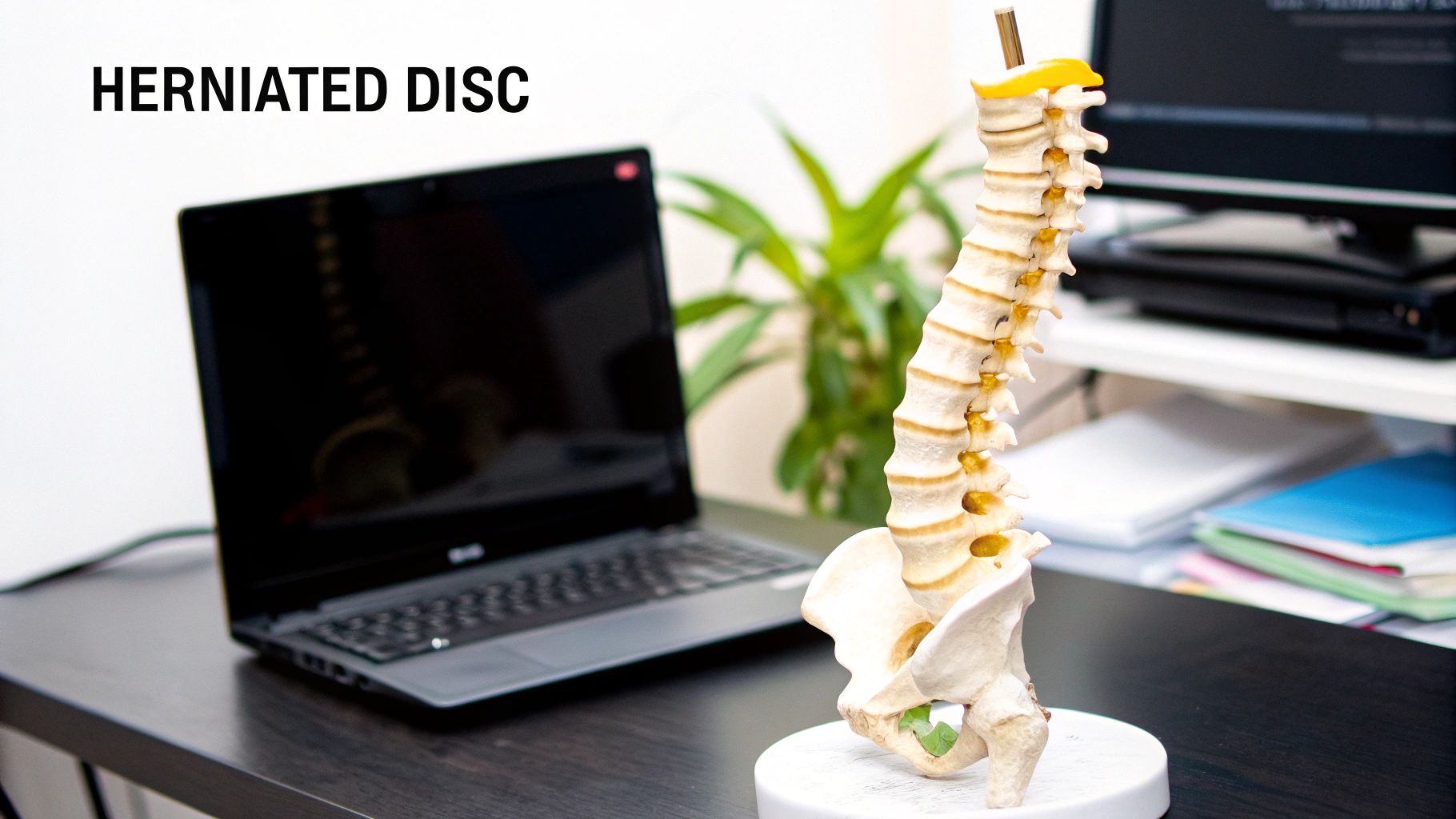
This nerve pressure often causes more than just localized back pain; it can result in sciatica, which is characterized by sharp, radiating pain, numbness, or tingling that travels down the buttock and into the leg. The discomfort can be constant or intermittent and is often worsened by sitting, coughing, or sneezing. Understanding the best treatment for a herniated disc is crucial for finding effective, lasting relief without invasive procedures.
How Our Cedar Park Chiropractor Helps
Protecting your spinal discs involves mindful movement and building a strong, supportive core. The goal is to minimize excessive pressure and strain on your lumbar spine throughout daily activities.
- Practice Good Posture: Sit and stand tall, keeping your spine in a neutral alignment.
- Avoid Repetitive Bending: When you must bend, hinge at your hips rather than rounding your lower back.
- Strengthen Your Core: Exercises like planks and bird-dogs build stability around your spine.
- Stay Active: Low-impact activities like walking or swimming keep discs hydrated and healthy.
Key Insight: A disc injury does not always require surgery. Conservative care is highly effective at reducing nerve pressure, managing symptoms, and facilitating the body’s natural healing processes, often allowing patients to avoid more invasive interventions.
At Bell District Spine and Rehab, we specialize in non-surgical solutions for disc-related pain for our Cedar Park patients. We use gentle chiropractic adjustments to restore proper spinal motion and spinal decompression therapy to carefully reduce pressure on the affected disc and nerve. This approach helps relieve pain, decrease inflammation, and create an optimal environment for healing.
3. Facet Joint Dysfunction and Arthritis
Beyond muscles and discs, the small stabilizing joints in your spine, known as facet joints, are a frequent source of lower back pain. These joints link your vertebrae together, providing flexibility and guiding movement. Facet joint dysfunction occurs when these joints become inflamed, stiff, or arthritic, leading to pain that is often described as a dull, deep ache in the lower back. This condition is a common part of the aging process and is frequently associated with degenerative disc disease.
Pain from facet joint issues often worsens with activities that compress the joints, such as prolonged standing, arching the back, or twisting. You might also notice increased stiffness first thing in the morning or after periods of inactivity. Because these joints are crucial for nearly every spinal movement, their dysfunction can significantly impact your daily life and is one of the more persistent common causes of lower back pain.
How Our Cedar Park Chiropractor Helps
Managing facet joint pain involves reducing stress on these joints and maintaining their mobility through targeted lifestyle changes. The goal is to unload the spine and support it with strong, flexible muscles to prevent further degeneration and inflammation.
- Maintain Good Posture: Avoid positions that cause you to arch your back excessively.
- Strengthen Your Core: A strong core acts like a natural brace for your lumbar spine.
- Stay Active: Gentle, low-impact activities like swimming or tai chi can keep joints mobile.
- Stretch Regularly: Focus on stretching your hip flexors and hamstrings to reduce strain on your lower back.
Key Insight: Facet joint pain is often a “mechanical” pain, meaning it is aggravated by specific movements. Identifying and modifying these trigger movements is a powerful step toward managing symptoms and preventing flare-ups.
At Bell District Spine and Rehab, we address facet joint dysfunction for our Cedar Park patients with precise chiropractic adjustments designed to restore normal joint motion and alleviate pressure. We complement this with rehabilitative exercises to stabilize the lumbar spine and soft tissue therapies to reduce local inflammation, providing effective, non-surgical relief and improving long-term spinal health.
4. Sciatica (Sciatic Nerve Compression)
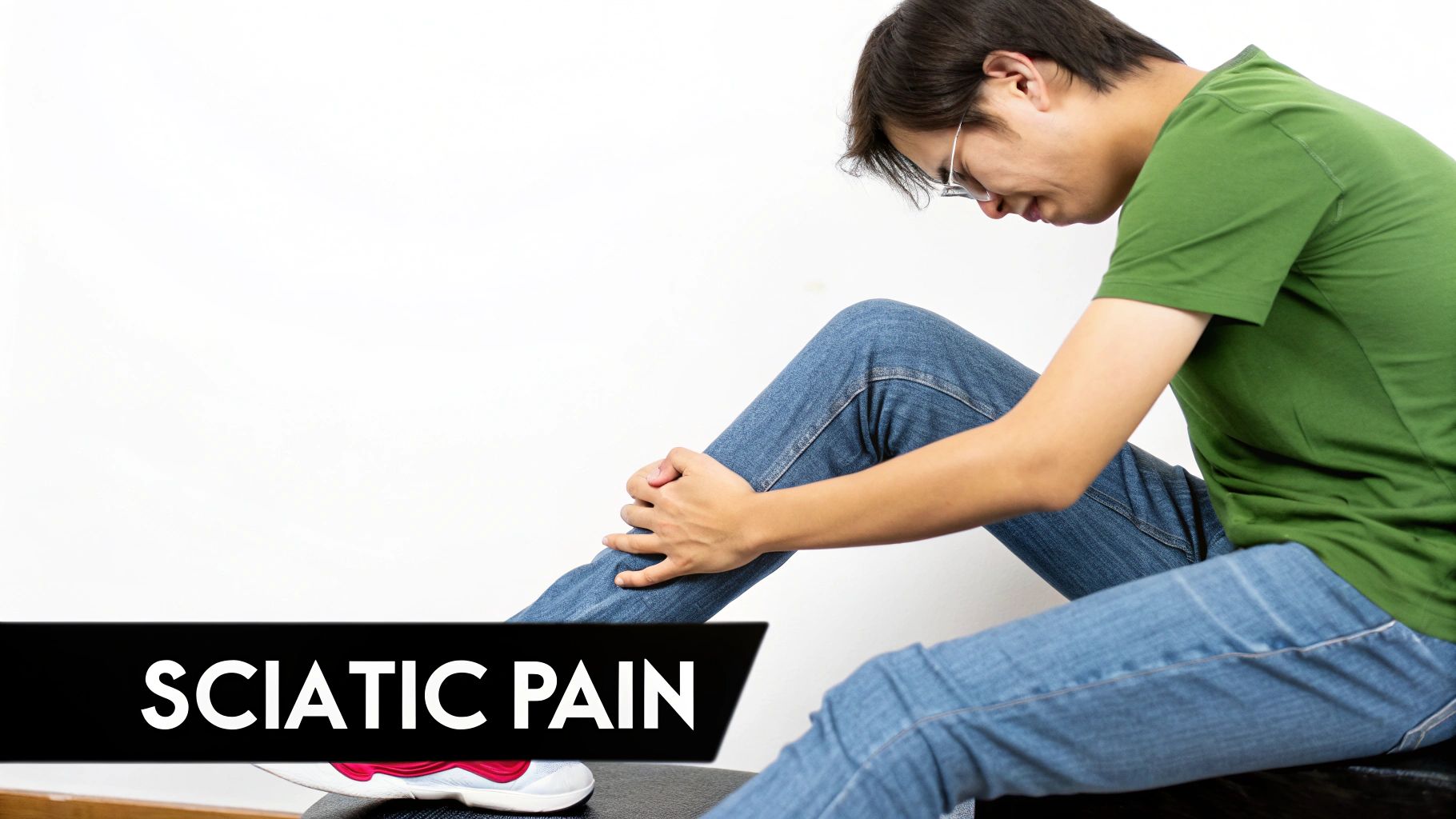
Sciatica is not a condition itself but a symptom of an underlying problem compressing the sciatic nerve, the longest nerve in your body. This compression leads to pain that radiates from the lower back, through the buttocks, and down the back of one leg. Common culprits include a herniated disc, a bone spur on the spine, or spinal stenosis, all of which can place direct pressure on the nerve roots. The pain is often described as a sharp, shooting, or burning sensation, making it one of the more disruptive common causes of lower back pain.
This radiating pain can be accompanied by numbness, tingling, or muscle weakness in the affected leg or foot. For many, simple actions like sitting, standing up, or even coughing can intensify the symptoms, significantly impacting daily life. As a trusted sciatica chiropractor in Cedar Park, we understand that addressing the root cause of the compression is crucial for lasting relief.
How Our Cedar Park Chiropractor Helps
Managing sciatica often involves relieving pressure on the nerve and reducing inflammation. Proactive lifestyle adjustments can also significantly lower your risk of developing this painful condition.
- Avoid Prolonged Sitting: Take frequent breaks to stand, walk, and stretch.
- Stretch Daily: Focus on stretches for the piriformis muscle and hip flexors.
- Use Proper Mechanics: Always lift with your legs, not your back, to protect your spine.
- Stay Active: Gentle, low-impact exercises like walking and swimming improve spinal health.
- Sleep Smart: Lie on your side with a pillow between your knees to maintain spinal alignment.
Key Insight: Early intervention is critical for sciatica. Addressing the underlying compression promptly can prevent the nerve irritation from becoming chronic and leading to more severe nerve-related issues.
At Bell District Spine and Rehab, our Cedar Park chiropractors specialize in identifying and treating the source of sciatic nerve compression. Through precise spinal adjustments, we can alleviate pressure on the sciatic nerve caused by misaligned vertebrae or bulging discs. We also utilize spinal decompression and targeted soft tissue therapies to reduce inflammation and promote healing, helping you find lasting relief from sciatica without invasive procedures.
5. Spinal Stenosis
Spinal stenosis is another common cause of lower back pain, particularly among older adults. This condition involves the narrowing of the spinal canal, the space through which your spinal cord and nerve roots travel. This narrowing can compress these sensitive neural structures, leading to pain, tingling, numbness, or weakness. It typically develops gradually due to age-related degenerative changes like bone spurs, thickened ligaments, or herniated discs that encroach upon the spinal canal.
The pain from spinal stenosis is often described as a cramping or aching in the lower back that can radiate into the buttocks and legs, a condition sometimes called neurogenic claudication. Symptoms frequently worsen with standing or walking and may be temporarily relieved by leaning forward or sitting, as this posture opens up the spinal canal and lessens the pressure on the nerves. If you suspect your symptoms align with this condition, you can explore spinal stenosis treatment without surgery to understand your options.
How Our Cedar Park Chiropractor Helps
Managing spinal stenosis focuses on relieving nerve pressure and maintaining function. Simple lifestyle adjustments and targeted exercises can make a significant difference in your daily comfort and mobility.
- Lean Forward: When walking, try leaning slightly on a shopping cart or walker to open the spinal canal.
- Avoid Backward Bending: Extension-based movements can narrow the canal further and should be avoided.
- Strengthen Your Core: A strong core provides better support for your lumbar spine.
- Stay Active: Low-impact activities like swimming or cycling can help maintain strength without aggravating symptoms.
Key Insight: Spinal stenosis symptoms are often progressive, but that doesn’t mean surgery is inevitable. Proactive, non-surgical care can effectively manage pain and slow the condition’s progression, allowing you to maintain an active lifestyle.
At Bell District Spine and Rehab, we provide Cedar Park residents with non-surgical spinal decompression therapy, a gentle and effective treatment for stenosis. This technique carefully stretches the spine, creating negative pressure within the discs and spinal canal to relieve nerve compression and promote healing. Paired with chiropractic adjustments and rehabilitative exercises, our approach helps restore function and reduce stenosis-related pain.
6. Postural Dysfunction and Muscle Imbalance
In our modern, often sedentary world, poor posture and resulting muscle imbalances are a leading and increasingly common cause of lower back pain. Activities like hunching over a computer, looking down at a phone, or slouching on the couch create chronic stress on the lumbar spine. This leads to conditions like forward head posture, rounded shoulders, and anterior pelvic tilt, where some muscles become tight and overworked while others become weak and underused.
These imbalances pull your spine out of its natural alignment, placing excessive strain on the lower back discs, joints, and ligaments. Over time, this constant mechanical stress leads to inflammation, stiffness, and persistent aching pain. The good news is that postural issues are highly correctable with targeted intervention, awareness, and consistent daily habits.
How Our Cedar Park Chiropractor Helps
Correcting posture is an active process that involves building new habits and strengthening the right muscles. The key is consistency in re-educating your body to hold a healthier, more stable position throughout the day.
- Ergonomic Setup: Adjust your workstation monitor to eye level and use a chair with proper lumbar support.
- Move Frequently: Set a timer to get up, stretch, and walk around for a few minutes every 30-45 minutes.
- Strengthen Your Core: Daily exercises like planks and bird-dogs stabilize your pelvis and support your lower back.
- Activate Weak Muscles: Focus on strengthening your glutes and upper back muscles to counteract the effects of prolonged sitting.
- Stretch Tight Muscles: Regularly stretch your hip flexors, hamstrings, and chest muscles to restore balance.
Key Insight: Your daily posture is a direct reflection of your muscle balance. Chronic back pain is often the body’s signal that certain muscles are overworking to compensate for others that have become weak or inhibited.
At Bell District Spine and Rehab, we conduct a thorough postural and functional assessment to identify the specific muscle imbalances contributing to your pain. Our Cedar Park chiropractors use precise adjustments to restore spinal alignment, while our customized therapeutic exercise programs are designed to strengthen weak core and gluteal muscles and release chronic tension in tight areas. This integrated approach not only relieves your current pain but also corrects the underlying issue to prevent its return.
7. Spondylolisthesis and Spondylolysis
These two related conditions are structural issues that rank among the common causes of lower back pain, particularly in athletes and older adults. Spondylolysis refers to a stress fracture or crack in the pars interarticularis, a small bone segment joining two vertebrae. If this fracture weakens the bone to the point that one vertebra slips forward over the one beneath it, the condition is called spondylolisthesis. This slippage can compress spinal nerves, leading to pain.
While some individuals have these conditions from birth or develop them during adolescent growth spurts, others acquire them through degenerative changes or repetitive spinal hyperextension seen in sports like gymnastics or football. The pain often worsens with activity, especially when bending backward, and may radiate into the buttocks and legs, mimicking sciatica symptoms.
How Our Cedar Park Chiropractor Helps
Managing these conditions involves stabilizing the lumbar spine and avoiding activities that exacerbate the vertebral slippage. A focus on core strength and proper body mechanics is crucial for long-term stability and pain relief.
- Avoid Hyperextension: Consciously avoid activities that involve backward bending.
- Strengthen Your Core: Perform core stabilization exercises, like planks and bird-dogs, to support the spine.
- Modify Activities: Temporarily cease high-impact sports or heavy lifting that triggers pain.
- Maintain a Healthy Weight: Reducing excess body weight lessens the mechanical stress on your lumbar vertebrae.
Key Insight: Spondylolisthesis is graded based on the severity of the slip. Most cases are low-grade and respond very well to conservative, non-surgical care focused on reducing stress on the affected vertebra and strengthening surrounding muscles.
At Bell District Spine and Rehab, we provide Cedar Park residents with a comprehensive approach to managing spondylolisthesis. We utilize gentle chiropractic adjustments to improve spinal mechanics in adjacent segments, combined with targeted flexion-distraction techniques to decompress the affected area. Our customized rehabilitation programs focus on building deep core stability to prevent further slippage and provide lasting pain relief.
8. Piriformis Syndrome and Myofascial Pain
While less known than other common causes of lower back pain, piriformis syndrome and myofascial pain can be significant sources of chronic discomfort. Piriformis syndrome occurs when the piriformis muscle, located deep within the buttock region, spasms or becomes tight. This tightening can compress the nearby sciatic nerve, leading to pain that mimics sciatica, including pain in the lower back, buttocks, and down the leg.
Myofascial pain syndrome involves “trigger points,” which are hyperirritable knots within the tight bands of muscle tissue. These trigger points can be a source of deep, aching pain and can also refer pain to other parts of the body, including the lumbar region. Both conditions are often misdiagnosed, yet they can severely limit your daily activities if left unaddressed.
How Our Cedar Park Chiropractor Helps
Managing and preventing these conditions involves keeping the hip and gluteal muscles flexible and strong. Consistent stretching and an awareness of your posture, especially while sitting, are crucial for avoiding flare-ups.
- Stretch Daily: Perform piriformis stretches, such as the “figure-four” stretch, holding each side for at least 30 seconds.
- Strengthen Hips: Incorporate exercises like clamshells and side-lying leg lifts to build stability in the hip abductors.
- Avoid Prolonged Sitting: Get up and move around at least once an hour to prevent the piriformis muscle from tightening.
- Use Self-Myofascial Release: A foam roller or massage ball can be used on the glute and hip area to release trigger points and muscle tension.
Key Insight: The pain from piriformis syndrome often worsens with sitting and can be distinguished from a true lumbar disc issue by a thorough physical examination. Correctly identifying the source is the first step toward effective relief.
At Bell District Spine and Rehab, we specialize in diagnosing and treating complex conditions like piriformis and myofascial pain for our Cedar Park patients. We utilize advanced soft tissue techniques, such as trigger point therapy and active release, to alleviate muscle spasms and restore normal function. Our targeted chiropractic adjustments and personalized rehabilitation plans address the underlying muscle imbalances, providing lasting relief and preventing future episodes.
9. Sacroiliac Joint (SI Joint) Dysfunction
The sacroiliac (SI) joints are a frequently overlooked but significant source of discomfort, making SI joint dysfunction one of the more elusive common causes of lower back pain. These powerful joints connect your sacrum (the triangular bone at the base of your spine) to your iliac bones (the main bones of your pelvis). Their job is to transfer weight and absorb shock between your upper body and legs, but when they become inflamed or move improperly, the result is sharp, localized pain.
This dysfunction can arise from too much movement (hypermobility) or too little movement (hypomobility). Causes range from traumatic injury and pregnancy-related hormonal changes to arthritis or repetitive stress from certain physical activities. The pain is often felt in the lower back and buttocks and can sometimes radiate down the leg, mimicking sciatica and leading to a misdiagnosis.
How Our Cedar Park Chiropractor Helps
Managing SI joint pain involves stabilizing the joint and correcting underlying muscle imbalances that contribute to the instability. The goal is to create a strong, balanced support system around the pelvis to reduce stress on the joint itself.
- Strengthen Glutes: Strong gluteal muscles are essential for pelvic stability. Incorporate exercises like bridges and clamshells.
- Improve Hip Mobility: Focus on strengthening hip abductors and external rotators to provide better support.
- Maintain Alignment: Avoid crossing your legs while sitting and try to sleep on your side with a pillow between your knees.
- Use Proper Mechanics: When lifting, squat down and engage your leg and core muscles, keeping your back straight to protect your pelvis.
Key Insight: SI joint dysfunction is often called a “great mimicker” because its symptoms overlap with other conditions like disc herniation and sciatica. A correct diagnosis is crucial for effective treatment, as therapies for other back issues may not resolve SI joint pain.
At Bell District Spine and Rehab, our Cedar Park chiropractors are skilled in diagnosing and treating SI joint dysfunction. Through specific chiropractic adjustments, we can restore proper motion and alignment to the SI joint. This is complemented by targeted soft tissue therapies to reduce inflammation and rehabilitation exercises designed to strengthen the stabilizing muscles around your pelvis, providing lasting relief and preventing recurrence.
10. Trauma and Auto Injury-Related Pain
Sudden, forceful events like auto accidents, serious falls, or sports injuries are significant sources of acute lower back pain. The impact from these traumas can jolt the spine, causing damage to vertebrae, discs, ligaments, and muscles. Even a seemingly minor, low-speed car accident can generate enough force to misalign spinal structures and cause whiplash-related injuries that refer pain to the lower back, a problem that might not become fully apparent for days or even weeks.
This type of injury often results in sharp, immediate pain, severe muscle spasms, and a significant loss of mobility. Because the underlying damage can range from soft tissue bruising to more severe issues like vertebral fractures or disc herniations, seeking a prompt and thorough evaluation is critical to prevent the development of chronic pain and long-term complications. Ignoring symptoms can lead to ongoing instability and degenerative changes down the road.
How Our Cedar Park Chiropractor Helps
While preventing unexpected accidents is difficult, managing the aftermath properly is key to a full recovery. Prompt and appropriate care can drastically improve outcomes and reduce the risk of long-term pain.
- Seek Immediate Evaluation: Get checked by a healthcare provider right after any significant trauma, even if you feel fine.
- Document Everything: Keep a detailed log of your symptoms, their progression, and how they affect your daily life for medical and insurance purposes.
- Use Ice: Apply ice packs for 15-20 minutes at a time during the first 48 hours to control acute inflammation.
- Follow Professional Advice: Adhere strictly to your provider’s recommendations for activity modification and rehabilitation exercises.
Key Insight: The absence of immediate, severe pain after an accident is not a reliable indicator of a lack of injury. Adrenaline can mask symptoms, and soft tissue damage often worsens over the following 24-72 hours.
At Bell District Spine and Rehab, we are a trusted auto injury chiropractor in Cedar Park, specializing in diagnosing and treating trauma-related spinal conditions. We use precise chiropractic adjustments to restore proper alignment, advanced soft tissue therapies to address muscle and ligament damage, and customized rehabilitation plans to help you regain strength and function, preventing acute injuries from becoming chronic problems.
What to Expect When You Visit Our Cedar Park Clinic
We understand that visiting a chiropractor for the first time can feel uncertain. Our priority is to make your experience welcoming, comfortable, and reassuring from the moment you walk through our doors. Your first visit will involve a comprehensive consultation where we listen carefully to your health history and symptoms. We’ll then conduct a thorough examination to pinpoint the exact cause of your lower back pain.
Based on our findings, we will explain your diagnosis in clear, easy-to-understand language and create a personalized treatment plan. This may include gentle chiropractic adjustments, spinal decompression, or targeted soft tissue therapies. Our goal is to not only relieve your pain but also to empower you with the knowledge and tools to prevent it from returning. We are here to partner with you on your journey back to a healthy, active life.
Take the First Step Toward Relief at Bell District Spine and Rehab
Navigating the landscape of lower back pain can feel overwhelming. As we’ve explored, the sources of discomfort are diverse, ranging from sudden muscle strains after an auto injury to the slow, degenerative progression of spinal stenosis or facet joint arthritis. We’ve seen how a herniated disc can create sharp, radiating pain, how postural dysfunction from long hours at a desk in North Austin can lead to chronic aches, and how conditions like sacroiliac joint dysfunction or sciatica can dramatically impact your mobility and quality of life.
Understanding these common causes of lower back pain is the critical first step. It empowers you to recognize that your pain is not just a vague, unmanageable symptom but a specific problem with a definable source. This knowledge transforms you from a passive sufferer into an active participant in your own recovery. Whether you identified with the deep, aching pain of piriformis syndrome or the sharp, activity-related sting of spondylolisthesis, you now have a clearer picture of what might be happening within your body.
The most important takeaway is this: You do not have to accept lower back pain as a permanent part of your life. The path to relief begins with a precise diagnosis from a trusted local chiropractor and a targeted, non-invasive treatment strategy tailored to the root cause of your specific condition.
From Understanding to Action: Your Path Forward
Recognizing the cause is step one; taking meaningful action is step two. Generic advice to “rest and take it easy” often falls short because it doesn’t address the underlying mechanical, structural, or neurological issues. Effective recovery requires a proactive approach that focuses on restoring function, not just masking symptoms.
For residents of Cedar Park, Leander, and the surrounding areas, this is where professional guidance becomes invaluable. A thorough assessment can differentiate between the radiating nerve pain of sciatica and the localized joint pain of SI dysfunction, ensuring your treatment plan is precise and effective from day one. Instead of guessing which stretches might help, you can engage in a plan designed specifically for your body’s needs.
Key Insight: Lasting relief from lower back pain rarely comes from a single, passive solution. It is achieved through a comprehensive strategy that combines targeted therapies to reduce inflammation and pain, corrective exercises to restore stability and function, and lifestyle education to prevent future injuries. This integrated approach ensures you not only feel better but also build a more resilient spine for the long term.
At Bell District Spine and Rehab, Dr. John Tuggle and our team are committed to this integrated philosophy. We believe that effective care for the common causes of lower back pain goes beyond temporary fixes. Our goal is to provide Cedar Park families and professionals with the tools and treatments necessary to regain control over their health and live active, fulfilling lives free from debilitating pain.
Don’t let uncertainty or frustration hold you back any longer. The journey from chronic pain to lasting comfort is a partnership between you and a knowledgeable healthcare provider who understands the intricacies of the spine. By taking the first step and seeking a professional evaluation, you are investing in your future health, mobility, and overall well-being. Today is the day to move from understanding your pain to actively resolving it.
Are you ready to find the root cause of your discomfort and start a personalized recovery plan? As a leading chiropractor in Cedar Park, TX, Bell District Spine and Rehab specializes in diagnosing and treating the common causes of lower back pain using advanced, non-surgical methods. Schedule your complimentary consultation today by visiting Bell District Spine and Rehab and discover your path to a pain-free life.