
Tension headaches and migraines can disrupt your day, making it difficult to focus at work, enjoy time with family, or simply relax. That persistent, dull ache or debilitating throbbing pain is a common complaint for many in Cedar Park, TX, but you don’t have to rely solely on over-the-counter medication for temporary relief. If you’re searching for a “chiropractor near me” for lasting headache relief, you’ve found the right place. There are powerful, evidence-based natural remedies for tension headaches and migraines that address the root causes of this common ailment.
At Bell District Spine and Rehab, we are the trusted local chiropractor serving patients in Cedar Park, Leander, and the greater North Austin area. We believe in a comprehensive, patient-focused approach to wellness that empowers you to find lasting relief. This guide explores eight effective strategies, combining professional chiropractic care with at-home techniques to help you reclaim your quality of life. We will delve into a collection of actionable remedies, from targeted therapies available right here in our Cedar Park clinic, such as chiropractic adjustments and dry needling, to lifestyle changes that can prevent headaches before they start.
A fundamental aspect of managing headaches involves learning how to effectively release tension in the body through practical techniques. In the following sections, you will discover specific insights into each remedy, giving you the tools you need to take control of your health and find a trusted “chiropractor in Cedar Park, TX” to guide you.
1. Chiropractic Adjustments for Headache Relief
When a tension headache or migraine strikes, the source of the pain often lies not just in your head but in your neck and upper back. Spinal manipulation, a cornerstone of chiropractic care, is one of the most effective natural remedies for headaches because it targets this root cause directly. This technique involves a licensed chiropractor applying a controlled, specific force to vertebrae in the cervical spine (your neck) that have become misaligned or are not moving correctly.
This misalignment, known as a subluxation, can irritate nearby nerves and cause the muscles in your neck and upper back to tighten excessively. This muscular tension is a primary trigger for tension-type headaches and a major contributor to migraines. By restoring proper alignment and motion, chiropractic adjustments help alleviate nerve irritation and release the built-up muscle tension, effectively reducing both the intensity and frequency of your headaches. This is a primary reason patients seek out an “auto injury chiropractor” or “neck pain chiropractor” in Cedar Park.
How Our Cedar Park Chiropractor Provides Relief
For residents in Cedar Park, Leander, and North Austin dealing with persistent headaches, understanding how an adjustment works can be empowering. The benefits are often twofold:
- Immediate Symptom Alleviation: Many patients, particularly desk workers with forward head posture or individuals recovering from auto injuries, report a noticeable reduction in headache pain after an adjustment. Restoring proper joint mechanics allows muscles to relax and reduces nerve pressure.
- Long-Term Prevention: Consistent chiropractic care does more than just treat the current headache. It addresses the underlying structural issues that cause them. By correcting posture and improving spinal function, adjustments help prevent future episodes from occurring.
Making Adjustments Work for You
To get the most out of this approach, consider these actionable tips:
- Start with a Full Evaluation: A thorough assessment at our Cedar Park clinic is crucial to identify the specific misalignments contributing to your headaches.
- Combine with Corrective Exercises: As your local chiropractor, we can provide specific stretches and exercises to strengthen your neck and back muscles, helping to maintain proper alignment between visits.
- Be Consistent: Regular follow-up visits are key to managing chronic tension headaches and preventing their recurrence.
Chiropractic care offers a targeted, non-invasive solution by addressing the biomechanical source of your pain. To explore how targeted adjustments can help you find lasting relief from headaches or sciatica, we can start your journey toward a pain-free life.
2. Magnesium Supplementation
When you’re searching for natural remedies for tension headaches, a deficiency in an essential mineral might be the last thing you suspect. However, magnesium plays a critical role in muscle and nerve function. When your levels are low, it can lead to increased muscle tension, nerve excitability, and inflammation—all primary triggers for headache pain. Supplementing with magnesium can be a game-changer because it works at a cellular level to restore balance.
This powerful mineral helps regulate neurotransmitters and blocks pain-transmitting signals in the brain. It also acts as a natural muscle relaxant, easing the chronic neck and shoulder tightness common among desk workers in Cedar Park and Leander. By calming the nervous system and relaxing tense muscles, magnesium directly addresses the physiological imbalances that contribute to the frequency and severity of tension headaches, making it a foundational component of natural headache management.
How Magnesium Supplementation Provides Relief
For those in North Austin struggling with recurring headaches, understanding how this simple mineral works can be enlightening. The benefits extend beyond just immediate comfort:
- Symptom Reduction: Clinical studies have shown that consistent magnesium intake can significantly reduce both the frequency and intensity of headaches. Individuals with chronic tension often find their symptoms lessen after several weeks of supplementation.
- Long-Term Prevention: By correcting a potential underlying mineral deficiency, magnesium helps prevent the cascade of muscle tension and nerve irritation from starting. It supports overall nervous system health, which is crucial for preventing future headaches.
Making Magnesium Work for You
To effectively integrate this mineral into your headache management plan, consider these actionable tips:
- Choose the Right Form: Not all magnesium supplements are created equal. Forms like glycinate and citrate are more bioavailable and gentler on the stomach.
- Start with a Therapeutic Dose: Begin with a daily dose of 200-400mg, preferably taken with food to enhance absorption. For targeted relief, understanding specific forms, such as the benefits of Magnesium Glycinate for Sleep, Anxiety, and Recovery, can enhance its effectiveness.
- Be Patient and Consistent: It can take several weeks to notice a significant improvement. Consistency is key for achieving preventative benefits.
When combined with treatments from your local chiropractor in Cedar Park, like care at Bell District Spine and Rehab, magnesium supplementation offers a powerful, synergistic approach to addressing the root causes of tension headaches.
3. Progressive Muscle Relaxation (PMR)
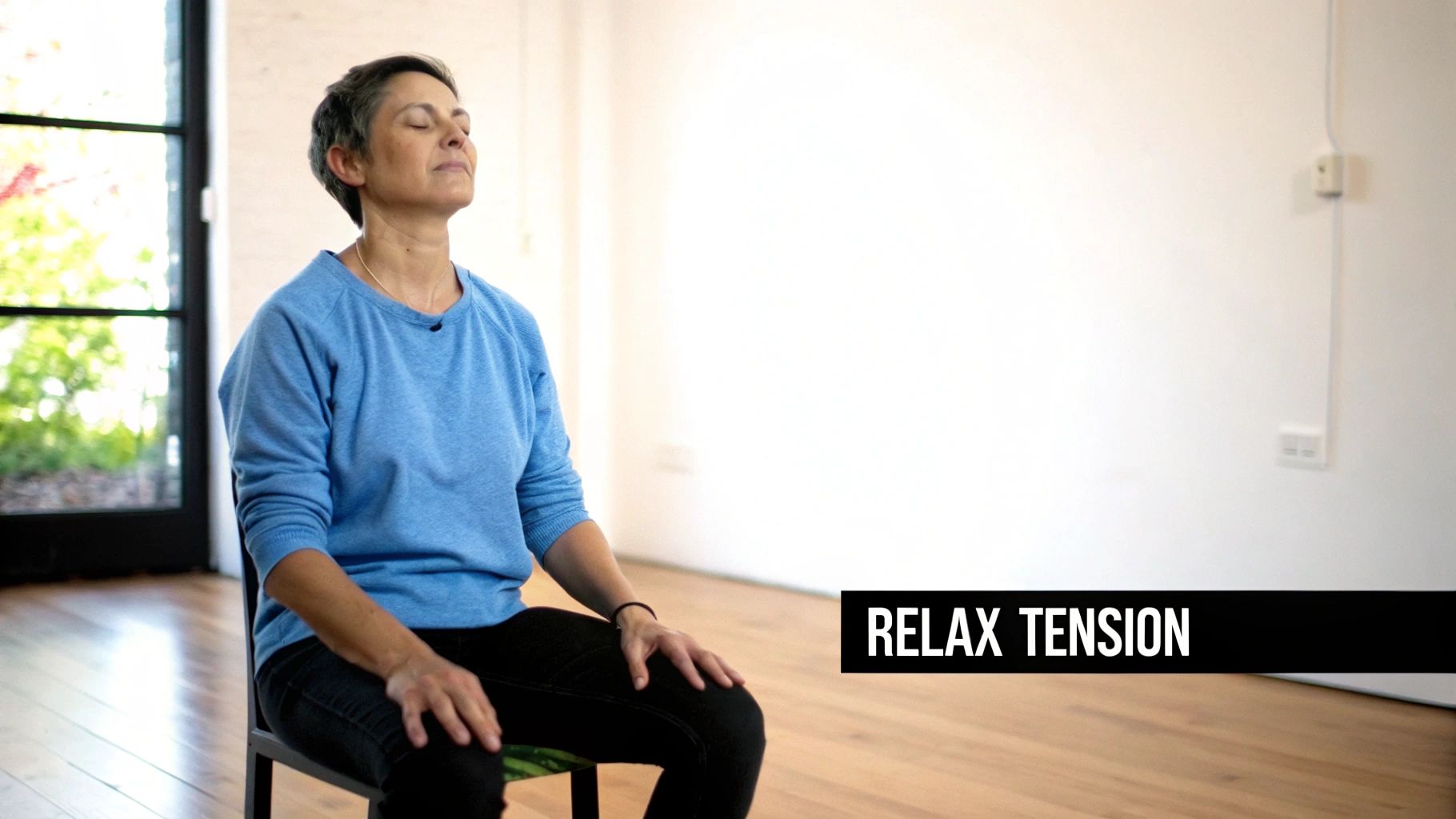
When stress manifests physically, it often creates a cycle of muscle tension that directly triggers headaches. Progressive Muscle Relaxation (PMR) is a powerful mind-body technique that serves as one of the most direct natural remedies for tension headaches by breaking this cycle. This method involves systematically tensing specific muscle groups and then releasing them, helping you become more aware of physical tension and consciously let it go.
This process targets the physiological root of many tension headaches. By contracting and then relaxing muscles in your neck, shoulders, and even your jaw and scalp, you reduce the muscular tightness that contributes to that signature band-like headache pain. Regular practice trains your nervous system to better manage its stress response, providing both immediate relief and a long-term strategy for prevention.
How PMR Provides Relief
For residents in Cedar Park and surrounding areas who spend hours at a desk, the benefits of PMR can be profound. It offers a practical way to de-escalate stress and physical tension before a headache fully develops. The benefits are two-sided:
- Immediate Symptom Reduction: Many individuals report a noticeable decrease in headache pressure after a 15-minute PMR session. Releasing this chronic muscle clenching calms the nervous system and eases pain signals.
- Long-Term Prevention: Consistent PMR practice increases your body awareness, helping you recognize the early signs of muscle tightening. This allows you to intervene before the tension can escalate into a full-blown headache.
Making PMR Work for You
To get the most out of this relaxation technique, consider these actionable tips:
- Find a Quiet Space: Practice in a comfortable, distraction-free environment where you can focus entirely on the sensations in your body.
- Use Guided Audio: When you’re starting, guided audio recordings can provide a structured session and help you stay focused.
- Combine with Clinical Care: At Bell District Spine and Rehab, we often see enhanced results when patients combine PMR with their chiropractic adjustments. PMR helps release muscular tension while our adjustments correct the underlying structural misalignments.
4. Neck and Shoulder Stretching and Mobility Work
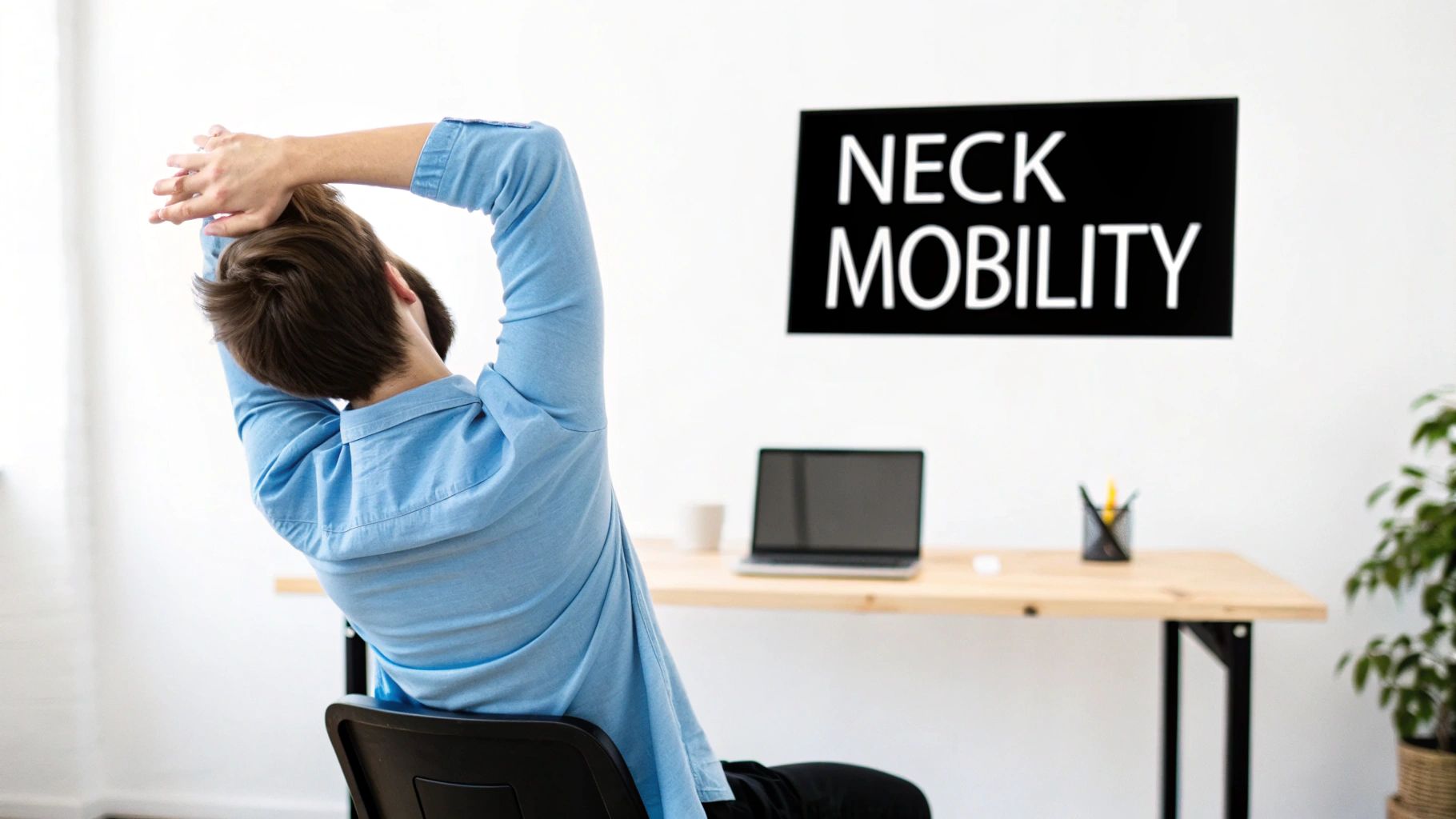
While many natural remedies for tension headaches focus on relieving symptoms, targeted stretching directly addresses one of the most common physical causes: chronic muscle tightness. Tension headaches often originate from stiffness in the cervical spine and tight muscles, especially in desk workers or those with forward head posture. Implementing a consistent stretching routine can dramatically reduce this underlying tension.
Stretching improves blood flow, increases your range of motion, and releases the tight bands of muscle tissue that refer pain to your head. By decompressing the structures in your neck and shoulders, these exercises not only alleviate an active headache but also work as a powerful preventative measure. For individuals in Cedar Park and Leander, combining this practice with professional care from a “neck pain chiropractor” can amplify and sustain the benefits.
How Stretching and Mobility Provide Relief
Understanding how specific movements can counteract the daily strain on your neck and shoulders is the first step toward finding freedom from headaches. The benefits are both immediate and cumulative:
- Immediate Symptom Alleviation: Simple, gentle stretches performed during the day can interrupt the cycle of muscle tension that leads to a headache. Cedar Park desk workers have reported a significant reduction in headache frequency by incorporating daily neck stretching breaks.
- Long-Term Prevention: Regular mobility work corrects the muscular imbalances and postural issues at the root of chronic tension headaches. It retrains your muscles to hold a healthier posture, which prevents tension from building up and extends the positive effects of chiropractic adjustments.
Making Stretching Work for You
To integrate this powerful habit into your routine effectively, follow these actionable tips:
- Be Gentle and Consistent: Hold each stretch for at least 30 seconds without bouncing. Focus on key muscles like the upper trapezius and levator scapulae. Aim to stretch daily for maximum benefit.
- Get a Professional Assessment: A movement analysis at Bell District Spine and Rehab can pinpoint your specific patterns of tension. Our experts can create a personalized stretching protocol tailored to your unique postural needs and headache triggers.
- Combine with Other Therapies: Stretching is most effective when paired with chiropractic adjustments. This combination ensures both the joints and the surrounding muscles are functioning optimally.
For a guided routine, this video offers excellent examples of effective neck and shoulder stretches you can start today:
5. Heat and Cold Therapy
When tension headaches arise from tight neck and shoulder muscles, one of the most accessible natural remedies is the strategic application of heat and cold. This simple therapeutic approach works directly on the muscles and nerves contributing to your pain. Heat therapy increases blood flow to the area, which helps relax tense muscles and alleviate the chronic stiffness that often precedes a headache.
Cold therapy has the opposite effect. It constricts blood vessels, which helps reduce inflammation and has a numbing effect on nerve endings, providing rapid relief for acute, throbbing headache pain. By understanding when to use each, you can create a powerful, customized response to your specific headache symptoms.

How Heat and Cold Therapy Provides Relief
For residents in Cedar Park and Leander, especially office workers who develop afternoon headaches, this remedy can be a game-changer. The benefits are targeted and can be applied to address different stages of a headache:
- Immediate Symptom Alleviation: Applying a cold pack to the base of the skull or temples can quickly numb the sharp pain of an acute tension headache. Conversely, a heating pad draped over the shoulders can almost instantly melt away the muscular tightness that triggers a chronic headache.
- Long-Term Prevention: Regularly using heat therapy on your neck and shoulders, especially before bed, can prevent morning stiffness and reduce the baseline muscle tension that leads to frequent headaches.
Making Therapy Work for You
To get the most out of this approach, consider these actionable tips:
- Apply Heat for Muscle Relaxation: Use a heating pad on your neck and shoulders for 15-20 minutes to ease chronic tension. This is especially effective before stretching or a chiropractic adjustment.
- Use Cold for Acute Pain: For sudden or intense headache pain, apply a cold pack wrapped in a thin towel for 10-15 minutes to reduce inflammation.
- Try Contrast Therapy: For stubborn pain, alternate between heat (3 minutes) and cold (1 minute) for several cycles. This helps flush out inflammation while improving circulation.
At Bell District Spine and Rehab, we often incorporate these modalities as part of a comprehensive treatment plan to enhance the effects of chiropractic adjustments, helping you find faster and more lasting relief in Cedar Park.
6. Hydration and Dietary Modifications
While many natural remedies for tension headaches focus on posture and muscle tension, what you put into your body is equally critical. Dehydration is a significant and often overlooked trigger, as even a mild fluid deficit can reduce blood flow and oxygen to the brain. This can cause brain tissue to shrink slightly, triggering pain receptors.
Similarly, your diet plays a powerful role. Inflammatory foods like processed snacks, refined sugars, and excessive caffeine can make you more susceptible to tension headaches. By focusing on proper hydration and an anti-inflammatory diet, you address the biochemical triggers of your pain, creating a healthier internal environment that is less prone to headache episodes.
How Hydration and Diet Provide Relief
For individuals in Cedar Park, understanding this connection is a game-changer for headache management. The benefits of this internal-first approach are both immediate and cumulative:
- Immediate Trigger Reduction: Correcting dehydration can sometimes alleviate a mild tension headache within a few hours. Likewise, identifying and removing a specific trigger food can stop a headache in its tracks.
- Long-Term Prevention: Consistently staying hydrated and eating an anti-inflammatory diet helps regulate your body’s internal systems, reducing the overall inflammatory load and making you more resilient to other headache triggers.
Making Hydration and Diet Work for You
To leverage this powerful natural remedy, consider these actionable steps:
- Track Your Water Intake: Aim for at least 8-10 glasses of water daily. Increase your intake if you are active or spending time in the Texas heat.
- Keep a Food and Headache Diary: For two weeks, log everything you eat and drink alongside any headache symptoms. This is an effective way to identify personal dietary triggers.
- Focus on Anti-Inflammatory Foods: Prioritize incorporating foods rich in omega-3s (like fatty fish), antioxidants (berries and leafy greens), and magnesium (nuts and seeds).
- Discuss Triggers with Your Chiropractor: At Bell District Spine and Rehab, we recognize that your overall health impacts your structural well-being. Share your food diary with us so we can provide personalized recommendations that support your chiropractic care plan.
By addressing your body’s nutritional needs, you build a strong foundation for a headache-free life.
7. Acupuncture and Dry Needling
When muscle knots (trigger points) in the neck and shoulders are the source of your tension headache, both acupuncture and dry needling offer a powerful, targeted solution. These techniques involve inserting very thin, sterile needles into specific points on the body. While they share a tool, their approaches differ; acupuncture focuses on balancing energy flow, while dry needling targets specific trigger points that cause pain and tension.
Both methods work to release constricted muscles, improve blood flow, and stimulate the nervous system to release natural pain-relieving chemicals. For tension headaches, needling key trigger points in the upper trapezius and suboccipital muscles (at the base of the skull) can directly deactivate the source of the radiating pain, making it one of the most effective natural remedies for tension headaches.
How Needling Therapies Provide Relief
For those in Cedar Park, Leander, and North Austin struggling with recurring headache pain, understanding the direct impact of these therapies is key. The benefits extend beyond simply masking symptoms:
- Immediate Trigger Point Release: Many patients, especially those with persistent “tech neck,” report an immediate sensation of muscle release and a significant reduction in headache intensity after dry needling.
- Long-Term Pain Modulation: By stimulating nerves, these therapies help reset pain signals between the muscles and the brain. A course of treatments can retrain the nervous system to be less sensitive, reducing the frequency of future headaches.
Making Needling Work for You
To maximize the benefits of dry needling for your tension headaches, consider these actionable tips:
- Schedule an Initial Series: For acute issues, a course of several treatments is often recommended to achieve lasting results.
- Combine for a Synergistic Effect: Pairing dry needling with chiropractic adjustments can yield powerful results. The adjustment realigns the spine, while needling releases the chronic muscular tension.
- Post-Session Care is Crucial: Stay well-hydrated and allow for rest after your session to help your body heal for optimal results.
At Bell District Spine and Rehab, we utilize functional dry needling to address the muscular component of your headaches directly. To discover how this precise technique can help you, you can learn more about what dry needling is and find lasting relief.
8. Stress Management and Mindfulness Meditation
For many, psychological stress is the number one trigger for tension headaches, creating a cycle where stress causes muscle contraction, which then leads to pain. Stress management and mindfulness meditation are powerful natural remedies because they directly target this root cause. These practices calm the central nervous system, reduce levels of the stress hormone cortisol, and interrupt the stress-tension-headache feedback loop.
Regularly practicing mindfulness rewires the brain’s response to stress, providing both immediate relief and powerful long-term prevention. Research shows that mindfulness-based stress reduction (MBSR) can significantly decrease tension headache frequency. By learning to manage the body’s reaction to stress, you can reduce headache triggers.
How Mindfulness Provides Relief
For busy professionals and residents in Cedar Park and Leander, understanding how meditation breaks the headache cycle is key. The benefits are both immediate and preventative:
- Immediate Symptom Alleviation: When you feel a headache beginning, pausing for a guided meditation can help release muscular tension in your neck, shoulders, and scalp, stopping a headache in its tracks.
- Long-Term Prevention: A consistent meditation practice trains your nervous system to be less reactive to stressors, which helps prevent the chronic muscle tightening that so often leads to tension headaches.
Making Mindfulness Work for You
To get the most out of this approach, consider these actionable tips:
- Start with Guided Sessions: Begin with 10-15 minute guided meditations using popular apps like Calm or Headspace. These are perfect for beginners.
- Create a Consistent Habit: Practice at the same time each day to build a routine.
- Focus on Body Scans: Use body scan meditations to bring awareness to areas of tension, such as your jaw, neck, and shoulders.
When combined with physical treatments from your local chiropractor that address biomechanical issues, the results are often even more profound. Discussing your stress levels with our team at Bell District Spine and Rehab can help us create a comprehensive care plan for lasting relief.
Comparison of 8 Natural Remedies for Tension Headaches
| Approach | Implementation complexity | Resource requirements | Expected outcomes | Ideal use cases | Key advantages |
|---|---|---|---|---|---|
| Chiropractic Adjustments and Spinal Manipulation | Moderate–high — requires licensed practitioner and diagnostic evaluation | Chiropractic clinic, trained chiropractor, multiple sessions | Immediate to cumulative reduction in neck-origin tension headaches; improved joint mobility | Cervical-spine-related headaches, forward-head posture, whiplash recovery | Addresses structural root causes, non-pharmacologic, complements other therapies |
| Magnesium Supplementation | Low — simple to implement but requires dosage monitoring | Supplements (glycinate/threonate preferred), possible lab check, provider guidance for interactions | Preventive reduction in headache frequency over 4–12 weeks (up to ~50% in some studies) | Suspected magnesium deficiency, preventive strategy, patients seeking non-prescription options | Evidence-based for prevention, low cost, systemic benefits (sleep, stress) |
| Progressive Muscle Relaxation (PMR) | Low–moderate — initial learning curve, then self-practice | Quiet space, guided audio/apps or instructor, 10–20 minutes/session | Rapid short-term tension relief (5–10 min) and long-term reduction with regular practice | Stress-induced headaches, workplace breaks, adjunct to physical therapies | Immediate, free/low-cost, safe for all ages, reduces stress and anxiety |
| Neck and Shoulder Stretching and Mobility Work | Low — simple routines but requires correct technique and consistency | Minimal equipment, time commitment, guidance from therapist/chiropractor recommended | Improved ROM and posture, reduced tension over 3–4 weeks with consistent practice | Desk workers, postural dysfunction, to maintain adjustment benefits | Enhances posture and mobility, low cost, amplifies chiropractic effects |
| Heat and Cold Therapy | Low — easy to apply but must choose appropriate modality | Heating pads/cold packs, towels; short application times | Fast symptomatic relief (10–20 minutes), typically temporary (30 min–2 hr) | Acute flare-ups, muscle stiffness, pre/post manual therapy | Rapid, inexpensive, safe when used properly; complements other treatments |
| Hydration and Dietary Modifications | Moderate — requires sustained behavior change and monitoring | Water access, dietary adjustments, possible nutritionist, food/headache diary | Gradual reduction in trigger-related headaches over days–weeks; broad health gains | Chronic or diet-triggered headaches, prevention-focused patients | Foundational approach, inexpensive, multiple systemic health benefits |
| Acupuncture and Dry Needling | Moderate–high — requires trained practitioner and multiple sessions | Certified acupuncturist or clinician trained in dry needling, clinic visits | Often rapid relief within 24–48 hours; reported 50–70% effectiveness rates with course of treatment | Myofascial trigger-point headaches, patients seeking drug-free intervention | Targeted myofascial release, can reduce medication use, synergizes with chiropractic care |
| Stress Management and Mindfulness Meditation | Low–moderate — needs daily practice and habit formation | Guided apps/instructors, quiet space, 15–30 minutes/day recommended | Gradual reduction in headache frequency (30–50% in ~8 weeks) and improved stress resilience | Stress-driven tension headaches, prevention, comorbid anxiety/stress | Reduces physiological stress response, improves mental health, no side effects |
Your Next Step to a Headache-Free Life in Cedar Park
Navigating the world of natural remedies for tension headaches can feel overwhelming, but you have a powerful toolkit at your disposal. From the immediate relief of heat therapy to the long-term benefits of magnesium, each strategy offers a pathway to reclaiming control over your well-being. Lasting relief is rarely about finding a single magic bullet. Instead, it’s about creating a holistic approach that addresses your specific triggers and underlying imbalances.
By integrating neck stretches, prioritizing hydration, and managing stress, you build a resilient foundation that makes you less susceptible to headache triggers. These are not just temporary fixes; they are sustainable habits that empower you to manage and prevent headaches proactively. You don’t have to simply endure the pain. You can take concrete, evidence-based steps to find freedom from the constant pressure of tension headaches.
From At-Home Care to Your Local Chiropractor
While the remedies discussed are effective, it’s crucial to recognize when at-home care isn’t enough. Many chronic headaches stem from deeper, structural issues that self-care alone cannot fully resolve. Persistent misalignments in the cervical spine, chronic muscle tension from poor posture, or underlying trigger points can perpetuate the headache cycle. This is where professional intervention from a “chiropractor in Cedar Park, TX” becomes essential.
At Bell District Spine and Rehab, we see patients from Cedar Park, Leander, and North Austin every day who have tried everything on their own. The missing piece is often a precise diagnosis of the root cause. A trained clinician can identify subtle biomechanical issues, such as a slight misalignment in your upper cervical vertebrae putting pressure on sensitive nerves.
Your Personalized Path to Relief at Bell District Spine and Rehab
This is why our approach at Bell District Spine and Rehab goes beyond temporary symptom management. We integrate the principles behind these natural remedies with advanced clinical care to create a personalized treatment plan.
- Chiropractic Adjustments: We use precise, gentle adjustments to restore proper alignment to your spine, relieving nerve pressure and reducing the mechanical stress that drives tension headaches and contributes to migraines.
- Dry Needling: If chronic trigger points are contributing to your pain, our functional dry needling services can release these knots of tension, providing immediate muscle relaxation and pain relief.
- Soft-Tissue Work: We address the muscular component of your headaches with targeted therapies that release tension, improve circulation, and restore healthy muscle function.
- Movement Analysis and Rehabilitation: We don’t just treat the pain; we teach you how to prevent it. We identify postural habits that contribute to your headaches and prescribe corrective exercises to build strength and resilience.
By combining these expert-led treatments, we help you achieve relief that is faster and longer-lasting than what you might achieve on your own. You no longer have to guess which remedy is right for you. We provide the expert guidance and targeted care needed to address the true source of your discomfort, helping you build a truly headache-free life right here in Cedar Park.
Ready to find the root cause of your tension headaches and receive a personalized treatment plan? Schedule your comprehensive evaluation with Bell District Spine and Rehab today and discover how our expert, patient-focused care can provide the lasting relief you deserve. Visit us at Bell District Spine and Rehab to take the first step.