
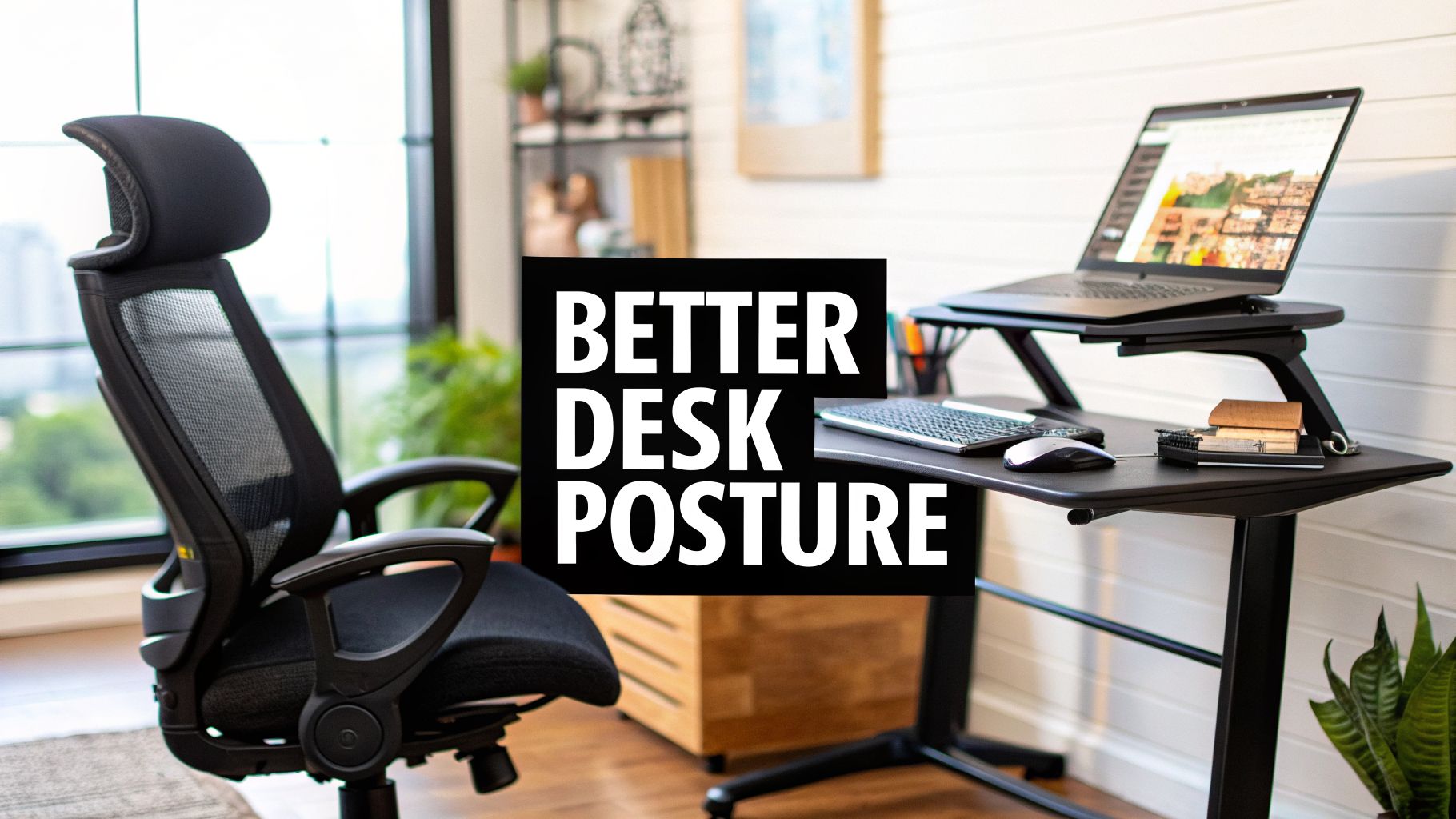
If you’re one of the many Cedar Park professionals spending hours at a desk, you know that all-too-familiar ache in your neck, shoulders, and lower back. It’s a slow burn that builds throughout the day, often signaling that it's time to find a local chiropractor for relief.
For a quick fix, many people talk about the '90-90-90' rule: keeping your elbows, hips, and knees bent at 90-degree angles. It’s a good starting point. You should also adjust your monitor so the top of the screen is at eye level to combat "tech neck," and remember to get up and move whenever you can. But when that pain becomes a constant problem, it's a sign your body needs professional help.
At Bell District Spine and Rehab, we are the trusted back pain chiropractor for patients in Cedar Park, TX, helping you move from temporary fixes to lasting solutions.
Your Immediate Action Plan for Desk-Related Pain
That nagging pain you feel after a long day at your desk isn't just a bad habit; it's a primary source of chronic pain that can drain your energy and kill your productivity. It's your body's way of sending up a flare, signaling that something is seriously misaligned.
For so many of our patients here in Cedar Park and Leander, these aches are the first sign that an underlying postural issue needs attention before it spirals into a more serious problem.
Ignoring these signals can lead to persistent conditions like tension headaches, sciatica, and even painful disc injuries. The good news? You can start making small, positive changes right now, and our team is here to guide you when you need expert care.
Building Your Foundation for Better Posture
To really make a dent in your workday discomfort, you first need to improve your posture at your desk. This starts by creating an ergonomic environment that supports your body’s natural alignment instead of fighting against it.
This diagram is a great visual for that simple "90-90-90" rule.

Hitting these right angles at your elbows, hips, and knees is key to maintaining a neutral spine and reducing the constant strain on your muscles and ligaments. Think of your desk setup as the foundation for your long-term spinal health.
Here's a quick reference to make sure your workstation is optimized for a healthy posture.
Your Ergonomic Desk Setup Checklist
| Ergonomic Check | Optimal Position | Common Mistake to Avoid |
|---|---|---|
| Chair Height | Feet flat on the floor, knees level with or slightly below hips. | Sitting too high with feet dangling or too low with knees above hips. |
| Monitor Position | Top of the screen at or just below eye level, about an arm's length away. | Looking down at a laptop screen or up at a monitor that's too high. |
| Keyboard & Mouse | Close enough to keep elbows bent at 90 degrees, wrists straight. | Reaching forward for the keyboard, causing shoulder and neck strain. |
| Lumbar Support | Chair supports the natural curve of your lower back. | Slouching forward, leaving a gap between your back and the chair. |
| Armrests | Shoulders are relaxed, with elbows lightly resting at a 90-degree angle. | Armrests are too high (shrugging shoulders) or too low (leaning). |
Making these adjustments helps minimize the physical stress that accumulates throughout your workday. It's about setting your body up for success, not failure.
At Bell District Spine and Rehab, we see firsthand how these seemingly minor details contribute to major pain points for our patients. This guide is your starter kit for immediate relief, but for long-term spinal health, a professional assessment from a chiropractor in Cedar Park, TX can identify the root cause of your discomfort.
Mastering Seated Posture to Prevent Lower Back Pain

It sounds simple, but just sitting correctly can feel like a monumental task, especially eight hours into a workday. Mastering this skill, however, is your first line of defense against the chronic lower back pain that plagues so many desk workers.
The whole point is to find and maintain a neutral spine. This means keeping your head, shoulders, and hips in a relaxed alignment, which takes the strain off your back muscles and ligaments. It’s not about sitting like a ramrod-straight statue; it's about finding a supported, natural posture your body can sustain.
If you really want to get it right, it helps to dig into the history and science of perfect posture. Understanding why it matters makes it much easier to build the right habits.
Here’s a great cue I give patients: gently engage your core by imagining you’re pulling your belly button lightly toward your spine. This one small action acts like an internal back brace, giving your lower back the support it needs from the inside out.
Active Sitting Habits for a Healthier Spine
Good posture isn't a "set it and forget it" deal. It demands active awareness throughout the day. Your body will naturally start to slump as your muscles get tired. The trick is to notice it happening and reset your alignment before the ache sets in.
A classic issue we see with our patients from Round Rock and Cedar Park is shoulders hunched up by their ears, especially after a long commute or a stressful meeting. To fight this, consciously roll your shoulders up toward your ears, pull them back, and then let them drop down. This tiny movement instantly releases tension in your neck and upper back.
Need a little extra lower back support? Try this quick fix:
- Roll up a small towel or even a spare sweater.
- Wedge it into the curve of your lower back, right above your beltline.
- This simple prop gives you immediate lumbar support and helps you maintain that natural "S" curve in your spine.
A neutral spine isn't just about dodging pain—it's about optimizing your body's function. When your spine is aligned, your whole system works more efficiently. At Bell District Spine and Rehab, our chiropractic care helps you retrain these deep postural muscles for results that actually last.
Common Posture Mistakes to Avoid
Even with the best intentions, a few sneaky habits can completely sabotage your posture, leading to bigger problems like sciatica or spinal misalignment down the road. Watch out for these common culprits:
- Crossing Your Legs: This simple act tilts your pelvis, creating uneven pressure on your lower back and hips. Try to keep both feet flat on the floor.
- Perching on the Edge of Your Chair: When you sit on the front of your seat, your back muscles are forced to do all the work without any support. It’s a fast track to fatigue and pain.
- Cradling the Phone: Pinning your phone between your ear and shoulder puts a massive strain on your neck muscles. Just use a headset or speakerphone instead.
At Bell District Spine and Rehab, Dr. Tuggle uses detailed movement analysis to pinpoint exactly how these habits are affecting your body. From there, he creates a personalized plan to correct your alignment and strengthen weak muscles, providing a solid foundation for a pain-free work life. If you're looking for a sciatica chiropractor near you, our approach gets to the root cause.
Optimizing Your Standing Desk to Reduce Neck Strain

A standing desk can be a powerful tool in your fight against a sedentary job, but it's not a magic bullet. In fact, standing the wrong way can just trade lower back pain for new aches in your neck, shoulders, and feet. This is why having a neck pain chiropractor in Cedar Park can be crucial for guidance.
I see this all the time. People invest in a great desk but then make the classic mistake of locking their knees. This throws off your entire spinal alignment and puts a ton of pressure on your joints. Instead, keep a slight, soft bend in your knees and focus on distributing your weight evenly across both feet. This simple shift engages your core and leg muscles, taking the strain off your back.
The Foundation of Proper Standing Posture
Two things are absolutely non-negotiable for a good standing desk setup: getting the height right and using an anti-fatigue mat. Your desk should be positioned so your elbows are at a comfortable 90-degree angle when typing, with your wrists straight. Just as important, your monitor needs to be at eye level to keep your head from drifting forward and down into that dreaded "tech neck" position.
An anti-fatigue mat isn't an optional accessory; it's a necessity. Standing on a hard floor for hours on end causes serious muscle fatigue in your legs and lower back. A quality mat provides the cushioning needed to encourage tiny, subtle movements in your leg muscles, which boosts circulation and dramatically reduces overall strain.
When you get your standing posture right, it almost immediately improves your head and neck alignment. This helps dial down the constant muscle tension that so often triggers headaches and migraines. For many people, working with a local chiropractor is key to achieving this alignment and preventing injuries.
Instantly Improve Your Neck Alignment
Forward head posture is an epidemic among office workers, but making the switch to standing can provide surprisingly fast relief. Recent findings from 2024 showed that standing desks significantly improve the craniovertebral angle (CVA)—that’s the critical measurement of your head-to-spine alignment.
This directly counters the "tech neck" that affects an estimated 86% of office staff, where the head juts forward and creates intense muscle fatigue. The study found that standing delivered immediate posture corrections that eased discomfort much faster than exercises alone. You can read the full research on these posture findings to see the data for yourself.
At Bell District Spine and Rehab, we often see how prolonged poor posture leads to painful muscle trigger points. When chronic neck pain or tension headaches are rooted in bad postural habits, we pair ergonomic corrections with targeted chiropractic care and advanced therapies like functional dry needling to release stubborn muscle knots and restore proper function, helping you feel better, faster.
Integrating Movement and Stretches Into Your Workday

Even with the most perfectly ergonomic setup, staying glued to one spot is the enemy of good posture. Your body isn't designed to be static; it craves movement. This is why we often tell our patients that the best posture is your next posture.
The single most effective way to fight off the muscle stiffness and joint strain that lead to chronic pain is to build brief, intentional movement into your workday. These little "micro-breaks" are far more powerful for resetting your body than a single, intense gym session after a long day of sitting. Think of them as hitting a refresh button for your spine and the muscles holding it up.
It’s a proactive strategy we champion for our patients across Cedar Park, Lago Vista, and Brushy Creek—it helps them avoid the very conditions we spend our days treating.
A simple way to put this into practice is using the Pomodoro Technique: work for 25 minutes, then take a 5-minute movement break. This easy-to-follow framework ensures you get up and counteract the effects of sitting before any real discomfort has a chance to settle in.
Simple Stretches You Can Do at Your Desk
You don't need a yoga mat or a ton of space to make a real difference. These desk-friendly movements are designed to target the exact muscles that scream for help after hours of sitting.
- Chin Tucks: This is our go-to exercise for anyone battling forward head posture. Sit up tall and gently draw your chin straight back, as if you're trying to make a double chin. You should feel a gentle stretch at the back of your neck. Hold for 5 seconds and repeat 10 times. For a deeper dive, check out our guide on fixing forward head posture.
- Seated Spinal Twists: While sitting, place your right hand on the outside of your left knee. Gently twist your upper body to the left, using your chair for a bit of leverage. Hold for a 15-second stretch to wake up your spine, then switch sides.
- Seated Hip Flexor Stretch: This one is a lifesaver for tight hips. Scoot to the very edge of your chair. Extend one leg straight back behind you, keeping your toes on the floor. Gently push your hips forward until you feel a stretch in the front of your hip and thigh. Hold for 20-30 seconds on each side.
Small, consistent actions are the key to preventing big problems. These brief interventions break the cycle of muscle strain, improve blood flow, and reduce the cumulative stress that can lead to serious issues like disc injuries, which we often treat with non-surgical spinal decompression at our Cedar Park clinic.
The evidence is clear: these small fixes have a massive impact. Studies on posture correction and simple desk stretches consistently show they slash pain and boost efficiency. In some real-world cases, productivity has jumped by 15-30%. These simple 5-minute resets, like the ones above, are a proven and sustainable way to keep your joints healthy for the long haul.
When DIY Fixes Aren't Enough: Finding a Chiropractor in Cedar Park
You’ve adjusted your chair, tweaked your monitor height, and even set reminders for stretch breaks. These are fantastic first steps for anyone learning how to improve posture at desk. But what happens when the aches and pains stick around anyway?
While self-correction is powerful, some postural issues run deeper. They can stem from underlying spinal misalignments that no amount of desk adjustment can fix on its own. These problems require a professional eye to diagnose and resolve correctly.
Knowing when to switch from DIY fixes to professional care is crucial. If you’ve made all the right ergonomic changes but are still dealing with persistent pain, it’s a clear signal that your body needs more support. This is especially true if the discomfort isn't just in your back or neck but seems to radiate into your arms or legs.
Red Flags That Signal It's Time for a Consultation
Certain symptoms should never be ignored. Think of them as your body's check-engine light, warning you that an underlying issue—like a spinal misalignment or nerve irritation—needs to be addressed by a healthcare professional. A trusted local chiropractor can pinpoint the root cause and guide you toward lasting relief.
Keep an eye out for these warning signs:
- Persistent Pain That Doesn't Improve: If your neck, shoulder, or back pain continues for weeks despite your best efforts, it’s time for an evaluation.
- Numbness or Tingling: Any feelings of pins-and-needles, numbness, or tingling in your arms, hands, legs, or feet are significant red flags. These sensations can indicate nerve compression, potentially from a disc injury.
- Frequent Tension Headaches or Migraines: If you find yourself constantly battling headaches that seem to start at the base of your skull, poor neck posture is a likely culprit that needs professional assessment.
- Sharp, Shooting Pains: Pain that zaps down your leg (sciatica) or arm when you sit, stand, or move is a clear indicator of nerve involvement that requires expert care.
Aches and pains that disrupt your daily life are not normal. At Bell District Spine and Rehab, we've been serving the Cedar Park community for years, helping patients from Austin to Round Rock find non-invasive solutions for these exact problems. If you're searching for a "chiropractor near me," we are here to help.
What to Expect at Our Cedar Park Clinic
Visiting a chiropractor for the first time can feel a little uncertain, but our goal is to make it a reassuring and empowering experience. When you come to Bell District Spine and Rehab, Dr. Tuggle begins with a thorough consultation and a detailed movement analysis. This isn't a quick crack-and-pop visit; it's a deep dive into how your body moves and where the dysfunction is coming from.
Based on his findings, Dr. Tuggle will create a personalized treatment plan designed specifically for you. Your care might include a combination of therapies aimed at providing lasting relief and restoring function. For many patients, understanding how a chiropractor can help with back pain and posture is the first real step toward getting better.
Your plan could involve:
- Chiropractic Adjustments: Gentle, precise adjustments to restore proper spinal alignment and relieve nerve pressure.
- Spinal Decompression: A non-surgical therapy ideal for treating disc injuries and sciatica.
- Shockwave Therapy: An advanced treatment that stimulates healing in chronically injured tissues.
Our focus is always on identifying and fixing the root cause of your pain, not just masking the symptoms. If you're tired of temporary fixes and ready for a real solution, we're here to help.
Common Questions About Improving Your Desk Posture
Even with the best intentions, changing lifelong habits at your desk is tough. It’s natural for questions to pop up along the way. Many of our patients in Cedar Park walk in with the same concerns, so we've put together answers to the questions we hear most often.
Think of this as a quick chat with Dr. Tuggle and our team, tackling the real-world hurdles you'll face as you build a healthier relationship with your workstation.
Is a Standing Desk Really Better Than Sitting?
This is probably the number one question we get. The short answer? The best position is your next position. Alternating between sitting and standing is the real goal here. Your body wasn't designed to stay in any single posture for eight hours straight, whether you're sitting or standing. The magic comes from movement.
The data backs this up. With over 80% of jobs in the U.S. now mostly sedentary, many of us spend up to 80% of our workday sitting down—a direct contributor to neck and back pain. One study showed that using a sit-stand desk not only eased back pain but also boosted productivity by around 6.5%. By standing for just 47 minutes a day on average, participants felt better back comfort in just a few weeks. You can dig into the study on productivity and posture to see the full findings.
How Long Will It Take to Fix My Posture?
There’s no magic timeline. The answer really depends on how long poor posture has been your default setting and whether there are any underlying spinal issues at play. Fixing your posture is a process of unlearning old, lazy muscle patterns and retraining your body to hold a new, stronger alignment.
Some people notice a difference within a few weeks of being consistent with ergonomic tweaks and daily stretches. For others, especially if chronic pain or a disc injury is involved, it can take a bit longer to see significant change.
The key is consistency. Making small, conscious efforts every single day is far more powerful than trying to be perfect once a week. If you feel stuck or the pain isn't budging, that’s a clear sign it's time for a professional assessment with a Cedar Park chiropractor to find and fix the root of the problem.
Can Chiropractic Care Actually Correct Years of Bad Posture?
Absolutely. This is the heart of what we do at Bell District Spine and Rehab. While a good chair and a proper desk setup provide external support, chiropractic care works from the inside out. We correct the structural problems that are causing your poor posture in the first place.
Here’s how our chiropractic care helps:
- Spinal Adjustments: Dr. Tuggle uses precise, gentle adjustments to restore movement to joints in your spine that have become “stuck” or misaligned. This immediately helps your body hold a better, more natural posture.
- Muscle Retraining: We identify which muscles have become weak and which are overly tight. From there, we build a personalized plan with exercises to strengthen your core, back, and neck muscles so they can properly support your spine.
- Addressing the Root Cause: We don’t just chase the pain; we find out why it’s there. Whether it’s a disc issue from years of slouching or nerve pressure causing your tension headaches, we map out a plan to resolve it for good.
Fixing years of bad posture is a partnership. We provide expert treatment and a clear roadmap, and you reinforce it with the daily habits we teach you. Together, we can achieve lasting results that bring back your comfort and mobility.
Are you ready to stop letting desk pain run your day? If you’re a professional in Cedar Park, Leander, or Austin struggling with chronic neck and back pain, our team at Bell District Spine and Rehab can help you find a real, lasting solution. Schedule your complimentary phone consultation today and find out how our personalized, non-invasive treatments can restore your function and help you feel like yourself again.