Burning feet at night can make sleep difficult. Tingling in the toes can turn a short walk, a grocery trip, or even standing in the kitchen into a daily frustration. For many people, laser therapy for neuropathy feet becomes a serious question when medications are not enough, or when they want a more conservative option focused on function and healing.
Peripheral neuropathy in the feet is not a single condition with a single cause. It is a pattern of nerve dysfunction that can show up as numbness, sharp pain, pins and needles, temperature sensitivity, weakness, or a feeling like you are walking on cotton or pebbles. Some people notice symptoms only at night. Others feel them every time they stand up. That variation matters, because good treatment should match the person, not just the diagnosis.
What laser therapy for neuropathy feet is meant to do
Laser therapy uses specific wavelengths of light to deliver energy to tissues below the skin. In a clinical setting, the goal is not heat for heat’s sake. The goal is to stimulate a biological response that may help reduce inflammation, support circulation, and encourage tissue repair.
When neuropathy affects the feet, nerves are often irritated, stressed, or functioning poorly in an area that already has high demand and repeated pressure. The feet carry body weight, absorb impact, and rely on healthy blood flow and nerve signaling to maintain balance and movement. If those systems are not working well, symptoms can linger and daily activity can become more limited.
This is where laser therapy may have a role. In the right patient, it may help calm irritated tissues and improve the local environment around the nerves. That does not mean it cures every cause of neuropathy. If nerve symptoms are tied to diabetes, spinal nerve compression, poor circulation, injury, or chronic inflammation, the broader cause still needs attention. But laser therapy can be a useful part of a non-invasive plan aimed at reducing pain and improving function.
Who may benefit from laser therapy for neuropathy feet
People usually consider this treatment when foot symptoms have started to affect quality of life. That might mean pain with walking, reduced confidence on stairs, trouble feeling the ground under the feet, or worsening discomfort by the end of the day.
The best candidates are often those looking for drug-free and surgery-free options, especially when they want to stay active and address symptoms early. Laser therapy may be considered for people with mild to moderate neuropathy symptoms, nerve irritation after injury, or persistent foot discomfort linked to inflammation and poor tissue recovery.
There are limits. If someone has severe nerve damage, advanced vascular disease, active infection, or a condition that requires urgent medical management, laser therapy alone is not the answer. It can still have value in some cases, but only after a proper evaluation. That is one reason a condition-based exam matters. Numbness and burning can come from more than one source, including the low back, where spinal issues may refer symptoms into the legs and feet.
What treatment feels like
Most patients want to know one simple thing first – does it hurt?
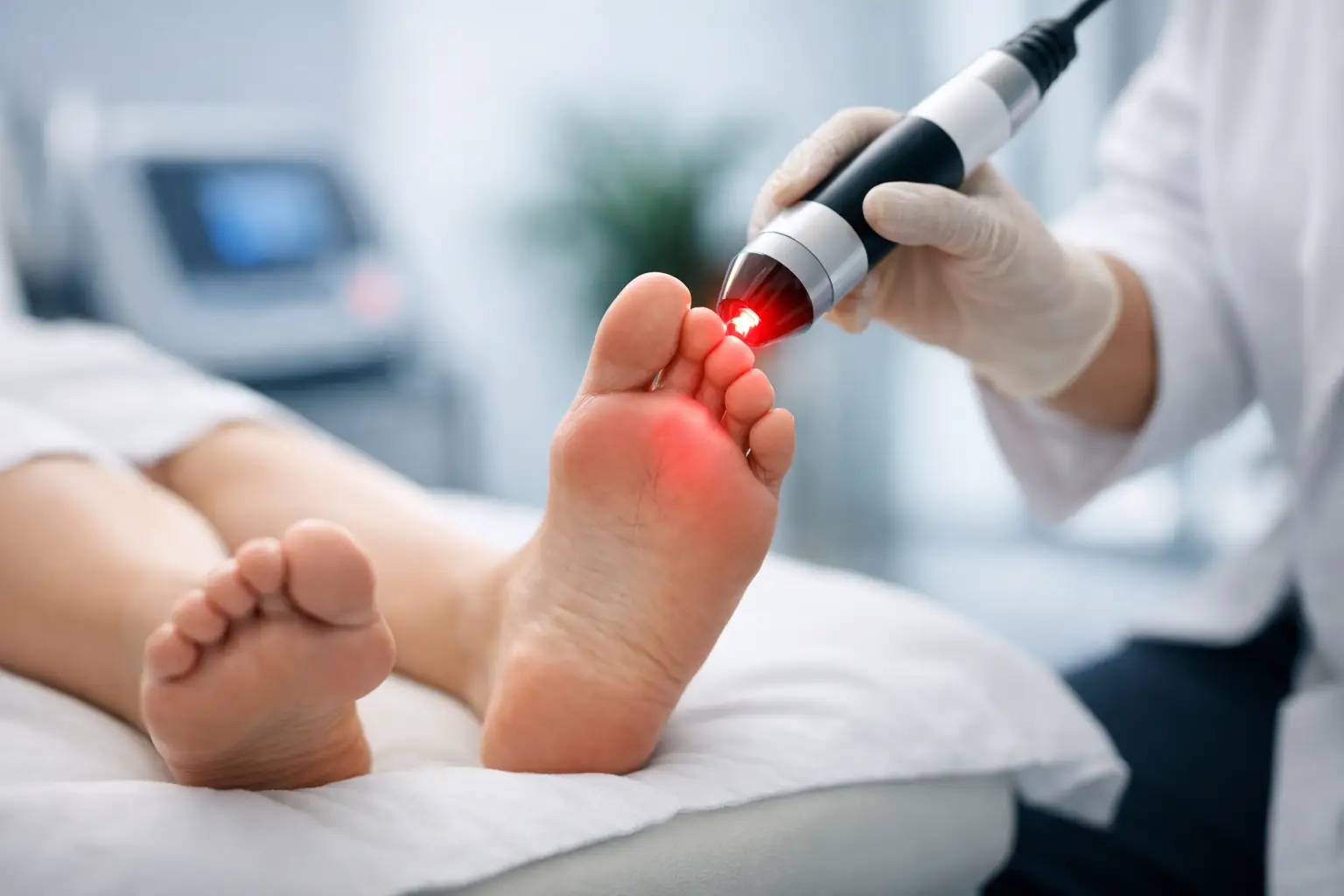
In most cases, no. Laser therapy is generally well tolerated. During treatment, the provider applies the laser over targeted areas of the foot or along the nerve pathway, depending on the findings. Patients often feel little to nothing, though some notice mild warmth. Sessions are usually quick, and there is typically no downtime afterward.
That convenience is a major reason people are interested in it. If you are balancing work, family responsibilities, exercise goals, and chronic symptoms, a treatment that does not require recovery time is appealing. You can usually return to normal activity right after the visit, unless your provider gives specific instructions based on your overall treatment plan.
What kind of results to expect
This is where realistic expectations matter. Laser therapy is not usually a one-visit fix, especially for symptoms that have been present for months or years. Nerves tend to recover slowly. Many patients need a series of visits, and the response can vary based on the cause of the neuropathy, the severity of symptoms, circulation, age, general health, and how long the problem has been present.
Some people report early improvement in burning pain or sensitivity. Others notice that they can stand or walk longer before symptoms increase. In cases where numbness is the main complaint, progress may be slower and more subtle. Sometimes the first win is not dramatic pain relief but better tolerance for daily activity.
That kind of progress still matters. If you can sleep better, walk more confidently, or get through the day with less irritation in your feet, that is meaningful improvement. The right goal is not just symptom reduction on paper. It is better function in real life.
Why laser therapy often works best with a broader rehab plan
Neuropathy symptoms in the feet rarely exist in isolation. A person may also have balance changes, calf tightness, reduced ankle mobility, altered gait, low back involvement, or weakness that makes every step less stable. Treating only the painful area can miss the bigger picture.
That is why many providers combine laser therapy with a broader rehab strategy. Depending on the case, that may include movement assessment, soft tissue work, targeted exercises, foot and ankle mobility work, balance training, and evaluation of the spine if nerve irritation may be coming from higher up the chain.
For example, if a patient has numbness in the feet along with sciatica-like symptoms, addressing spinal mechanics may be just as important as treating the feet directly. If a patient has neuropathy and poor balance, rehab should help reduce fall risk, not just chase pain. If walking mechanics are off, the feet may stay irritated even with good in-office treatment.
At Bell District Spine and Rehab, that whole-body view is one reason conservative care can be so effective. The focus is not simply on applying a therapy. It is on building a personalized plan that supports pain relief, movement, and daily function.
Questions to ask before starting care
If you are considering this treatment, ask what is causing the neuropathy symptoms and how the diagnosis was determined. Ask how many sessions are typically recommended, what changes should be expected, and how progress will be measured.
It also helps to ask what else is included in the plan. A thoughtful provider should be able to explain whether laser therapy is being used on its own or as part of a larger approach. That conversation can tell you a lot about the quality of care. Good treatment plans are specific. They are not built around generic promises.
When conservative care makes sense
Many people with neuropathy symptoms feel stuck between two unsatisfying options – just live with it, or rely heavily on medications. That is exactly why non-invasive treatment has become more attractive. Conservative care can make sense when symptoms are interfering with daily life, but the goal is still to improve function without jumping straight to more aggressive interventions.
That does not mean every case responds the same way. Sometimes laser therapy is a strong fit. Sometimes another treatment needs to come first. Sometimes the most effective plan combines several approaches over time. The key is matching the treatment to the problem, the patient, and the stage of recovery.
If your feet burn, tingle, or feel numb often enough that you have started planning your day around the symptoms, it may be time to look beyond temporary relief. The right care should help you move with more confidence, not just help you get through one more day.