
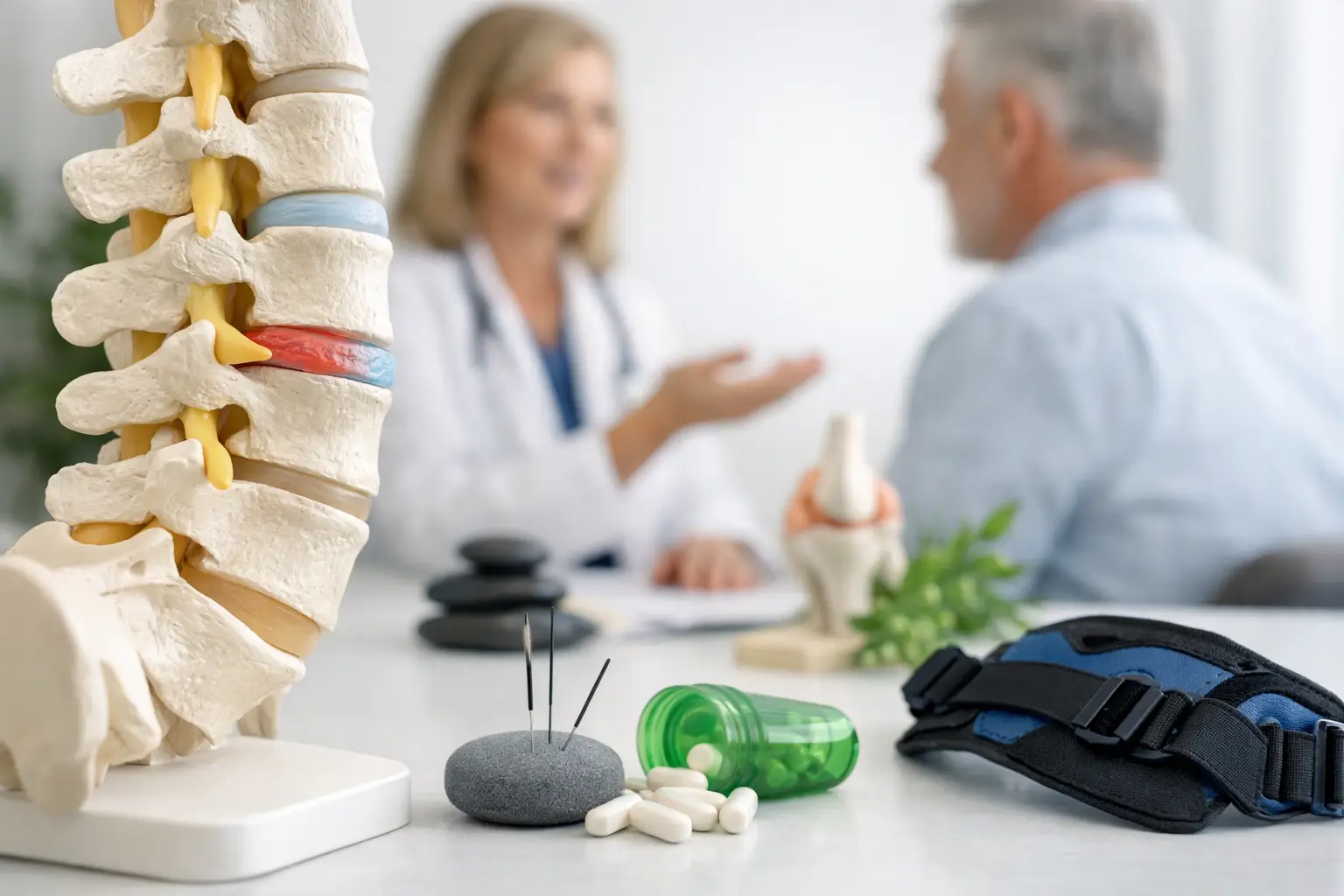
A degenerative disc disease diagnosis can make everyday decisions feel bigger than they should. Sitting through a workday, picking up a child, driving across Cedar Park, or returning to the gym may all bring on pain, stiffness, or leg symptoms. The good news is that surgery alternatives for degenerative disc disease can often help people reduce pain, move more comfortably, and rebuild confidence without immediately pursuing an invasive procedure.
Degenerative disc disease does not always mean a disc is rapidly getting worse or that surgery is inevitable. The term describes age-related changes in the spinal discs, which can lose hydration, height, and resilience over time. For some people, those changes cause little or no pain. For others, they contribute to inflammation, restricted movement, nerve irritation, or recurring episodes of back and neck pain.
The right next step depends on the source of symptoms, the degree of nerve involvement, daily demands, and how a person responds to conservative care. A thoughtful evaluation should look beyond an imaging report and focus on how the spine is functioning in real life.
When Degenerative Disc Disease May Not Need Surgery
Surgery may be considered when there is severe nerve compression, progressive weakness, spinal instability, or pain that has not improved after an appropriate course of conservative care. It can be an important option in specific cases. Still, imaging findings alone do not determine whether surgery is necessary.
Many adults have disc degeneration on an MRI or X-ray without significant symptoms. Conversely, someone may have substantial pain with relatively modest imaging changes. This is why a detailed assessment of movement, posture, strength, nerve symptoms, work demands, and prior injuries matters.
Conservative care is often a reasonable first approach when symptoms are manageable and there are no urgent neurological concerns. It is designed to improve the factors that can be changed: movement tolerance, muscle support, joint mobility, inflammation, and the way the body handles daily load.
Know the red flags
Back or neck pain deserves prompt medical attention if it comes with new bowel or bladder changes, numbness in the groin area, rapidly worsening weakness, major trauma, fever, unexplained weight loss, or a history that raises concern for infection or cancer. These symptoms need medical evaluation rather than a wait-and-see approach.
Surgery Alternatives for Degenerative Disc Disease That Focus on Function
There is no single non-surgical treatment that fits every disc condition. The most effective plan usually combines targeted hands-on care, progressive rehabilitation, and practical changes that make daily movement less aggravating.
Chiropractic care and manual treatment
Gentle chiropractic adjustments and manual therapy can help restore motion in spinal joints that have become restricted or are moving poorly around an irritated area. For the right patient, this may reduce stiffness, improve mobility, and make it easier to participate in rehabilitation.
Care should be individualized. Someone in an acute flare may need a lighter approach focused on comfort and movement tolerance, while an active adult with recurring stiffness may benefit from a more progressive plan. A provider should also modify care when symptoms suggest significant nerve irritation or when a technique is not well tolerated.
Spinal decompression therapy
Non-surgical spinal decompression uses controlled traction to gently reduce pressure through the spine. For some patients with disc-related pain, sciatica, or symptoms aggravated by compression, this approach may help create a more comfortable environment for movement and recovery.
Decompression is not a cure for every disc problem, and it is not appropriate for every health history. Its role is best understood as one part of a broader plan, not a stand-alone answer. When paired with mobility work and strengthening, it can help patients progress from painful movement to more normal activity.
Progressive rehabilitation and movement retraining
Rehabilitation is where lasting improvement is built. Pain often changes the way people move. They may brace constantly, avoid bending, shift weight to one side, or stop using their hips and core effectively. Those compensations can keep the spine sensitive even after the initial flare settles.
A structured rehab program may include mobility exercises, core stabilization, hip and glute strengthening, balance work, and gradual exposure to activities that have become difficult. The goal is not to make the spine rigid. It is to help the body become stronger, more coordinated, and better prepared for real-life demands.
For example, a desk-based professional may need help tolerating sitting and getting in and out of a car. A recreational athlete may need a carefully paced return to lifting, running, or rotational movements. An older adult may need better leg strength and balance to stay active without fearing a painful flare.
Soft tissue techniques, dry needling, laser, and shockwave therapy
Disc pain rarely affects the disc alone. Protective muscle tension, trigger points, and irritated surrounding tissues can add to discomfort and restrict motion. Soft tissue techniques may help reduce muscular guarding and improve how the area moves.
Functional dry needling can be considered for muscle-related tightness and trigger points when clinically appropriate. Laser therapy and shockwave therapy may also be used in selected cases to support pain reduction and tissue recovery, particularly when soft tissue involvement is contributing to the problem. These services should support an active recovery plan, not replace it.
Daily Habits That Can Reduce Disc-Related Flares
A painful back does not always need complete rest. In fact, prolonged inactivity can reduce conditioning and make routine tasks feel harder. The better approach is usually relative rest: temporarily reducing movements that sharply increase symptoms while staying as active as the condition allows.
Short, frequent walks can be more tolerable than one long walk. Changing positions regularly can be more helpful than trying to maintain perfect posture for hours. When lifting, using the hips and legs, keeping an object close to the body, and avoiding sudden twisting under load can reduce unnecessary strain.
Sleep also matters. The best position is the one that allows restful sleep with the least discomfort. Some people feel better on their side with a pillow between the knees; others prefer lying on their back with support under the knees. There is no universal position, so comfort and symptom response should guide the choice.
Weight management, regular physical activity, and avoiding tobacco can support overall spine health as well. These changes are not quick fixes, but they can improve the body’s capacity to recover and tolerate activity over time.
What a Personalized Conservative Care Plan Looks Like
Effective non-surgical care begins with identifying the pattern behind the pain. Is discomfort primarily in the low back or neck? Does it travel into an arm or leg? Is bending, sitting, standing, walking, or lifting the main trigger? Are there signs that a hip, knee, shoulder, or poor movement pattern is changing the load on the spine?
At Bell District Spine and Rehab, a care plan can combine chiropractic treatment, spinal decompression, soft tissue care, movement analysis, and rehabilitation based on what the patient needs most. Progress is measured by more than a pain score. Better sleep, easier workdays, longer walks, improved strength, and a return to favorite activities are meaningful signs that recovery is moving in the right direction.
A plan should also change as symptoms change. Early care may emphasize pain relief and gentle mobility. As tolerance improves, the focus should shift toward strength, endurance, and independent strategies that help prevent repeated flare-ups.
When It Is Time to Reconsider Surgical Consultation
Choosing conservative care does not mean ignoring symptoms or delaying necessary medical treatment. If pain continues to severely limit daily life despite a well-directed treatment plan, or if numbness, weakness, or loss of function progresses, a surgical consultation may be appropriate.
The decision is not simply surgery versus no surgery. It is about understanding the diagnosis, trying appropriate non-invasive options when safe, and choosing the level of care that gives the best chance of meaningful improvement. A clear, collaborative plan can make that decision less intimidating.
Disc degeneration may be part of the picture, but it does not have to define what you can do. With the right guidance, consistent rehabilitation, and care matched to your symptoms, many people can return to work, family activities, exercise, and daily movement with less pain and greater confidence.