
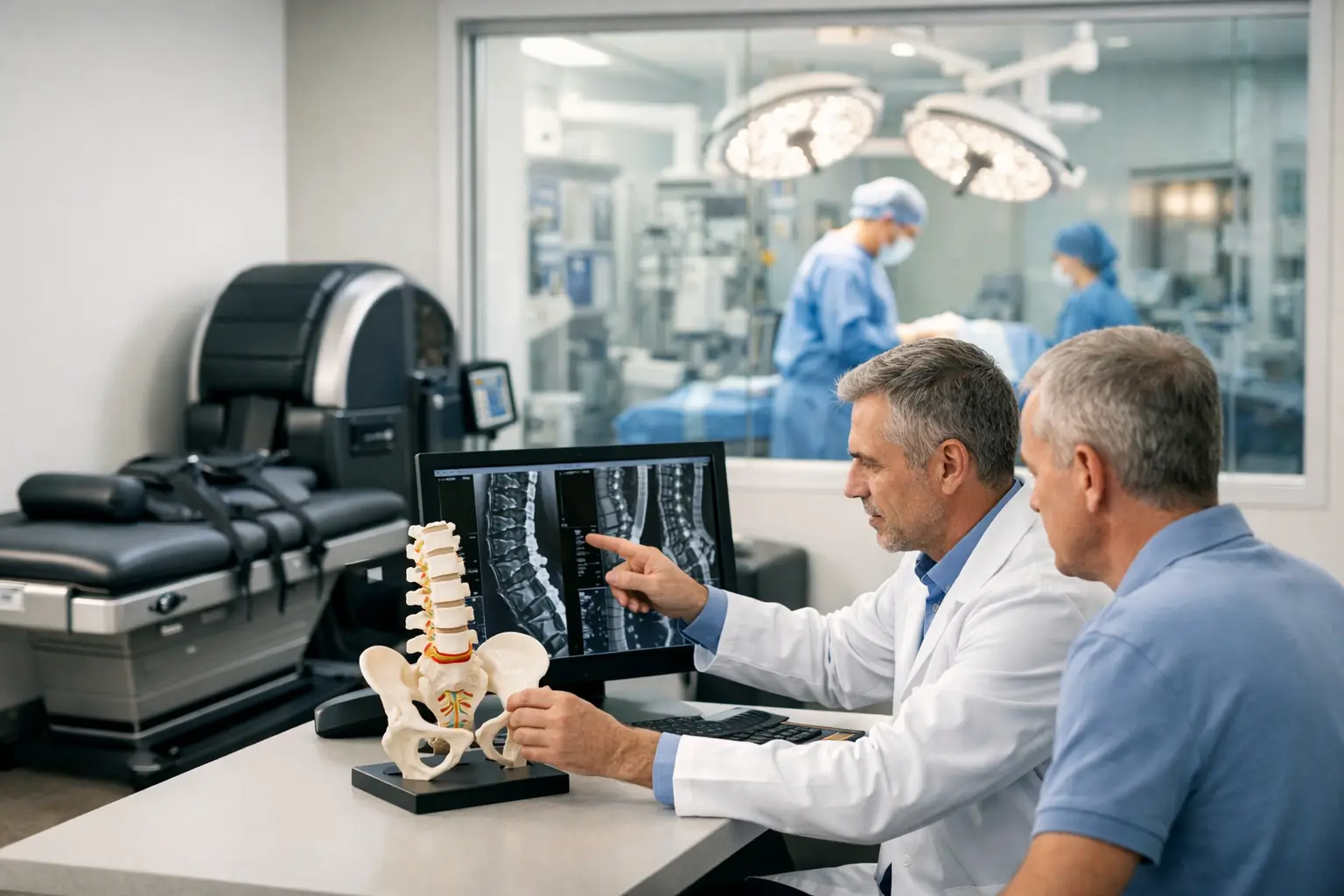
A painful trip from the car to your desk, a numb leg after standing in line, or sleep interrupted by back pain can make surgery feel like the only answer. But when considering spinal decompression vs back surgery, the right next step depends on what is causing your symptoms, how severe they are, and whether there are signs of nerve damage that need urgent medical attention.
For many people with disc-related low back pain, sciatica, or stiffness that limits daily activity, conservative care deserves a thoughtful trial before an invasive procedure. For others, surgery may be the appropriate and necessary choice. The goal is not to delay needed care. It is to match the level of treatment to the condition, your function, and your safety.
Spinal Decompression vs Back Surgery: The Key Difference
These terms sound similar, but they describe very different approaches.
Non-surgical spinal decompression is a conservative therapy that uses a specialized traction system to gently and repeatedly change pressure through the spine. The treatment is intended to reduce stress on irritated spinal structures while supporting movement and healing. It is often paired with chiropractic care, manual therapy, soft tissue treatment, and a personalized rehabilitation plan.
Back surgery is an invasive medical procedure performed to address a structural problem in the spine. Depending on the diagnosis, a surgeon may remove part of a disc, create more room around a compressed nerve, stabilize a spinal segment with a fusion, or perform another procedure intended to relieve nerve pressure or correct instability.
Neither option is automatically better. Non-surgical decompression generally aims to improve symptoms and function without altering spinal anatomy. Surgery directly changes anatomy and may be the best option when there is a clear structural issue causing serious or progressive neurologic problems.
What non-surgical spinal decompression can address
Spinal decompression therapy may be considered for people whose symptoms appear related to disc irritation, certain disc bulges or herniations, sciatica, degenerative disc changes, or recurring mechanical low back pain. Some patients also seek it when sitting, bending, lifting, or prolonged standing consistently aggravates their symptoms.
A decompression session is typically comfortable and controlled. The patient lies on a treatment table while a harness and computerized system deliver gentle traction cycles. The plan is not simply to pull on the spine. It is to use targeted loading and unloading alongside care that improves mobility, muscle control, and tolerance for everyday movement.
Results vary because back pain has many causes. A disc finding on an MRI does not always explain a person’s pain, and a treatment that helps one patient may not be appropriate for another. A thorough examination helps determine whether decompression is a reasonable fit and whether the plan should focus more heavily on joint mobility, soft tissue restrictions, strength, movement mechanics, or medical referral.
What back surgery is designed to do
Surgery may be recommended when imaging findings, symptoms, and a neurologic examination point to significant nerve compression or spinal instability. Common procedures include discectomy or microdiscectomy for certain herniated discs, laminectomy for spinal stenosis, and fusion when stabilization is necessary.
The potential benefit is meaningful when a compressed nerve is causing severe leg pain, weakness, or loss of function and conservative care has not provided adequate relief. In the right situation, surgery can reduce pressure on a nerve and help a patient return to activity.
It also comes with trade-offs. Recovery may require time away from work, activity restrictions, post-operative rehabilitation, and management of surgical risks such as infection, bleeding, blood clots, persistent pain, or complications related to anesthesia. Fusion procedures can also change how forces are distributed through nearby spinal segments. These realities do not mean surgery is a poor choice. They mean it should be a well-informed one.
When Conservative Care Often Makes Sense First
For most uncomplicated episodes of low back pain or sciatica, a conservative approach is commonly appropriate before surgery is considered. This is especially true when symptoms are painful but stable, strength is intact, and there are no red-flag signs of serious nerve involvement.
At Bell District Spine and Rehab, care begins with understanding how your pain behaves in real life. Does it travel down the leg? Is it worse when coughing, sitting, or walking? Has your mobility changed after an injury? Are certain movements weak, guarded, or poorly controlled? Those answers help guide a plan that may include spinal decompression, chiropractic adjustments, targeted soft tissue work, and progressive rehabilitation.
The rehab component matters. Passive treatment can help calm pain and improve movement, but lasting progress often requires rebuilding capacity. That may mean restoring hip and core control, improving lifting mechanics, addressing mobility limitations, and gradually returning to activities that have become difficult.
A conservative plan is not the same as waiting and hoping. It should have clear goals: less pain with daily tasks, improved range of motion, better walking or standing tolerance, reduced leg symptoms, and stronger movement confidence. If progress stalls, symptoms worsen, or the exam reveals concerns that require a different level of care, the plan should change.
When Back Surgery May Be the Better Choice
There are situations where delaying a surgical evaluation is not advisable. Seek urgent medical evaluation for new bowel or bladder changes, numbness in the groin or saddle area, rapidly worsening leg weakness, severe trauma, fever with significant back pain, or unexplained weight loss accompanied by persistent pain. These symptoms can indicate conditions that need immediate medical attention.
Surgical consultation may also be appropriate for persistent, disabling nerve pain or weakness that has not improved with a well-directed course of conservative care. The decision is usually strongest when three factors align: your symptoms follow a recognizable pattern, the physical exam shows nerve involvement, and imaging confirms a structural issue that matches both.
For example, a patient with a large disc herniation, worsening foot weakness, and MRI evidence of compression affecting the same nerve may need a surgical opinion sooner than someone with intermittent back pain and no neurologic deficit. The severity of pain matters, but the progression of weakness and loss of function can matter even more.
Comparing Recovery, Risk, and Expectations
Non-surgical decompression has no incision, no anesthesia, and generally no surgical recovery period. Patients can usually return to normal routines after treatment, though their care plan may include temporary activity modifications while symptoms settle. The main commitment is consistency. Improvement often occurs through a series of visits combined with the right home and rehab strategies.
Surgery may offer more immediate relief in carefully selected cases, particularly when nerve compression is the primary source of severe symptoms. Recovery, however, is more involved. A patient may need medication, wound care, activity restrictions, follow-up appointments, and structured rehabilitation before returning to heavier work, sports, or demanding household tasks.
Expectations should be realistic with either path. Decompression is not a guarantee that every disc issue will resolve, and surgery is not a guarantee that all back pain will disappear. Pain can have multiple contributors, including joint changes, deconditioning, nerve sensitivity, sleep disruption, stress, and movement habits. The best care plan addresses the factors that can be changed while staying alert to those that require medical or surgical management.
How to Make a More Confident Decision
Start with a complete assessment rather than choosing a treatment based on an MRI report, a recommendation from a friend, or fear of surgery. A clinician should evaluate your symptoms, medical history, strength, reflexes, sensation, mobility, and functional limitations. Imaging can be valuable, but it should support the clinical picture rather than replace it.
Ask direct questions: What structure is believed to be causing my symptoms? Are there signs of nerve damage? What are the expected benefits and limitations of conservative care? How long is it reasonable to try it? What changes would mean I need a surgical evaluation?
For Cedar Park-area patients, the most useful next step is often a personalized examination that identifies whether conservative treatment is appropriate and what it should include. You deserve a plan that respects your goals, protects your safety, and gives you a practical path back to moving with less pain and more confidence.