
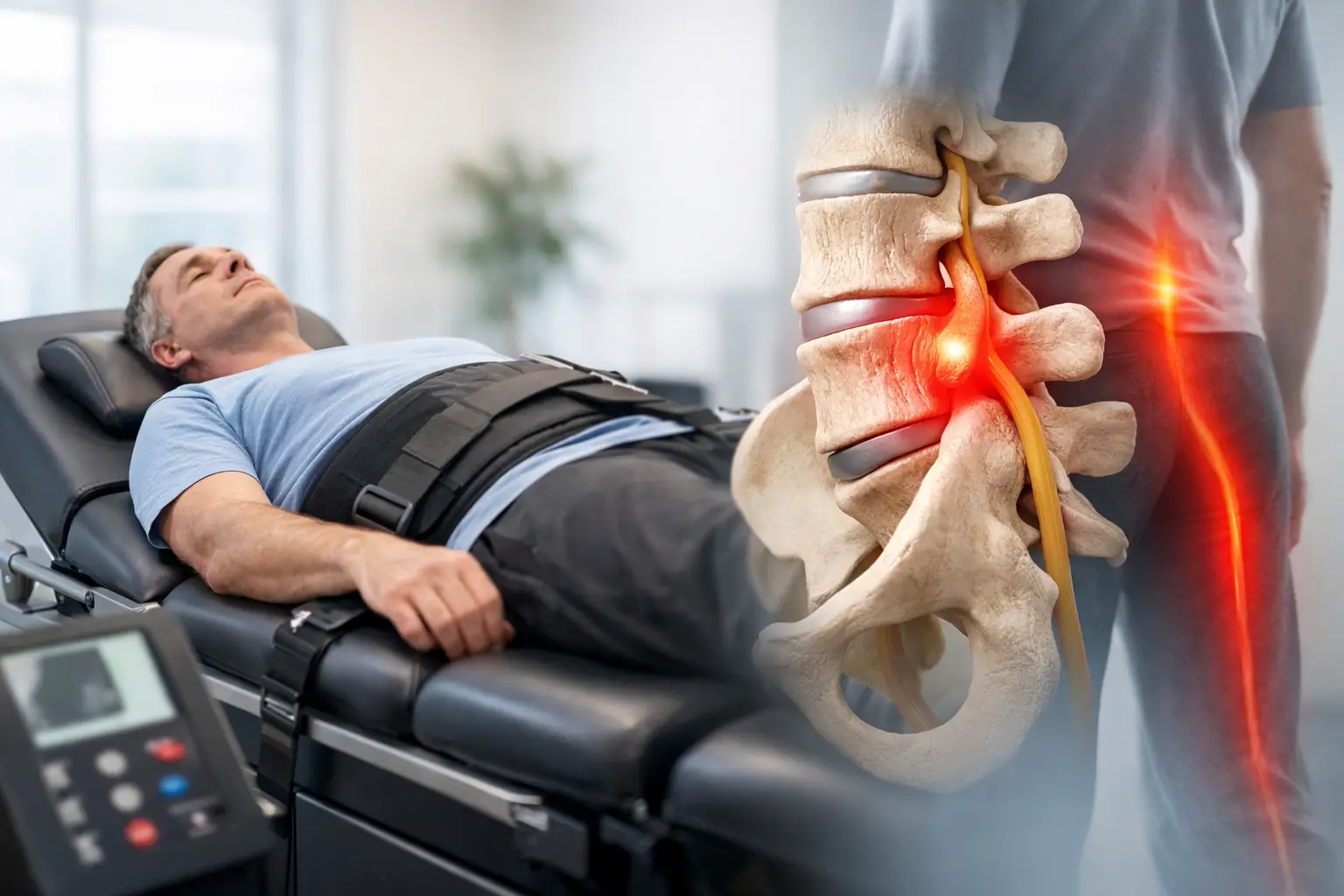
Sciatica can make ordinary movements feel like calculated risks. Sitting through a work meeting, loading groceries into the car, or taking a few steps after getting out of bed may trigger sharp pain, burning, tingling, or numbness that travels from the low back into the buttock and leg. So, can spinal decompression help sciatica? For some patients, yes. When sciatic symptoms are related to disc pressure or certain mechanical problems in the low back, non-surgical spinal decompression may be a useful part of a personalized treatment plan.
The key is identifying what is irritating the sciatic nerve in the first place. Sciatica is a symptom pattern, not a diagnosis by itself. Effective care starts with an evaluation that looks beyond where the pain travels and focuses on why it is happening.
What sciatica actually means
The sciatic nerve is the largest nerve in the body. It begins in the lower spine, travels through the pelvis and buttock, and branches down each leg. Sciatica occurs when one or more of the nerve roots that contribute to this nerve become irritated, compressed, or inflamed.
A herniated or bulging lumbar disc is a common cause. The soft inner material of a disc can press on a nearby nerve root, while disc height loss and age-related changes can reduce the space where nerves exit the spine. Spinal stenosis, joint irritation, muscle tension, and movement-related strain can also contribute to sciatic symptoms.
That is why two people with “sciatica” may need very different care. One person may have symptoms mainly when bending forward because of a disc-related issue. Another may feel worse standing or walking because of narrowing around the nerves. A thorough assessment helps determine whether decompression, chiropractic care, rehabilitation, or another conservative approach is appropriate.
How spinal decompression may help sciatica
Non-surgical spinal decompression uses a computerized traction table to apply gentle, controlled pulling and relaxation cycles to the lower back. The goal is not to force anything back into place. Instead, the treatment is designed to reduce pressure within spinal discs and improve the space around irritated nerve structures.
For patients whose sciatica is associated with a disc bulge, disc herniation, or disc degeneration, this change in pressure may help relieve stress on the affected nerve root. Reducing disc pressure can also support fluid and nutrient movement within the disc, which matters because discs have a limited direct blood supply.
Many patients describe the session as comfortable and gradual. They are secured with supportive harnesses while the table moves through customized traction cycles. It should not feel like an aggressive stretch or a painful procedure. Treatment settings are adjusted based on the patient’s condition, tolerance, body size, and symptoms.
Relief is rarely the result of one appointment. Some patients notice changes early, such as less leg pain or easier movement when standing up. Others need a series of treatments before symptoms settle. Progress depends on the underlying condition, how long symptoms have been present, daily activity demands, and whether the patient follows through with rehab and home-care guidance.
Decompression works best as part of a plan
Spinal decompression can address one important contributor to sciatica: mechanical pressure in the lower spine. But pain often changes the way a person moves. They may brace their back, shift weight away from one side, lose hip mobility, or stop using core muscles effectively. Those compensations can keep the problem going even when the initial irritation improves.
For that reason, a more complete care plan may combine decompression with targeted chiropractic adjustments, soft tissue treatment, movement analysis, and progressive rehabilitation exercises. The goal is to calm the irritated area while restoring the strength, mobility, and movement control needed for daily life.
For example, an active adult with a disc-related flare-up may first need care that reduces leg pain enough to walk and sleep more comfortably. As symptoms improve, treatment can shift toward hip mobility, core stability, and safe return to lifting, running, golf, or work tasks. That progression is more useful than treating pain in isolation.
Who may be a good candidate for spinal decompression?
People with low-back pain that radiates into the buttock, thigh, calf, or foot may be candidates, especially if an exam suggests a disc-related source. Decompression may also be considered for recurring symptoms associated with degenerative disc changes, certain cases of spinal stenosis, or persistent back and leg pain that has not responded fully to rest and basic self-care.
A good candidate is not simply someone who has leg pain. The pattern of symptoms matters. A provider will consider when the pain began, what movements aggravate or relieve it, whether numbness or weakness is present, previous injuries, medical history, and the results of an orthopedic and neurological exam.
Imaging may be useful in some cases, particularly when symptoms are severe, longstanding, or not improving as expected. However, an MRI finding alone does not determine treatment. Many adults have disc bulges without pain, while others have significant symptoms with relatively modest imaging changes. Your symptoms, function, and examination findings all matter.
When decompression is not the right starting point
Non-surgical spinal decompression is not appropriate for every cause of sciatica. Certain spinal fractures, severe osteoporosis, spinal instability, active infection, some implanted devices, and particular medical conditions may make traction-based care unsuitable. Pregnancy and prior spinal surgery also require an individualized discussion.
More urgently, new or worsening leg weakness, loss of bowel or bladder control, numbness in the groin or saddle area, fever with severe back pain, or pain following major trauma needs prompt medical evaluation. These symptoms can signal conditions that should not be managed with routine conservative care alone.
Even without those red flags, some patients need a different first step. If symptoms are driven primarily by hip disease, significant peripheral neuropathy, vascular problems, or another non-spinal condition, decompression is unlikely to be the main answer. A responsible treatment plan does not try to fit every patient into the same service.
What you can do between visits
During a sciatic flare-up, complete bed rest often makes stiffness and deconditioning worse. Gentle movement is usually more helpful, but the right movement depends on your symptom pattern. Short walks, changing positions regularly, and avoiding prolonged slumped sitting can be reasonable starting points if they do not increase leg symptoms.
Try to notice whether pain stays in the low back or travels farther down the leg. In general, symptoms that move out of the foot or calf and closer to the back can be a positive sign. Increasing numbness, weakness, or pain spreading farther down the leg deserves attention.
Avoid repeatedly testing painful movements, heavy lifting, and forceful stretching during the most irritable stage. Stretching can feel productive, but an irritated nerve does not always respond well to aggressive hamstring or back stretches. Your care team can help you choose exercises that match your condition rather than aggravate it.
A personalized approach to sciatica care in Cedar Park
At Bell District Spine and Rehab, care for sciatica begins with listening to how pain is affecting your work, sleep, family life, and ability to move. From there, treatment can be tailored around the findings of your exam and your recovery goals. Spinal decompression may be included when it fits the clinical picture, alongside hands-on care and rehabilitation designed to help your body move with greater confidence.
Sciatica can be frustrating, particularly when it disrupts the routines that keep you active and independent. The most helpful next step is not guessing which treatment you need, but getting a clear assessment of what may be driving your symptoms and building a conservative plan that gives you a practical path forward.