
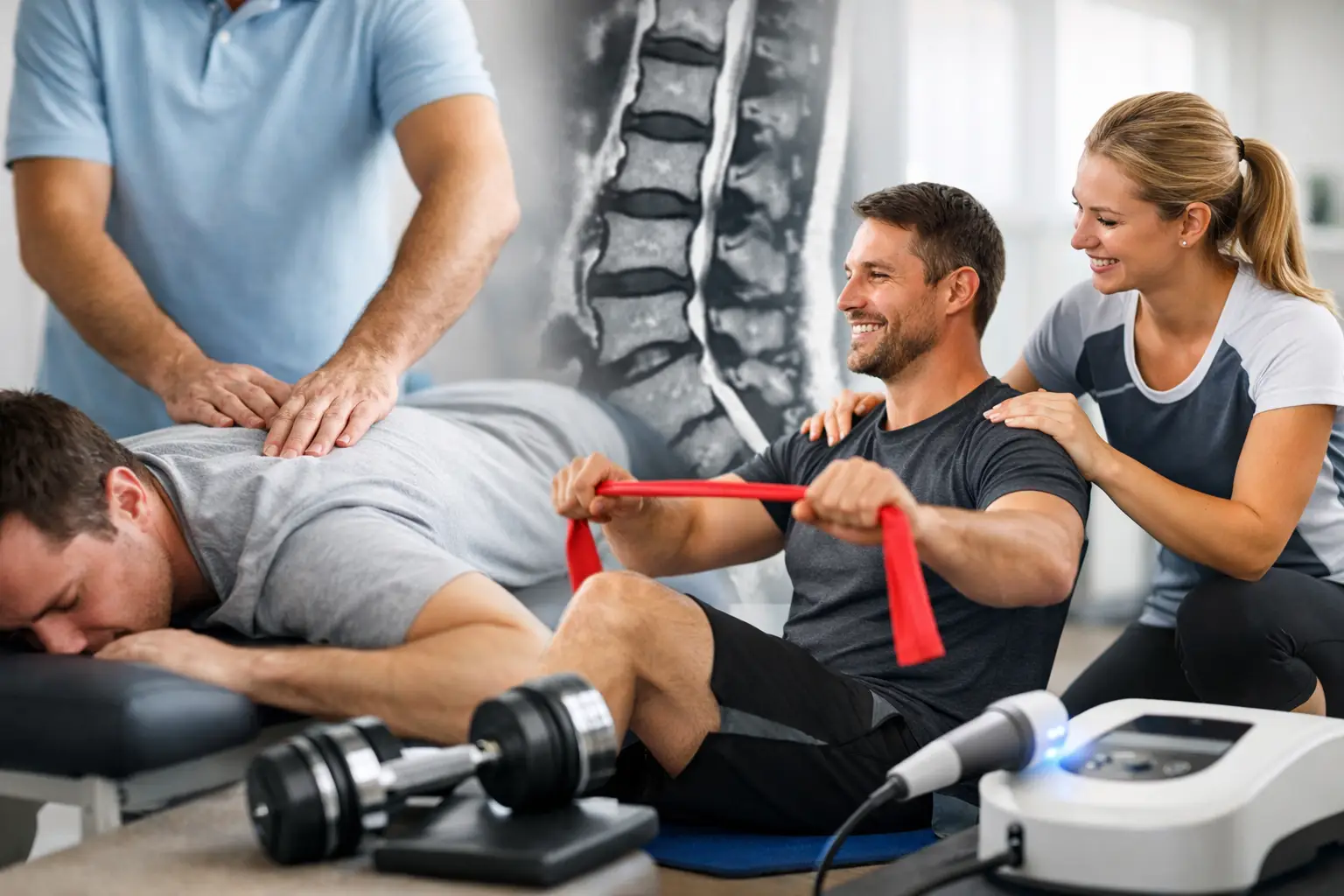
A disc problem can make ordinary movements feel risky. Sitting through a meeting, getting out of the car, lifting a child, or returning to the gym may trigger sharp back pain, stiffness, or pain that travels into the buttock and leg. The top therapies for disc pain are not one-size-fits-all treatments. The right plan depends on whether a disc is irritated, bulging, herniated, degenerating, or placing pressure on a nearby nerve.
For many people, conservative care can reduce symptoms, improve mobility, and help them return to normal activity without relying on heavy medication or surgery. The goal is not simply to quiet pain for a day. It is to reduce stress on the injured area, restore better movement patterns, and build the strength needed to protect the spine over time.
Why Disc Pain Needs an Individualized Plan
Spinal discs are cushions between the bones of the spine. They help absorb force and allow the back and neck to move. With injury, repetitive strain, age-related changes, or poor loading mechanics, a disc can become inflamed or shift in a way that irritates surrounding tissues or nerves.
Symptoms vary widely. One person may have localized low back pain after bending, while another may have sciatica, numbness, tingling, or weakness down one leg. Neck disc irritation can also refer pain into the shoulder, arm, or hand. That difference matters because the best care plan for stiffness and mechanical back pain may not be the same as a plan for active nerve irritation.
A thorough evaluation should look beyond the image or diagnosis alone. Movement quality, posture, strength, work demands, activity level, symptom triggers, and neurological signs all help determine which therapies are appropriate and when to progress them.
Top Therapies for Disc Pain: A Conservative Approach
Chiropractic Care and Gentle Spinal Adjustments
Chiropractic care can be helpful when joint restriction, muscle guarding, and altered spinal mechanics are contributing to disc-related pain. Controlled adjustments or mobilization techniques may improve motion in restricted spinal joints and reduce the strain placed on surrounding muscles.
This does not mean every patient with a disc issue needs the same adjustment or force. When symptoms are acute or a nerve is highly sensitive, care may begin with gentler techniques, positioning strategies, and soft tissue work. As pain settles and movement improves, treatment can be adjusted to support a safer return to normal activity.
Spinal Decompression Therapy
Spinal decompression is a non-surgical therapy designed to gently unload the spine through controlled traction. For appropriate patients, it may reduce pressure on irritated disc structures and create a more comfortable environment for movement and recovery.
Decompression is often considered for persistent low back or neck pain, disc bulges, herniated discs, sciatica, and degenerative disc changes. It is not a guaranteed solution, and it is not right for every condition. A clinical evaluation is essential, particularly for patients with severe osteoporosis, certain spinal instability concerns, fractures, or other medical factors that may make traction inappropriate.
When used as part of a complete plan, decompression can give patients a window of relief that makes it easier to begin the active rehabilitation work that supports lasting progress.
Targeted Rehabilitation and Core Stability Training
Rehabilitation is one of the most valuable parts of disc pain recovery because pain relief alone does not automatically correct the movements that contributed to the problem. A structured program can improve how the hips, pelvis, core, and spine work together during standing, bending, walking, lifting, and exercise.
Early rehab may focus on comfortable movement, breathing mechanics, gentle mobility, and positions that calm symptoms. As tolerance improves, exercises can progress to core endurance, hip strength, balance, and functional lifting patterns. The emphasis should be on control and consistency, not pushing through sharp pain.
For example, an active adult with a painful disc may need help returning to golf, running, or strength training. A working parent may need strategies for lifting children, carrying groceries, and sitting with less discomfort. Good rehab connects the exercises in the clinic to the movements people need in real life.
Manual Therapy and Soft Tissue Techniques
Disc pain frequently causes the body to compensate. Muscles in the low back, hips, glutes, and legs may tighten to protect the painful area. While that guarding is understandable, it can limit movement and maintain a cycle of stiffness and pain.
Manual therapy and soft tissue techniques can address restricted muscles and connective tissue around the spine and hips. These therapies are often used alongside chiropractic care and rehab to improve comfort, reduce tension, and help patients move more freely.
The benefit is not just feeling looser after an appointment. Improved soft tissue mobility can help a patient perform corrective exercises with better form and less strain.
Functional Dry Needling
For some patients, functional dry needling may be useful when muscle trigger points and protective spasms are limiting recovery. The technique targets tight, irritable muscle tissue to reduce tension and improve movement tolerance.
Dry needling is not a treatment for the disc itself. Instead, it can be a valuable supporting therapy when secondary muscle dysfunction is making it difficult to sit, walk, or begin rehabilitation. It should be selected based on the patient’s presentation, health history, and comfort level.
Laser Therapy for Pain and Tissue Support
Laser therapy may be incorporated into a conservative plan to support pain reduction and tissue recovery. It uses focused light energy and is typically painless, quick, and non-invasive. For patients struggling with inflammation, sensitivity, or muscle tightness around a disc injury, it can be a useful addition to hands-on care and active rehabilitation.
Like other passive therapies, laser therapy works best when it supports a broader plan rather than replacing movement-based recovery. Relief is more meaningful when it helps someone walk farther, tolerate work, sleep better, or complete the exercises that restore function.
What Recovery Should Look Like
The best treatment plan is usually layered rather than dependent on a single therapy. A patient may begin with symptom-calming care, spinal decompression, and gentle movement. As symptoms improve, the focus should shift toward strength, mobility, movement retraining, and practical changes at home or work.
That progression matters. Too much rest can lead to more stiffness, weakness, and fear of movement. On the other hand, returning too quickly to heavy lifting, repetitive bending, or high-impact exercise can aggravate an already sensitive disc. The right pace depends on symptoms, function, and how the body responds between visits.
At Bell District Spine and Rehab, care can combine chiropractic treatment, decompression, hands-on therapies, movement analysis, and personalized rehabilitation to address both immediate discomfort and the factors that may keep disc pain returning.
When Disc Pain Requires Medical Attention
Most disc pain can be evaluated and managed conservatively, but certain symptoms require prompt medical assessment. Seek urgent care for new or worsening leg weakness, loss of bowel or bladder control, numbness in the saddle area, severe pain after significant trauma, fever with back pain, or unexplained weight loss.
Persistent symptoms also deserve a professional evaluation, especially when pain is traveling down an arm or leg, sleep is consistently disrupted, or normal daily activities are becoming harder. Imaging may be appropriate in some cases, but it is not always the first step. A careful exam often provides important direction about the safest treatment options.
Disc pain can be discouraging, particularly when it interrupts work, family time, or the activities that keep you active. A personalized, non-invasive plan can help you move from protecting your back at every turn to trusting it again, one comfortable movement at a time.