
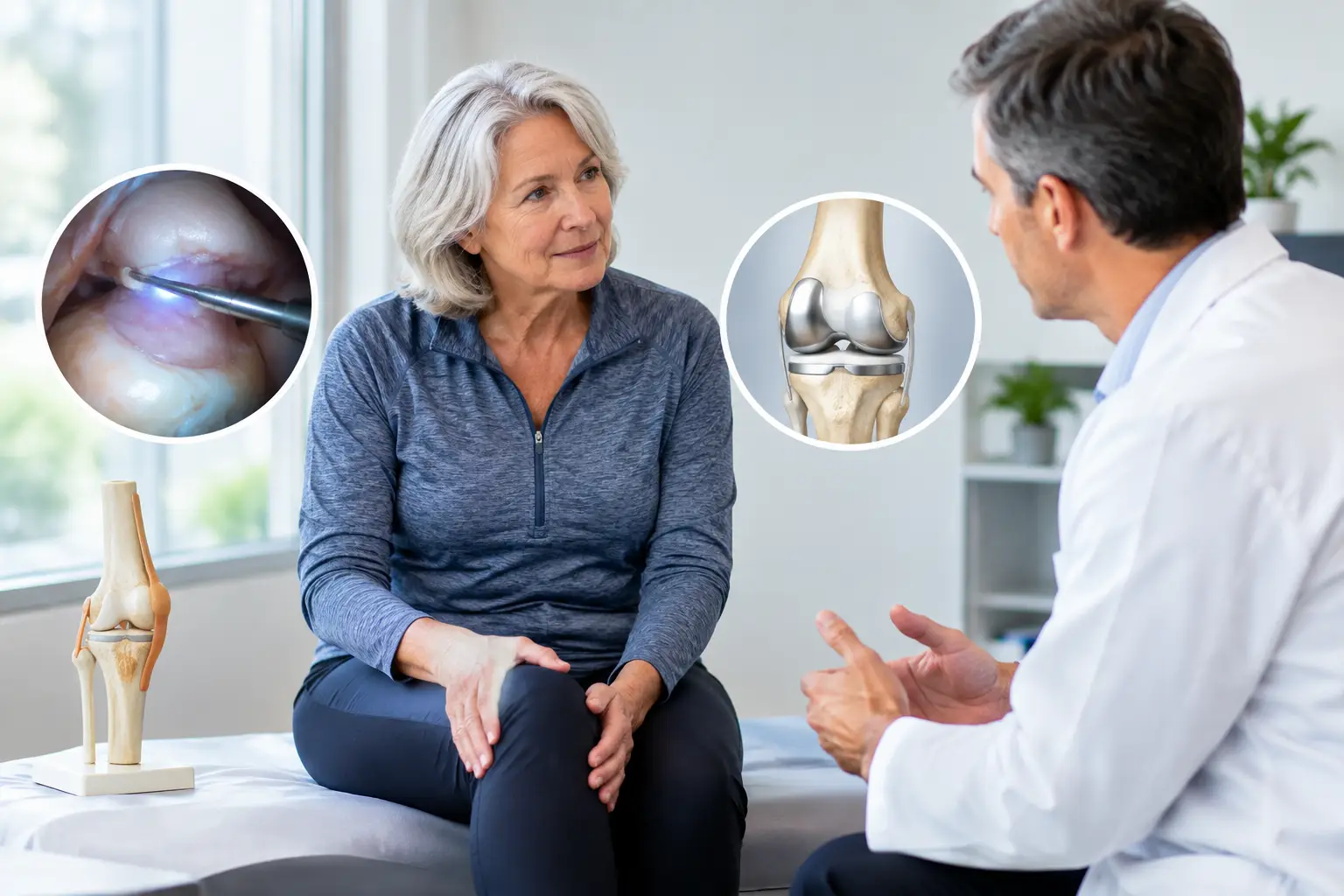
A knee that hurts on stairs, swells after a short walk, or keeps you from getting through a workday can make surgery feel like the only answer. But knee decompression versus replacement is not a simple choice between a quick fix and a major operation. The right path depends on what is causing your pain, how advanced the joint damage is, what you need your knee to do, and whether conservative care has been fully explored.
For many people in Cedar Park, Leander, Round Rock, and Austin, a personalized non-surgical plan can reduce symptoms and improve movement enough to postpone or avoid surgery. For others, knee replacement is the more appropriate option because the joint has reached a point where conservative care can no longer provide meaningful function. A careful evaluation helps separate those situations.
What Knee Decompression Is Designed to Do
Knee decompression is a non-invasive treatment approach intended to gently reduce compressive stress within and around the knee joint. Depending on the individual treatment plan, it may involve specialized traction or unloading techniques, hands-on care, targeted rehabilitation, and supportive therapies that address the muscles and soft tissues influencing the knee.
The goal is not to “put cartilage back” or promise a cure for arthritis. Rather, decompression aims to create a more comfortable environment for movement by reducing pressure, improving joint mechanics, and helping the surrounding muscles better support the knee. When pain decreases, patients may be able to move more normally, strengthen more effectively, and return to activities that have become difficult.
This approach can be especially useful when knee pain is being amplified by stiffness, poor movement patterns, weakness in the hips or quadriceps, old injuries, altered gait, or repeated overload. A thorough exam should look beyond the knee itself. Limited ankle mobility, hip weakness, or a habit of favoring one side can place more force on an already irritated joint.
At Bell District Spine and Rehab, knee care may combine decompression with movement analysis, chiropractic and manual techniques, rehab exercises, soft tissue treatment, laser therapy, or shockwave therapy when clinically appropriate. The purpose is to build a plan around the cause of the problem and the patient’s daily goals, not just the location of pain.
Knee Replacement: When Surgery Becomes the Better Option
Knee replacement, also called knee arthroplasty, is a surgical procedure that replaces damaged portions of the knee joint with artificial components. A partial replacement addresses one compartment of the knee, while a total knee replacement addresses more extensive joint damage. It is most often considered for severe osteoarthritis, although certain injuries and other joint conditions may also lead to a surgical recommendation.
Replacement can provide substantial pain relief and improved function for appropriate candidates. It is not a minor procedure, however. Recovery requires preparation, post-operative rehabilitation, pain management, and consistent effort to restore strength and range of motion. Most patients need weeks to resume many daily tasks and months for a fuller recovery.
Surgery may make sense when imaging and clinical findings show advanced structural damage, pain remains severe despite appropriate conservative care, and the knee is limiting basic quality of life. Examples include pain that regularly interrupts sleep, an inability to walk short distances without significant symptoms, marked loss of motion, or progressive deformity that affects stability and function.
A replacement is not automatically the next step just because an X-ray shows arthritis. Imaging matters, but the decision should also account for symptoms, physical exam findings, health history, functional limits, and your response to non-surgical treatment. Some people have significant arthritis visible on imaging but remain active with manageable symptoms. Others have less dramatic imaging findings but need targeted care for pain and movement limitations.
Knee Decompression Versus Replacement: Key Differences
The most obvious difference is invasiveness. Knee decompression is a conservative, in-office approach that does not remove or replace joint tissue. Knee replacement is surgery involving anesthesia, an incision, implanted components, and a structured recovery period.
The recovery experience is also very different. Most people can continue normal daily activities around decompression appointments, although activity modification may be recommended while symptoms calm down. Knee replacement requires time away from usual routines, help at home for some patients, formal rehabilitation, and a temporary adjustment to work, driving, and exercise.
Expected outcomes should be viewed differently as well. Decompression and rehabilitation are intended to reduce pain, improve mobility, support joint function, and help patients stay active. They do not reverse end-stage arthritis or repair a severely damaged joint surface. Replacement may offer stronger relief when the joint is truly beyond what conservative treatment can reasonably manage, but it also brings surgical risks, including infection, blood clots, stiffness, nerve or blood vessel injury, and the possibility that an implant may eventually need revision.
Cost and timing can factor into the decision, but they should not drive it alone. Conservative care is often a sensible first step when there are no urgent surgical concerns. It can help determine how much of the problem is coming from modifiable factors such as strength, mobility, swelling, or movement mechanics. It can also prepare the body for a better surgical recovery if replacement is ultimately needed.
Who May Be a Good Candidate for Conservative Knee Care?
A non-surgical plan may be reasonable for adults with mild to moderate osteoarthritis, recurring knee soreness, overuse-related pain, early degenerative changes, stiffness after inactivity, or pain related to muscle imbalance and poor mechanics. It can also help active adults who want to continue walking, golfing, training, playing recreational sports, or keeping up with family without immediately pursuing surgery.
A good candidate is not defined by age alone. Some older adults respond well to decompression and progressive rehab, while some younger adults with advanced post-traumatic arthritis may need an orthopedic surgical opinion. The more useful question is whether the knee can still improve with a plan that reduces irritation and restores support around the joint.
Conservative care should be tailored, not passive. Treatment may begin with symptom relief, but long-term progress usually depends on restoring motion and gradually building strength in the quadriceps, hamstrings, hips, and core. Your provider may also recommend adjustments to walking, exercise volume, footwear, sleep position, or work demands while the knee recovers.
When to Seek an Orthopedic Evaluation Promptly
Conservative treatment and orthopedic care do not have to be competing paths. A responsible provider will recommend referral when symptoms or exam findings indicate that surgical evaluation is warranted. Prompt medical assessment is particularly important after a significant injury, a suspected fracture, a locked knee, sudden inability to bear weight, fever with a hot swollen joint, calf swelling, or unexplained redness.
An orthopedic consultation is also reasonable when pain persists despite a well-executed conservative program, when function continues to decline, or when severe arthritis is affecting sleep and essential daily activities. Seeking a surgical opinion does not commit you to surgery. It gives you clearer information about the condition of the joint and the options available.
How to Make the Decision With Confidence
Start with a complete assessment rather than a one-size-fits-all label. Your provider should ask how pain affects your work, sleep, exercise, stairs, driving, and family life. They should evaluate range of motion, joint stability, swelling, gait, strength, and the mechanics of the hips, ankles, and feet. Imaging may be useful, but it should be interpreted alongside what your body is actually doing.
Then set a measurable trial of care. Instead of judging treatment after one visit, track meaningful changes over several weeks: Can you walk farther? Are stairs less painful? Is swelling reduced? Are you sleeping better? Can you stand through a shift or return to an activity you value? Clear progress supports continued conservative management. Little or no progress may signal the need to reassess, adjust the plan, or consult an orthopedic specialist.
The best choice is the one that matches the true condition of your knee and your life. If your knee still has the capacity to respond to non-invasive care, a focused decompression and rehabilitation plan may help you move with less pain and more confidence. If replacement is appropriate, entering surgery stronger, better informed, and with realistic expectations can support a more successful recovery. Either way, you deserve care that listens to your goals and gives you a practical path back to the activities that matter.