
If your ankle seems to roll again and again, even during normal daily activity, it may be more than bad luck. Repeated ankle sprains can leave the joint feeling weak, unsteady, and painful long after the original injury should have healed. For many active adults, runners, athletes, and even people who simply walk on uneven ground, that cycle can become frustrating and limiting.
In Cedar Park, TX, chronic ankle instability is a common issue for people who have a history of ankle sprains or who never fully regained strength and balance after an injury. Understanding why your ankle keeps rolling is the first step toward finding the right solution. With the right combination of evaluation, hands-on care, movement retraining, and rehab for weak ankles, many people can improve stability and reduce the risk of future injuries.
This guide explains what chronic ankle instability is, what symptoms to watch for, and what treatment options may help you recover and move with more confidence.
What Is Chronic Ankle Instability?
Chronic ankle instability describes a condition where the outer side of the ankle repeatedly gives way, especially during walking, pivoting, running, jumping, or stepping on uneven surfaces. It often develops after one or more ankle sprains, particularly lateral ankle sprains that stretch or tear the ligaments on the outside of the joint.
After a sprain, the ligaments may heal in a lengthened or weakened state. At the same time, the muscles, tendons, and nervous system that help control ankle position can lose efficiency. That combination can make the joint feel unreliable. Instead of responding quickly to small changes in terrain or motion, the ankle may collapse inward and roll again.
This is one reason recurrent ankle sprain treatment is so important. Without proper care, each new sprain can further irritate tissues, reduce stability, and increase the chance of long-term pain or compensatory movement problems elsewhere in the body.
Why Your Ankle Keeps Rolling
Most people assume the ankle keeps rolling because the ligaments are loose. While ligament injury is often part of the problem, it is usually not the only cause. Chronic instability tends to involve several overlapping factors.
Incomplete Healing After a Previous Sprain
If you returned to sports, exercise, or full activity too quickly, the ankle may not have regained normal strength, mobility, and control. Pain may have improved, but the joint may still lack the support it needs.
Poor Proprioception
Proprioception is your body’s sense of joint position. After an ankle sprain, this system can become less accurate. That means your body may not react as quickly when the foot lands awkwardly, increasing the risk of another roll.
Weakness in the Supporting Muscles
The muscles around the ankle, foot, calf, and even the hip contribute to lower-body stability. Weakness in these areas can reduce your ability to control motion during walking, cutting, climbing stairs, or landing from a jump. That is why rehab for weak ankles usually includes more than ankle-only exercises.
Restricted Mobility
Stiffness in the ankle joint, especially limited upward bending of the foot, can change how you move. When normal motion is restricted, the body often compensates in ways that increase stress on the outer ankle.
Biomechanical and Movement Pattern Issues
Flat feet, high arches, altered gait mechanics, balance deficits, or poor single-leg control can all contribute to repeated ankle strain. In some cases, chronic instability also affects the knee, hip, and low back because the body changes how it loads the leg.

Common Symptoms of Chronic Ankle Instability
Not every person with chronic ankle instability has severe pain all the time. In fact, many people describe the problem more as a sense of weakness or unpredictability. Symptoms can include:
- Repeated ankle rolling or giving way
- Ongoing soreness on the outside of the ankle
- Swelling that returns after activity
- Tenderness around the ligaments
- A feeling that the ankle is unstable or unreliable
- Difficulty with uneven ground, stairs, or quick changes in direction
- Reduced confidence during exercise or sports
- Stiffness or limited ankle motion
If you are searching for an ankle pain chiropractor in Cedar Park because your ankle never feels fully recovered, these symptoms may point to lingering instability rather than just occasional soreness.
Why Recurrent Ankle Sprains Should Not Be Ignored
It is easy to brush off a sprain, especially if you can still walk. But repeated sprains can create a long cycle of tissue irritation and compensation. Over time, unresolved ankle instability may contribute to:
- Ongoing ligament irritation
- Peroneal tendon strain
- Joint stiffness and altered mechanics
- Reduced athletic performance
- Balance deficits and fall risk
- Compensation in the knee, hip, or low back
- Persistent fear of movement or re-injury
Early assessment and a structured treatment plan can help reduce these risks. For many people, conservative care is most effective when started before the ankle has gone through multiple repeated injuries.
How Chronic Ankle Instability Is Evaluated
A thorough evaluation should look beyond the site of pain. The goal is not just to confirm that the ankle is unstable, but to understand why it remains unstable.
An assessment may include:
- Review of prior ankle sprains and injury history
- Observation of swelling, posture, and walking mechanics
- Testing ankle range of motion
- Checking ligament tenderness and joint mobility
- Balance and single-leg control testing
- Strength assessment for the ankle, calf, and hip
- Movement screening during squatting, stepping, or athletic tasks
In some cases, imaging may be appropriate if there is concern about fracture, significant ligament damage, cartilage injury, or another structural issue. However, many cases of chronic ankle instability are identified through history and physical examination.
Chronic Ankle Instability Treatment Options in Cedar Park, TX
The best chronic ankle instability treatment in Cedar Park, TX usually focuses on improving joint function, restoring confidence in movement, and reducing the chance of future sprains. Conservative care often works best when it addresses mobility, strength, balance, and mechanics together rather than relying on one strategy alone.
Activity Modification During the Early Phase
If the ankle is irritated, swollen, or painful after repeated rolling, temporarily reducing aggravating activities can help calm symptoms. This does not always mean complete rest. Instead, it may involve choosing lower-impact exercise, limiting cutting or jumping, and gradually reintroducing more demanding movements as control improves.
Manual Therapy and Joint Mobilization
Hands-on treatment may help improve ankle and foot mobility, reduce stiffness, and support more normal mechanics. When a joint is moving better, it is often easier to retrain balance and strength effectively. Manual care may also address surrounding soft tissues that have become tight or overworked as a result of compensation.
Targeted Strengthening
Strengthening is a core part of recurrent ankle sprain treatment. This commonly includes the muscles that help resist rolling, such as the peroneals, along with calf strengthening and foot control work. In many rehab plans, the hips and glutes are also trained because they influence leg alignment and single-leg stability.
Useful examples may include:
- Resistance band ankle eversion
- Calf raises
- Toe control and foot intrinsic exercises
- Single-leg strengthening drills
- Lateral movement training
Balance and Proprioception Training
If your ankle rolls unexpectedly, your neuromuscular control system likely needs retraining. Balance work helps your body react more efficiently to movement and changing surfaces. This is one of the most important pieces of rehab for weak ankles.
Examples include:
- Single-leg standing
- Balance pad exercises
- Reach drills
- Eyes-closed balance progressions
- Dynamic stabilization tasks
These exercises are typically progressed over time to challenge real-world control rather than just static balance.
Gait and Movement Retraining
Walking, running, squatting, landing, and cutting mechanics may all need attention. If the foot collapses inward, the knee drifts, or the hip lacks control, the ankle may keep absorbing stress in the same unhealthy pattern. Movement retraining helps address those broader habits so the ankle is not left to manage instability on its own.
Supportive Bracing or Taping
For some people, temporary support with taping or a brace can help during sports or higher-risk activities. This can be especially useful while strength and control are still improving. Bracing is generally most helpful when used as part of a full rehab plan rather than as the only solution.
Return-to-Activity Progression
One reason ankles get re-injured is that people return to full activity before they are ready. A gradual progression helps ensure that the ankle can handle higher loads, faster speeds, and more complex movements. This might start with walking and controlled strength work, then progress to jogging, hopping, agility drills, and sport-specific tasks.
The Role of Chiropractic and Conservative Musculoskeletal Care
For some patients, working with an ankle pain chiropractor in Cedar Park can be part of a broader conservative approach to care. Chiropractic and rehab-focused musculoskeletal treatment may help by identifying movement restrictions, addressing joint mechanics, and guiding functional rehabilitation.
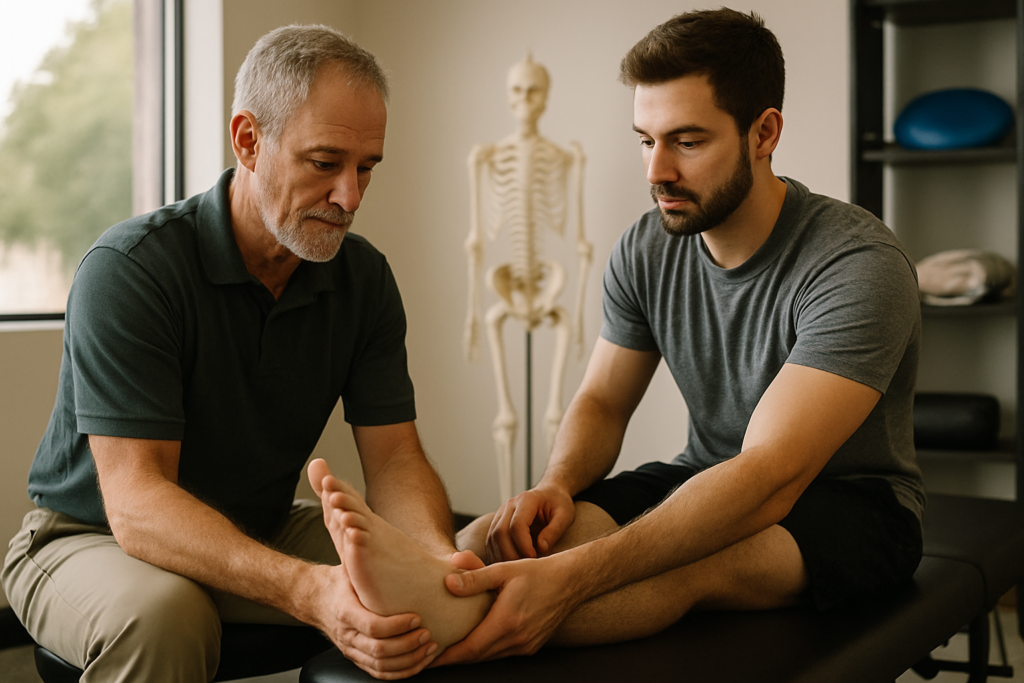
Importantly, chronic ankle instability is rarely solved by passive treatment alone. Hands-on care may be valuable, but long-term improvement usually depends on active rehab. The combination of assessment, manual techniques, corrective exercise, and movement training often provides the most complete approach for persistent instability.
Practical Examples of Daily Habits That Can Help
In addition to formal treatment, small daily choices can support recovery and reduce the risk of future rolling episodes.
Choose Footwear Carefully
Shoes that are excessively worn, unstable, or poorly matched to your activity can make an unstable ankle work harder. Supportive footwear with a secure fit can improve confidence during walking and exercise.
Do Not Skip Warm-Ups
A short warm-up that includes calf activation, ankle mobility, and light balance work can help prepare the joint for activity, especially if you have a history of sprains.
Be Cautious on Uneven Surfaces
Trails, curbs, grass, gravel, and crowded environments can increase the chance of missteps. If your ankle is still recovering, those surfaces may require extra attention.
Stay Consistent With Home Exercises
One of the biggest reasons chronic instability persists is inconsistency. A structured home routine, even if brief, can help restore control over time.
When Symptoms May Need More Attention
Although many ankle instability cases improve with conservative care, some situations deserve prompt evaluation. Seek professional assessment if you have severe swelling, significant bruising, sharp pain with weight-bearing, obvious deformity, numbness, or symptoms that do not improve after a reasonable period of rehab. Persistent instability after multiple sprains may also require further investigation to rule out more significant ligament, tendon, or cartilage involvement.
The right diagnosis matters. Not every ankle that rolls repeatedly has the same underlying problem, so individualized care is important.
What Recovery Often Looks Like
Recovery from chronic ankle instability is usually a process rather than a quick fix. Some people improve relatively quickly once they begin targeted rehab, while others need a longer plan because the issue has been present for months or years. Progress often happens in stages:
- Reducing pain, swelling, and irritation
- Restoring ankle mobility
- Rebuilding strength and foot control
- Improving balance and proprioception
- Correcting walking and movement mechanics
- Gradually returning to full activity
It is common for the ankle to feel better before it is fully ready for demanding movement. That is why symptom relief alone should not be the only measure of recovery. The bigger goal is dependable stability.
Why Early Treatment Can Make a Difference
The longer ankle instability continues, the more likely the body is to develop compensation patterns. You may start shifting weight away from the affected side, limiting activity, or changing how you run, squat, or climb stairs. Those changes can place extra stress on other joints and make recovery more complicated.
Addressing the issue early with chronic ankle instability treatment in Cedar Park, TX can help break that pattern. A focused treatment plan gives the ankle a better chance to regain strength, responsiveness, and control before recurrent sprains become your normal.
Conclusion
If your ankle keeps rolling, the problem may be chronic ankle instability rather than a series of unrelated sprains. Repeated ankle injuries often leave behind a combination of weakness, poor proprioception, stiffness, and altered movement patterns that make the joint vulnerable again and again.
The good news is that many people improve with the right conservative approach. Recurrent ankle sprain treatment typically works best when it includes a full evaluation, hands-on care when appropriate, targeted strengthening, balance training, and rehab for weak ankles that addresses the entire lower body. With a thoughtful plan and consistent follow-through, it is often possible to reduce ankle pain, improve stability, and return to daily activities or sports with greater confidence.
For people in Cedar Park, TX, recognizing the signs early and seeking proper guidance can be an important step toward lasting ankle health.