Pain, pulling, or stiffness in the back of the thigh is often blamed on a “tight hamstring.” In many cases, that is true. But not all posterior thigh discomfort comes from the muscle itself. Sometimes the real issue is nerve irritation or tension, often involving the sciatic nerve. Understanding the difference matters because the wrong self-treatment can keep symptoms going longer or even make them worse.
For people searching for answers about hamstring tightness vs sciatica in Cedar Park, TX, the key is to look at the pattern of symptoms, what movements trigger the problem, and whether the discomfort behaves like a muscle issue or a nerve issue. While both can cause pain in the back of the leg, they tend to feel different and respond differently to stretching, activity, and rest.
This guide explains common posterior thigh pain causes, how to recognize possible nerve tension symptoms in the leg, and when a true hamstring problem is more likely. It also covers general approaches to hamstring pain treatment in Cedar Park and why an accurate assessment is important.
Why the Difference Matters
Hamstring tightness and nerve tension can overlap enough that many people confuse them. Both may create pulling in the back of the thigh. Both can feel worse with bending forward. Both may limit athletic activity, walking comfort, or sitting tolerance.
However, they are not the same problem:
- Hamstring tightness usually comes from the muscle or tendon being overloaded, shortened, strained, or guarded.
- Nerve tension usually involves irritation, sensitivity, or reduced mobility of the sciatic nerve or related nerve roots in the low back.
If someone with nerve irritation keeps aggressively stretching what they think is a tight hamstring, symptoms may become more intense. On the other hand, if the issue is primarily muscular, the solution may involve graded mobility work, strengthening, and tissue recovery rather than nerve-focused care.
What Hamstring Tightness Usually Feels Like
The hamstrings are a group of muscles on the back of the thigh that help with bending the knee and extending the hip. They work hard during running, squatting, climbing stairs, hinging movements, and sports that involve sprinting or sudden acceleration.
True hamstring tightness often has a more local and predictable feel. Common features include:
- A dull pulling sensation in the back of the thigh
- Stiffness when first moving, especially after exercise or prolonged sitting
- Symptoms that are easier to pinpoint to a specific spot in the muscle
- Discomfort during toe touches, lunges, sprinting, or kicking
- Soreness after activity, especially if the muscle was overloaded
In some cases, tightness is not simply “short muscle.” It may reflect muscle guarding, weakness, prior strain, poor recovery, or compensation from the hips or low back. A person might feel tight because the body is protecting an irritated area.
Clues the Hamstring Itself May Be the Problem
A muscular source is more likely when:
- The discomfort started after running, lifting, sports, or a sudden stretch
- The pain is fairly localized rather than traveling below the knee
- The area feels sore or tender to touch
- Contracting the hamstring against resistance reproduces symptoms
- Gentle stretching creates a normal muscle stretch feeling instead of burning, tingling, or zapping
If there was a true hamstring strain, symptoms may include sharp pain during activity, bruising, weakness, or pain with walking fast, climbing, or bending forward.
What Nerve Tension Usually Feels Like
Nerve tension is different from ordinary muscle tightness. In this situation, the nerve is sensitive, irritated, compressed, or not gliding as smoothly as it should through surrounding tissues. The sciatic nerve is the one most commonly linked to symptoms in the back of the thigh.
When symptoms are nerve-related, people often describe them differently than a standard muscle pull. Common nerve tension symptoms in the leg include:
- Burning, tingling, electric, or zinging sensations
- Pain that starts in the low back or buttock and travels down the thigh
- Symptoms that extend below the knee, sometimes into the calf or foot
- Numbness or pins and needles
- Discomfort that changes with spinal position, sitting, coughing, or slouching
- A deep pulling feeling that seems hard to stretch out

Nerve-related symptoms may be intermittent or constant. Some people feel them most when sitting in the car, getting up from a chair, bending forward, or straightening the knee. Others notice that repeated stretching of the hamstrings seems to irritate the leg instead of helping it loosen.
Why Sciatica Is Often Confused with Hamstring Tightness
Sciatica is a broad term commonly used when the sciatic nerve is irritated. Because the nerve travels through the buttock and down the back of the leg, the discomfort can mimic a hamstring problem. A person may simply say, “My hamstring always feels tight,” when the actual source is nerve sensitivity coming from the low back, pelvis, or deep hip region.
This is one reason the topic of hamstring tightness vs sciatica in Cedar Park, TX is so important. The two can look similar at first, but the symptom behavior often tells a different story.
Common Posterior Thigh Pain Causes
The back of the thigh can hurt for many reasons, and not every case fits neatly into one category. Some of the more common posterior thigh pain causes include:
- Hamstring muscle tightness or overuse: often related to exercise, repetitive strain, deconditioning, or recovery problems
- Hamstring strain: a muscle or tendon injury that may occur with sprinting, sudden acceleration, or overstretching
- Sciatic nerve irritation: sometimes related to lumbar disc issues, spinal irritation, or nerve entrapment along its path
- Referred pain from the low back: not all leg pain is a true local leg injury
- Deep gluteal or piriformis-related irritation: can create pain in the buttock and posterior thigh
- Tendon irritation near the sit bone: often felt high in the hamstring area, especially with sitting or uphill activity
Because several structures can create similar symptoms, a simple internet search or self-diagnosis is not always enough to sort it out correctly.
Practical Ways to Tell the Difference
Although a formal evaluation is the best way to identify the source, there are some practical clues that can help people think more clearly about what may be happening.
1. Where the Symptoms Travel
If the discomfort stays mostly in one part of the back of the thigh, the hamstring muscle may be involved. If symptoms move from the low back or buttock down the leg, especially below the knee, nerve irritation becomes more likely.
More suggestive of hamstring: local soreness, pulling, or tightness in the thigh.
More suggestive of nerve tension: radiating pain, tingling, numbness, or symptoms reaching the calf or foot.
2. What the Pain Feels Like
Muscle tightness usually feels like a stretch, ache, fatigue, or soreness. Nerve symptoms are often described as burning, sharp, shooting, buzzing, electric, or unusually sensitive.
More suggestive of hamstring: sore, tight, stiff, or tender.
More suggestive of nerve tension: hot, zappy, prickly, tingling, or numb.
3. How It Responds to Stretching
Gentle stretching often helps a true muscular tightness feel better over time, even if the stretch is initially uncomfortable. With nerve tension, traditional hamstring stretching may reproduce symptoms quickly and can sometimes aggravate them, especially if it is done forcefully.
If a toe-touch stretch creates a strange pulling all the way down the leg, tingling into the calf, or increased discomfort after the stretch, that may point more toward nerve sensitivity than simple muscle tightness.
4. Whether Sitting Makes It Worse
Many nerve-related conditions become more noticeable with prolonged sitting, slouching, or driving. Hamstring soreness can also be felt while sitting, especially near the upper tendon, but symptoms that intensify with spinal position or seated nerve stretch patterns deserve closer attention.
More suggestive of nerve tension: worsening with driving, desk sitting, slumped posture, or rising from a chair after a long period.
5. Whether the Low Back or Buttock Is Also Involved
When posterior thigh pain is paired with low back stiffness, buttock pain, or changes in spinal movement, a nerve source or referred pain pattern should be considered. A pure hamstring issue is less likely to cause significant low back-related symptom patterns.
6. How It Started
A true hamstring issue often has a clear mechanical trigger: a sprint, heavy deadlift, awkward lunge, or sports movement. Nerve irritation may begin after prolonged sitting, a flare-up of back pain, repetitive bending, or sometimes without a clear thigh-specific injury.
Examples of Symptom Patterns
Consider a few practical examples:
Example 1: A recreational runner feels a sudden sharp pain high in the back of the thigh while accelerating. The area is sore to touch and painful when pushing off. This sounds more like a hamstring strain or local muscle problem.
Example 2: An office worker notices persistent “hamstring tightness” on one side, but the feeling worsens during long drives, extends into the calf, and sometimes includes tingling. Stretching seems to aggravate it. This pattern is more consistent with nerve tension or sciatica.
Example 3: A gym-goer feels stiffness in both hamstrings after lower-body workouts, especially the next morning. The discomfort improves with movement and does not radiate. This is more in line with muscular tightness or post-exercise soreness.
Example 4: A person with intermittent low back pain gets pulling in the posterior thigh only when slouching or bending forward, and straightening the knee makes the sensation stronger. That pattern may reflect neural tension rather than a short hamstring alone.

Important Considerations Before You Stretch Aggressively
It is common for people to respond to posterior thigh discomfort by stretching harder and more often. That can help some muscle-related cases, but it is not always the best first step.
Aggressive stretching may not be appropriate when:
- The pain shoots or tingles down the leg
- Symptoms worsen during or after stretching
- There is numbness or weakness
- The discomfort is linked to low back pain
- A recent strain may need protection and gradual loading rather than deep stretching
In these situations, the body may not need more force. It may need a more precise plan based on whether the source is muscle, tendon, nerve, spine, or a combination.
How Evaluation Helps Clarify the Cause
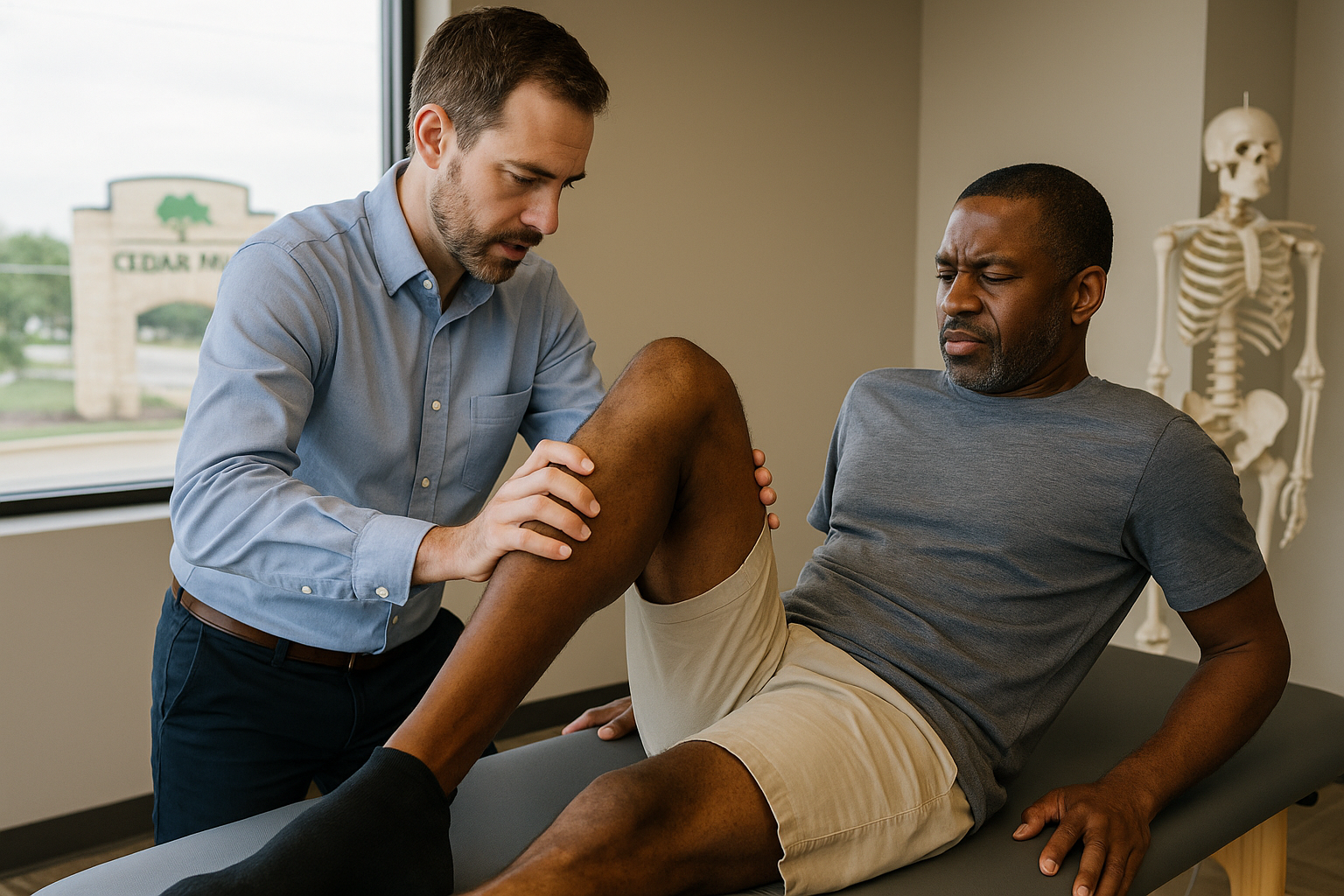
A thoughtful clinical evaluation typically looks at more than just flexibility. It may include:
- Where symptoms begin and where they travel
- Spinal movement and posture
- Hip and pelvic mechanics
- Strength and flexibility testing
- Nerve tension screening
- Palpation of the hamstring muscle and tendon
- Activity patterns, training load, and sitting tolerance
This broader view helps distinguish whether the problem is mostly muscular, mostly neural, or mixed. That distinction influences the best approach to recovery.
General Approaches to Hamstring Pain Treatment in Cedar Park
The best hamstring pain treatment in Cedar Park depends on the underlying cause. Treatment for a strained or overloaded hamstring is not the same as treatment for sciatic nerve irritation.
When the Problem Is Primarily Hamstring Tightness or Strain
General care may include:
- Relative rest from aggravating activity
- Gradual return to movement instead of complete inactivity
- Gentle mobility work within tolerance
- Progressive strengthening for the hamstrings, glutes, and core
- Attention to training load, warm-up, and recovery habits
- Correction of movement patterns that overload the posterior chain
For chronic “tight hamstrings,” strengthening is often just as important as stretching. Weak or underprepared tissue can feel tight because it is working inefficiently.
When the Problem Is Nerve Tension or Sciatic Irritation
General management may focus more on:
- Reducing irritation to the nerve
- Identifying whether the low back, pelvis, or deep hip region is contributing
- Improving movement patterns that provoke symptoms
- Using gentle nerve mobility strategies when appropriate
- Restoring tolerance for sitting, walking, bending, and daily activity
- Supporting spinal and hip function
Because nerves can be sensitive to both compression and stretch, treatment tends to be more specific and measured than simply pushing through a stretch.
When to Seek Professional Assessment
Posterior thigh pain should be assessed sooner rather than later when:
- Symptoms persist despite rest and home care
- Pain keeps returning with activity
- You feel tingling, numbness, or burning
- Symptoms travel below the knee
- There is weakness, limping, or reduced function
- Back pain is part of the picture
- Stretching consistently makes it worse
These signs do not automatically mean the condition is severe, but they do suggest that the issue may be more than ordinary tightness.
How Cedar Park Patients Can Think About Their Next Step
For many active adults, desk workers, and athletes in Cedar Park, posterior thigh discomfort falls into one of two broad buckets: a local hamstring problem or a nerve-related issue. The challenge is that both can create a feeling of tightness. The difference is in the details.
If symptoms are local, sore, and activity-related, the hamstring itself may be the main driver. If symptoms radiate, tingle, burn, or worsen with sitting and spinal position, nerve involvement becomes more likely. And in some cases, both can be present at the same time.
That is why the question is not just whether the leg feels tight. The better question is why it feels tight.
Conclusion
Knowing the difference between hamstring tightness and nerve tension can save time, reduce frustration, and help prevent the wrong type of self-treatment. A true hamstring issue usually behaves like a local muscle problem: sore, stiff, or strained with movement or loading. Nerve tension tends to create a different pattern, often involving radiating pain, tingling, burning, or symptoms that change with sitting and spinal position.
For those researching hamstring tightness vs sciatica in Cedar Park, TX, the most important takeaway is that posterior thigh pain is not always just a flexibility problem. Looking closely at symptom quality, symptom travel, and response to movement can offer valuable clues. When discomfort lingers, spreads, or does not improve with basic care, a professional evaluation can help identify the true source and guide the most appropriate plan for recovery.