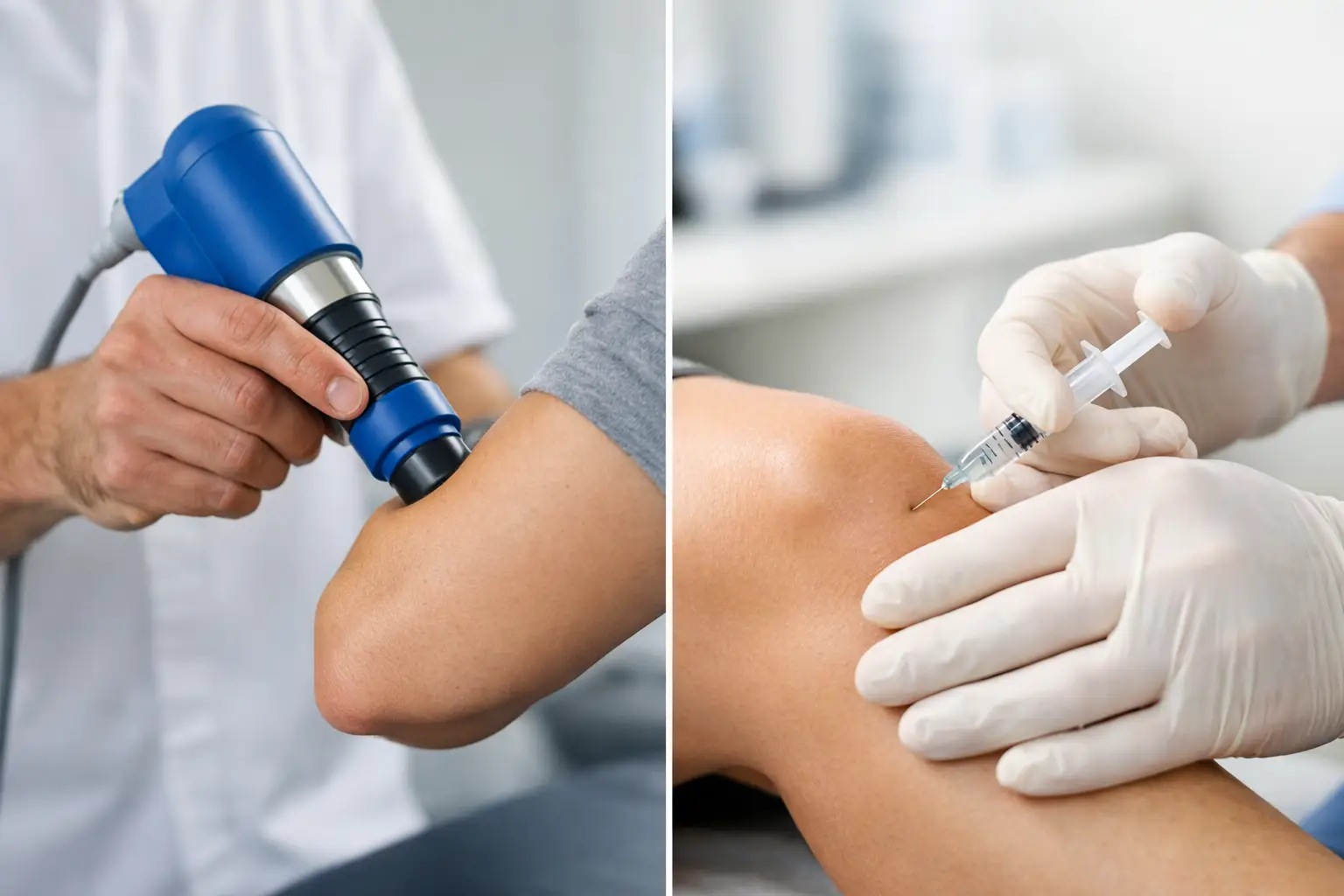
A painful first step out of bed, an elbow that will not tolerate lifting a coffee mug, or a shoulder that wakes you at night can make fast relief feel like the only priority. When comparing shockwave therapy vs cortisone injections, the better option depends on what tissue is causing the pain, how long symptoms have lasted, and whether the goal is short-term symptom control or longer-term tissue recovery.
Cortisone injections and shockwave therapy are not interchangeable treatments. One is a medication-based intervention intended to reduce inflammation and pain. The other uses sound waves to stimulate a healing response in certain chronic musculoskeletal conditions. Both can have a place in care, but neither should be selected based on pain level alone.
What Is a Cortisone Injection?
A cortisone injection usually combines a corticosteroid medication with a local anesthetic. Corticosteroids are powerful anti-inflammatory medications. When placed near or in a painful area, they can reduce inflammation and relieve pain relatively quickly.
These injections are commonly used for conditions involving significant inflammation, including some cases of bursitis, joint arthritis, inflammatory flare-ups, and certain nerve-related pain conditions. Depending on the area treated, relief may begin within a few days and can last weeks or months.
For someone whose knee, shoulder, or other joint is highly irritated and limiting daily activity, a cortisone injection may create a useful window for sleep, gentle movement, or rehabilitation. That window matters. Less pain can make it easier to restore mobility and begin strengthening work.
However, cortisone does not repair a torn tendon, rebuild cartilage, correct a movement problem, or address the loading pattern that contributed to pain. It can reduce symptoms without resolving the underlying cause.
Potential drawbacks of cortisone
Cortisone injections are generally considered after a clinical evaluation and are often limited in frequency. Repeated steroid injections in the same area may weaken nearby soft tissue, particularly tendons. This is a meaningful consideration for chronic tendon problems such as tennis elbow, Achilles tendinopathy, or rotator cuff irritation.
Other possible effects include a temporary pain flare after the injection, skin color changes near the injection site, elevated blood sugar in people with diabetes, and infection risk, though infection is uncommon. Results also vary. Some patients experience substantial temporary relief, while others notice little change.
How Shockwave Therapy Works
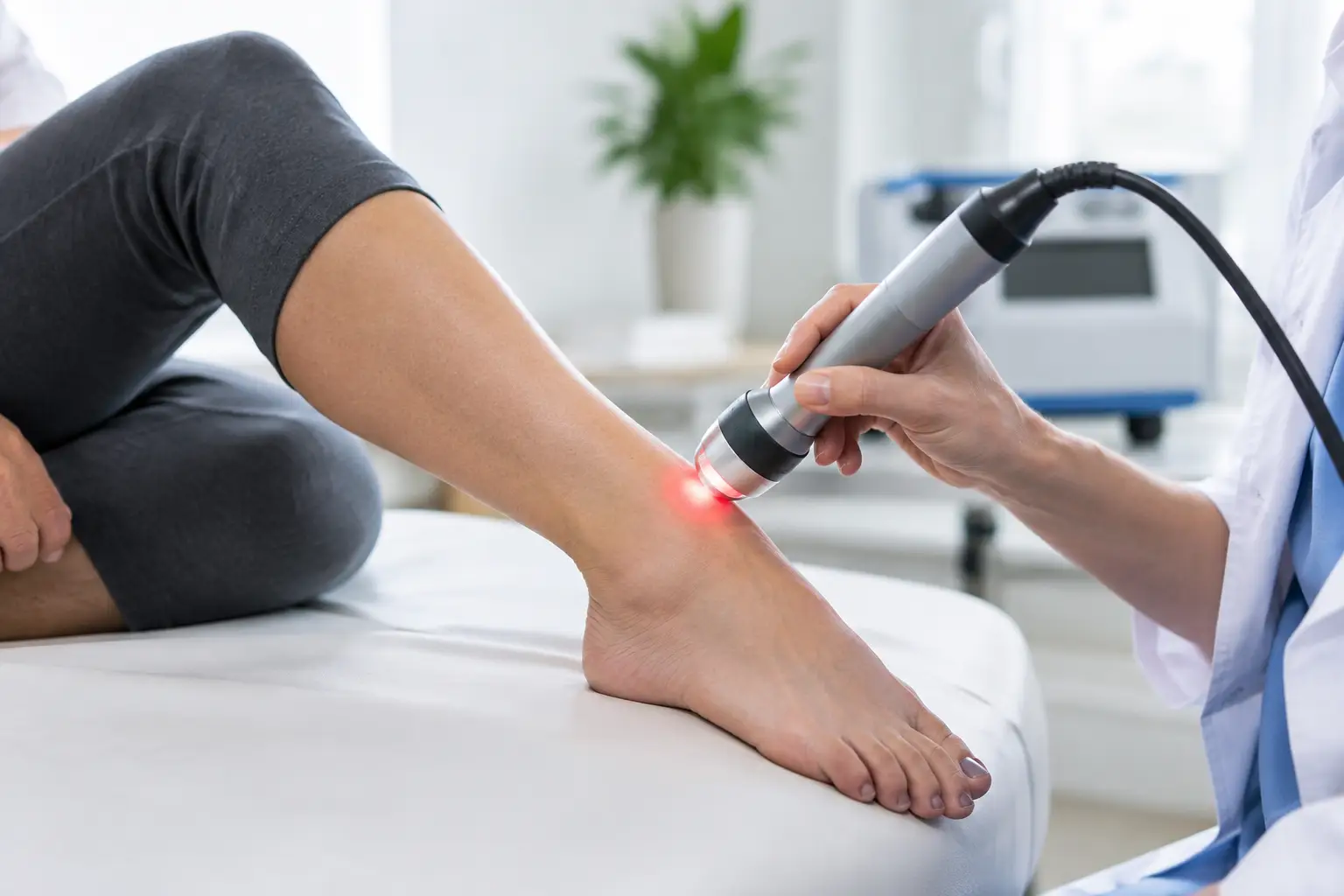
Shockwave therapy, also called extracorporeal shockwave therapy, delivers acoustic waves to targeted tissue. It is a non-invasive treatment often used for persistent tendon and fascia problems that have not improved with rest, basic home care, or activity modification alone.
The treatment is not an injection and does not rely on medication. The mechanical energy is intended to stimulate local circulation, cellular activity, and the body’s natural repair processes. In chronic conditions, the goal is not simply to quiet pain for a few days. It is to support healthier tissue response while rehabilitation improves strength, mobility, and movement control.
Shockwave therapy is frequently considered for chronic plantar fasciitis, Achilles tendinopathy, tennis elbow, golfer’s elbow, calcific shoulder tendinopathy, and some patellar tendon conditions. It may also be used as part of a broader plan for other soft tissue concerns when clinically appropriate.
Treatment is performed in the clinic, and patients remain awake and mobile afterward. The treated area can feel sore or sensitive for a day or two, similar to the response after a challenging workout or deep tissue treatment. Most care plans involve a series of sessions rather than a single visit.
Shockwave therapy is not a quick fix
Shockwave therapy usually does not provide the immediate numbing effect some people associate with an injection. Improvement tends to be gradual, often occurring over several weeks as the tissue responds and the patient progresses through rehab.
That timeline can be frustrating if you need immediate relief for a major event or a severe inflammatory flare. Yet for chronic tendon pain, a gradual approach may be preferable to repeatedly suppressing symptoms while the tendon remains weak or overloaded.
Shockwave Therapy vs Cortisone Injections for Tendon Pain
The difference is especially important when pain comes from a tendon. Chronic tendon pain is not always driven by active inflammation. In many cases, the tendon has been exposed to repetitive load, poor mechanics, inadequate recovery, or a previous injury that did not fully rehabilitate. The tissue can become painful and less tolerant of everyday demand.
In that setting, cortisone may offer short-term pain relief, but repeated exposure can be a concern because corticosteroids may negatively affect tendon integrity. Shockwave therapy, paired with progressive loading exercises, may better fit the goal of improving the tendon’s capacity over time.
This does not mean shockwave is automatically the right answer for every tendon problem. A complete exam should identify whether the pain is truly tendon-related, whether there is a suspected tear, and whether symptoms are being referred from the spine, joint, or nerve. An Achilles tendon rupture, for example, requires a very different pathway than a slowly developing case of Achilles tendinopathy.
When Cortisone May Make More Sense
Cortisone may be worth discussing with a medical provider when inflammation is a dominant feature and pain is preventing basic function. A significant arthritic joint flare, an inflamed bursa, or severe pain that is blocking participation in rehabilitation may call for faster symptom reduction.
The decision also depends on the tissue being treated. Cortisone is often used differently in a joint than around a tendon. Your health history matters as well, including diabetes, blood-thinning medications, immune conditions, prior injections, and previous reactions to steroids.
Even when an injection is appropriate, the best results often come from using the reduced-pain period strategically. Improving joint mobility, correcting movement compensation, building strength, and gradually returning to activity can help reduce the chance that the same problem returns once the medication wears off.
When Shockwave Therapy May Be a Better Fit
Shockwave therapy may be a strong conservative option when pain has lasted for months, imaging or examination suggests chronic tissue irritation rather than an acute tear, and standard care has not created enough progress. It is particularly relevant for patients who want to avoid medication-based care when possible and are willing to follow a structured rehabilitation plan.
It may not be appropriate for everyone. Treatment decisions should account for pregnancy, certain bleeding disorders or anticoagulant use, active infection, a suspected fracture, cancer in the treatment area, or significant nerve and circulation concerns. A provider should also determine whether the area contains a growth plate in younger patients.
The type of shockwave device and the treatment protocol can matter, too. Focused and radial shockwave therapies deliver energy differently, and a clinician should select the approach based on the condition, tissue depth, sensitivity, and treatment goal.
The Missing Piece: Rehabilitation
Choosing between an injection and shockwave therapy is only part of the decision. Long-term recovery depends on why the area became painful in the first place.
For plantar fasciitis, that may involve ankle mobility, calf strength, footwear, walking volume, and foot mechanics. For tennis elbow, it may include grip demands, wrist and shoulder strength, work setup, and how the tendon is loaded during lifting. For shoulder pain, the neck, shoulder blade mechanics, posture, and training habits can all influence symptoms.
A personalized plan may include hands-on care, movement analysis, targeted soft tissue work, mobility exercises, and progressive strengthening alongside an advanced therapy. The aim is to help you return to work, exercise, family activities, and daily movement with more confidence, not simply chase temporary pain relief.
How to Make the Right Choice
A good evaluation starts with a clear diagnosis, not a preselected treatment. Your provider should ask where pain is located, what movements trigger it, how long it has been present, whether there was a specific injury, and what treatments you have already tried. When needed, imaging or referral can help rule out a fracture, serious tear, infection, or another condition requiring different care.
At Bell District Spine and Rehab, care decisions can be built around your symptoms, functional goals, and tolerance for activity rather than a one-size-fits-all protocol. If your goal is to move better without relying on repeated medication or invasive procedures, ask whether your condition is better suited to shockwave therapy, rehabilitation, another conservative treatment, or coordination with a medical specialist for an injection.
Pain relief is valuable, but the most useful treatment is the one that also gives your body a realistic path back to stronger, more comfortable movement.