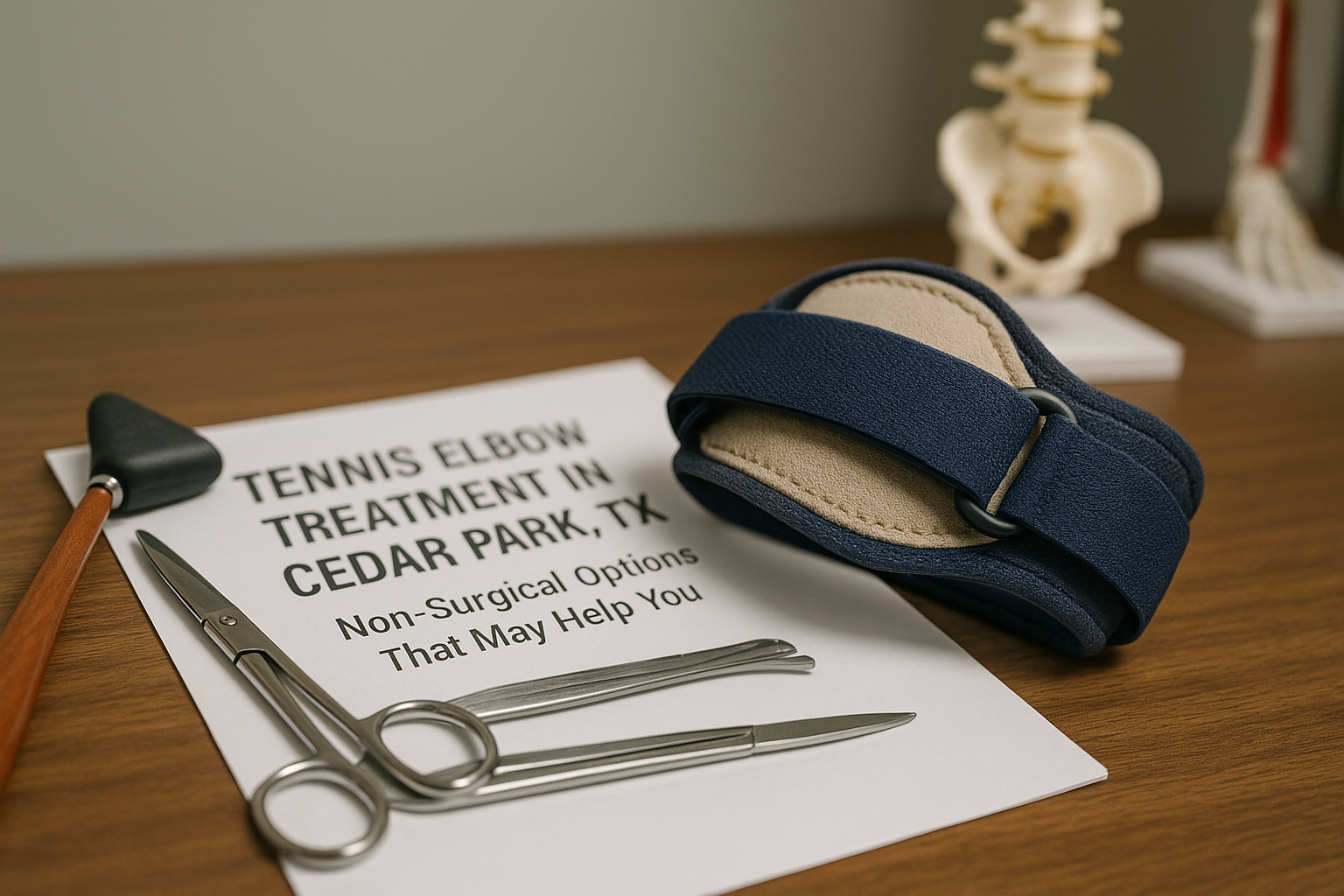
Tennis elbow can make simple daily tasks surprisingly difficult. Gripping a coffee mug, turning a doorknob, lifting groceries, typing, or shaking hands may all trigger pain around the outside of the elbow. While the name suggests a sports injury, many people with tennis elbow have never picked up a racquet. Repetitive strain from work, exercise, home projects, or technology use is often the real cause.
If you are looking for tennis elbow treatment in Cedar Park, TX, it helps to understand what this condition is, why it develops, and which non-surgical options may support recovery. In many cases, conservative care can reduce irritation, improve strength and mobility, and help people return to normal activity without surgery.
This guide explains the basics of tennis elbow, common symptoms, factors that may be contributing to ongoing irritation, and non-surgical approaches that are often considered for relief.
What Is Tennis Elbow?
Tennis elbow, also called lateral epicondylitis, is a painful condition involving the tendons that attach to the outside of the elbow. These tissues help control wrist and finger movement, especially when you grip, lift, twist, or extend the wrist. Over time, repeated strain can overload the tendon and lead to small areas of irritation or degeneration.
Despite the name, tennis is only one possible cause. Many people develop tennis elbow from repetitive tasks such as:
- Typing or prolonged mouse use
- Using hand tools
- Painting or home repairs
- Lifting boxes or materials at work
- Weight training with poor form or too much volume
- Repetitive gripping in golf, pickleball, or racquet sports
- Frequent use of the forearm for childcare or yard work
The condition often starts gradually. At first, the elbow may only feel sore after activity. If the strain continues, the pain can become more frequent, sharper, and more limiting.
Common Symptoms of Tennis Elbow
Symptoms can vary from person to person, but tennis elbow often causes discomfort on the outer part of the elbow that may spread into the forearm. Some people also notice weakness or pain during specific movements.
Common signs may include:
- Pain or tenderness on the outside of the elbow
- Pain when gripping, lifting, carrying, or twisting objects
- Discomfort when shaking hands or opening jars
- Forearm tightness or fatigue
- Weak grip strength
- Pain that worsens with work, sports, or repetitive hand use
Because several conditions can cause elbow pain, proper evaluation matters. Nerve irritation, joint problems, referred pain from the neck or shoulder, ligament injury, and other overuse conditions can sometimes mimic tennis elbow. That is one reason many people seek an elbow pain chiropractor in Cedar Park for a more complete musculoskeletal assessment rather than focusing only on the elbow itself.
Why Tennis Elbow Can Become Persistent
One of the frustrating things about tennis elbow is that it often lingers. This usually happens because the painful tendon is repeatedly stressed before it has a chance to recover. Rest alone may help temporarily, but symptoms often return if the underlying movement patterns, workload, or tissue capacity are not addressed.
Several factors may contribute to ongoing symptoms:
- Repeated gripping, lifting, or twisting at work or home
- Poor mechanics during exercise or sport
- Weakness in the forearm, shoulder, or upper back
- Limited mobility in the wrist, elbow, or shoulder
- Sudden increases in activity intensity or frequency
- Continuing to push through pain without modification
For many people, recovery is not just about calming the elbow down. It is also about improving how the arm, shoulder, and even neck function together during daily activity.
The Goal of Non-Surgical Tennis Elbow Treatment
Non-surgical tennis elbow treatment is generally aimed at four things: reducing irritation, supporting tissue healing, restoring strength and mobility, and lowering the chance of repeat aggravation. Conservative care often combines more than one strategy rather than relying on a single quick fix.
Depending on the individual, a non-surgical plan may include:
- Activity modification
- Manual therapy
- Rehabilitation exercises
- Soft tissue treatment
- Bracing or temporary support
- Shockwave therapy for tennis elbow
- Postural and ergonomic changes
The right mix depends on symptom severity, how long the problem has been present, occupational demands, and whether related areas such as the wrist, shoulder, or neck are contributing to the problem.
Activity Modification Without Complete Inactivity
Many people assume they need to stop using the arm completely. In reality, total rest is not always the best solution, especially if it leads to stiffness or deconditioning. A better strategy is often temporary activity modification.
This means reducing or adjusting the movements that keep overloading the tendon while staying as active as possible within tolerance. Practical examples may include:
- Using two hands instead of one when lifting
- Taking short breaks during repetitive work
- Reducing grip force when possible
- Switching to tools with better handles or grip support
- Temporarily lowering training intensity
- Avoiding repeated wrist extension under load until symptoms improve
These changes can help calm the irritated area while giving rehabilitation a better chance to work.
Rehabilitation Exercises for Long-Term Improvement
Exercise-based rehab is often one of the most important parts of conservative care. Tendons typically respond best to gradual, progressive loading rather than complete avoidance forever. The goal is to build tissue tolerance so the elbow can better handle daily stress.
A rehabilitation plan may include:
Isometric exercises
These involve activating the muscles without much joint movement. In some cases, they may help reduce pain while beginning to load the tendon gently.
Eccentric and progressive strengthening
These exercises gradually challenge the wrist and forearm muscles in a controlled way. Over time, they may help improve tendon capacity and function.
Grip training
Since many people with tennis elbow notice weakness when holding objects, carefully progressing grip strength can be helpful.
Shoulder and scapular strengthening
The elbow does not work in isolation. Improving upper arm, shoulder blade, and postural muscle control may reduce unnecessary stress farther down the chain.
Mobility work
Restricted movement in the wrist, forearm, shoulder, or upper back can change mechanics and increase strain. Gentle mobility exercises may be part of the plan.
Consistency matters. Many people expect immediate results, but tendon recovery often takes time and steady progression.
Manual Therapy and Hands-On Care
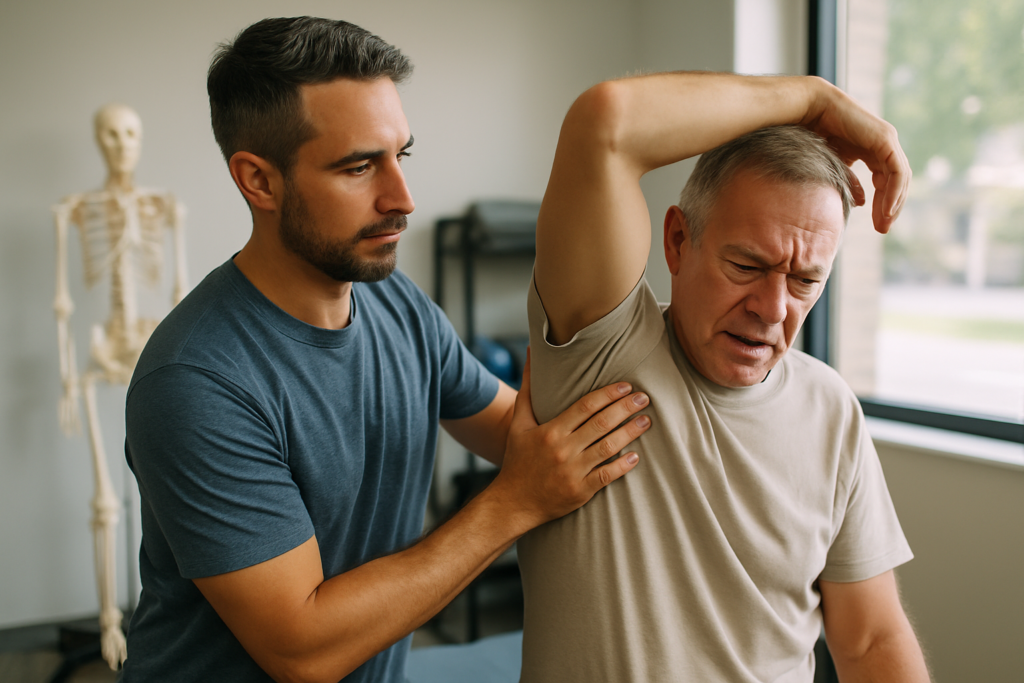
Hands-on treatment may be used to improve mobility, reduce muscle tension, and support better movement patterns. Depending on the provider and the individual presentation, this may include soft tissue work, joint mobilization, or other manual techniques directed at the elbow, wrist, forearm, shoulder, or upper back.
This approach can be especially useful when tennis elbow is accompanied by stiffness, compensation, or muscle guarding. In some cases, people searching for an elbow pain chiropractor in Cedar Park are looking for this broader perspective, since discomfort at the elbow can be influenced by nearby joints and the way the whole upper extremity is functioning.
While manual therapy alone may not solve a chronic overuse problem, it can be a useful part of a more complete non-surgical plan.
Shockwave Therapy for Tennis Elbow
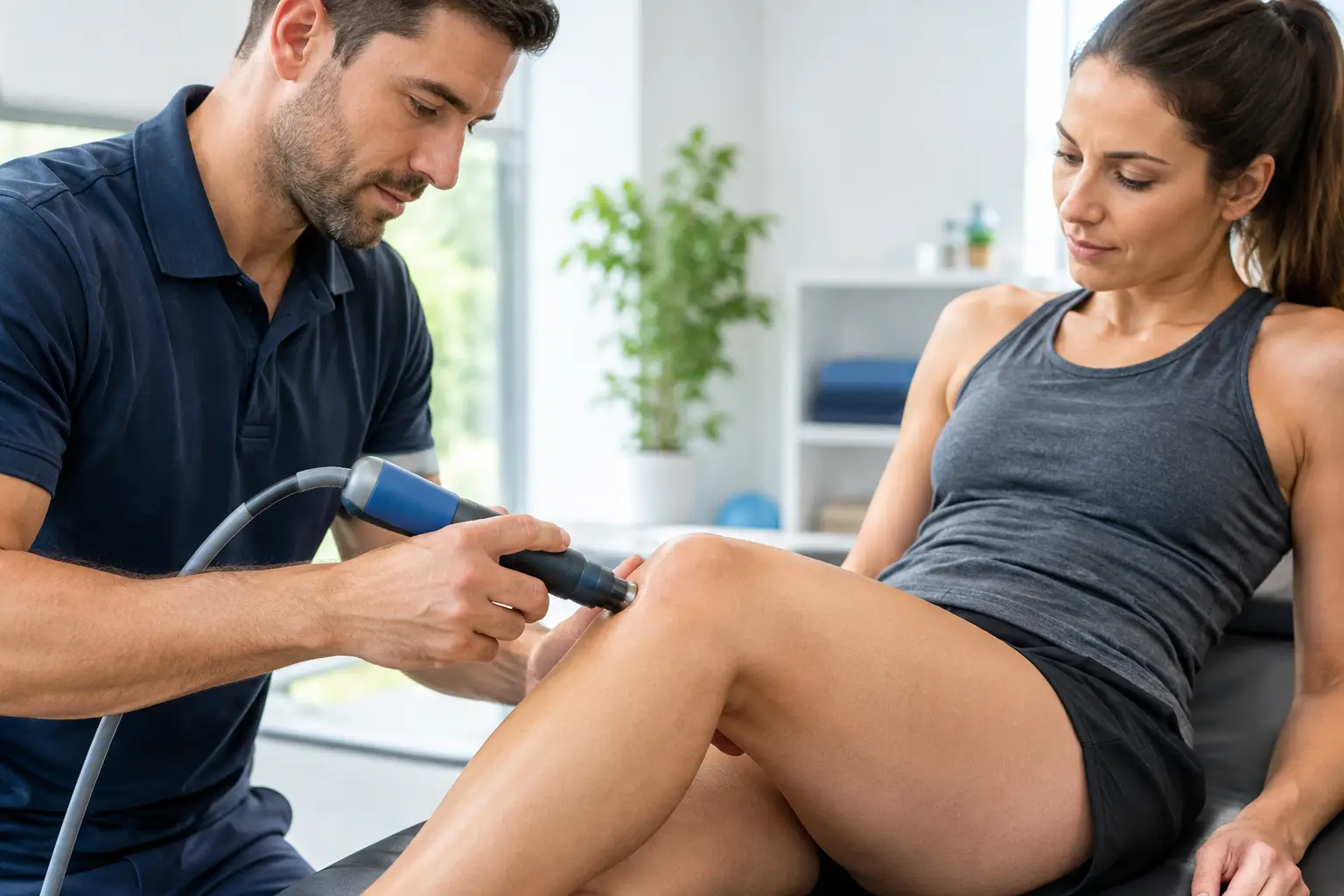
Shockwave therapy for tennis elbow has gained attention as a non-invasive option for stubborn cases, especially when symptoms have lasted for months and have not responded well to basic self-care. This treatment uses acoustic waves directed at the affected tissue.
The exact response can vary, but shockwave therapy is generally used with the goal of stimulating the area and supporting the body’s healing process. It may also help reduce pain in some individuals. Treatment protocols differ, and it is often combined with exercise and load management rather than used as a stand-alone solution.
Potential reasons someone may consider shockwave therapy include:
- Persistent tennis elbow symptoms despite rest and stretching
- Chronic pain interfering with work, exercise, or hobbies
- A desire to explore non-surgical options before more invasive measures
- Need for a treatment plan that supports active rehabilitation
As with any treatment, not every person is an ideal candidate. A proper clinical evaluation is important to determine whether the condition is truly tennis elbow and whether shockwave therapy is appropriate based on symptoms, health history, and tissue presentation.
Supportive Bracing and Ergonomic Changes
Sometimes small changes can make a meaningful difference during recovery. A counterforce brace or wrist support may occasionally be used to reduce strain during specific activities, though bracing is generally viewed as a temporary aid rather than a long-term solution.
Ergonomic changes may also help, especially for people whose symptoms are tied to workstations, hand tools, or repetitive tasks. Examples include:
- Adjusting keyboard and mouse setup
- Improving desk posture and arm positioning
- Using tools that reduce grip strain
- Changing handle size on sports equipment
- Spacing out repetitive tasks throughout the day
These modifications may seem simple, but they can reduce repeated aggravation and give healing tissues a better environment.
When the Neck, Shoulder, or Wrist May Be Part of the Problem
Not all outer elbow pain comes only from the elbow. Sometimes the wrist extensors are overworking because the shoulder lacks strength or stability. In other cases, nerve-related irritation from the neck can contribute to arm pain and altered mechanics. Wrist stiffness may also change how force is transferred during gripping and lifting.
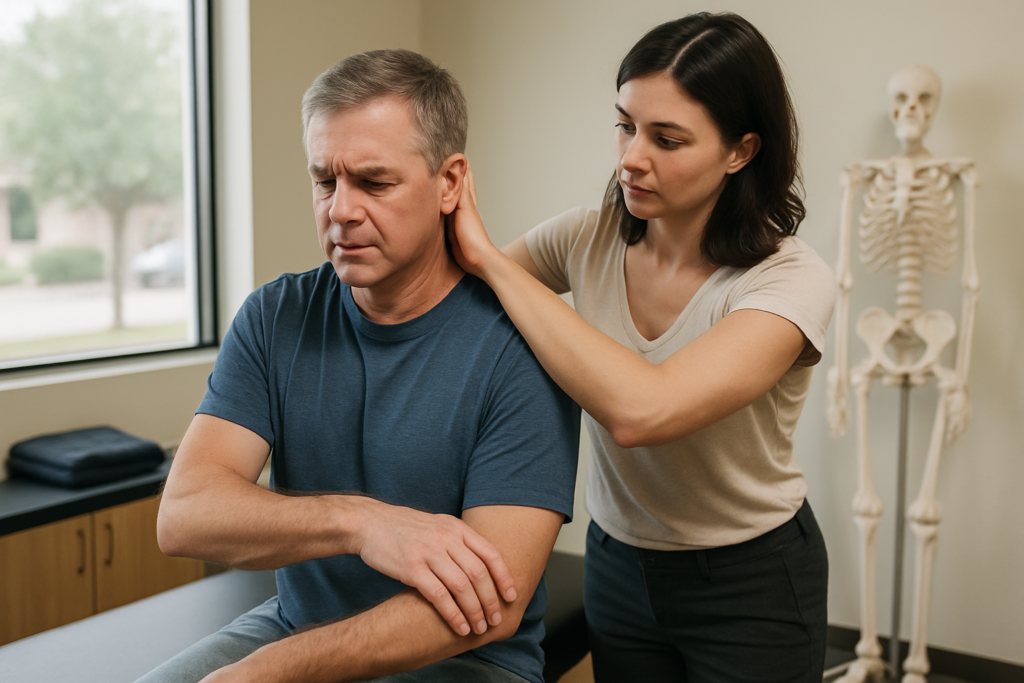
This is one reason a whole-chain assessment is valuable. If treatment focuses only on the painful spot and ignores nearby restrictions or weakness, symptoms may improve temporarily but continue to return. Comprehensive non-surgical tennis elbow treatment often looks at how the neck, shoulder, elbow, forearm, and wrist interact during real-life movement.
What Recovery May Look Like
Recovery timelines vary. Some mild cases improve with early activity modification and guided exercise. More chronic cases may require a longer course of care, especially if the tendon has been irritated for months or if job demands make it hard to avoid aggravating activities.
In general, recovery tends to go better when people:
- Address symptoms early
- Follow a progressive rehab plan
- Modify activities instead of repeatedly pushing through pain
- Work on contributing factors such as posture, strength, and mechanics
- Stay consistent even when progress feels gradual
It is also important to understand that “feeling better” and “being fully ready for heavy use” are not always the same thing. Pain may decrease before the tissue is fully prepared for a return to demanding work or sport. Gradual reloading is often the safer path.
Important Considerations Before Starting Care
If you are considering tennis elbow treatment in Cedar Park, TX, it is wise to seek care that begins with a clear evaluation rather than a one-size-fits-all plan. Since elbow pain can have more than one cause, identifying the true source of symptoms matters.
You may want to look for a provider who evaluates:
- Your symptom history and aggravating activities
- Grip strength and forearm function
- Wrist, elbow, and shoulder mobility
- Work and sport mechanics
- Possible nerve involvement or referred pain
- Whether conservative care is appropriate or if referral is needed
Medical attention is especially important if pain began after a fall or direct trauma, if you cannot use the arm normally, or if symptoms include marked swelling, deformity, unexplained numbness, fever, or other concerning changes.
Why Early Non-Surgical Care Can Be Helpful
People often wait too long before addressing tennis elbow because they assume it will go away on its own. Sometimes it does. But when repetitive strain continues and tissue tolerance does not improve, the condition can become more stubborn and disruptive.
Early conservative care may help by reducing the cycle of overload before it becomes deeply ingrained. Instead of just chasing pain, a structured approach can focus on correcting the reasons the tendon keeps getting irritated. That may mean improving strength, changing technique, adjusting activity volume, or using treatments such as shockwave therapy for tennis elbow as part of a broader plan.
For office workers, active adults, tradespeople, parents, and athletes in Cedar Park, this kind of practical, non-surgical support may make it easier to stay engaged in daily life while working toward recovery.
Conclusion
Tennis elbow is a common overuse problem, but it is not always a simple one. Pain on the outside of the elbow can be driven by repetitive strain, poor mechanics, weakness, stiffness, or even contributing issues from the shoulder, wrist, or neck. That is why successful non-surgical tennis elbow treatment often goes beyond rest alone.
If you are exploring tennis elbow treatment in Cedar Park, TX, conservative options such as activity modification, progressive rehabilitation, hands-on care, ergonomic changes, and shockwave therapy for tennis elbow may all play a role depending on your needs. A thoughtful plan that addresses both pain and the causes of overload can support healing, improve function, and help reduce the risk of future flare-ups.
With the right approach, many people are able to return to work, exercise, and everyday tasks with less pain and better confidence in how their arm performs.