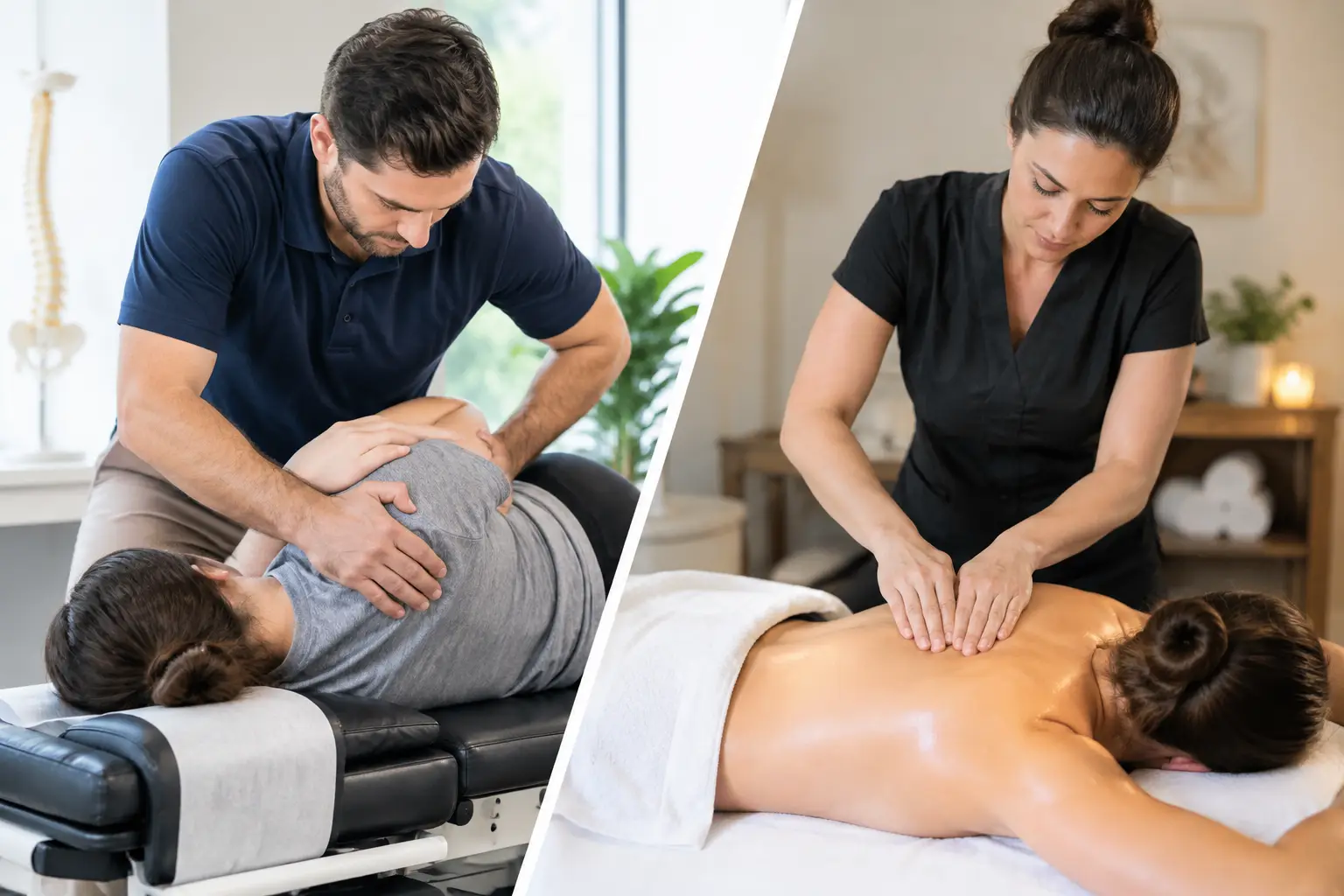

A sore lower back can make ordinary moments feel like obstacles. Getting out of the car, lifting a child, sitting through a work meeting, or returning to the gym may all become uncomfortable. Manual adjustment for lower back pain can help some patients move with less restriction and discomfort, especially when it is part of a plan that identifies why the pain started and what is keeping it from improving. The right care is not about forcing a quick fix. It is about restoring comfortable movement, building resilience, and helping you return to the activities that matter to you.
What Is a Manual Adjustment for Lower Back Pain?
A manual adjustment is a hands-on chiropractic technique used to improve movement at a restricted spinal joint. During an adjustment, a chiropractor applies a controlled, precise force to a specific area of the spine or pelvis. You may hear a popping sound, which is simply pressure changing within the joint. It is not a sign that a bone was put back into place.
Lower back pain can involve more than one structure. Stiff joints, irritated discs, strained muscles, reduced hip mobility, repetitive postures, and movement habits can all contribute. That is why a manual adjustment for lower back pain should be based on an examination rather than a standard routine.
For the right patient, an adjustment may reduce joint stiffness, improve short-term range of motion, and make daily movement more manageable. Some people notice relief after an early visit; others need a gradual approach, particularly if pain has been present for months or follows a more complex injury.
Why Lower Back Pain Often Needs More Than One Treatment
An adjustment can be valuable, but it is rarely the entire answer. If a painful joint moves more freely but the surrounding muscles are weak, guarded, or poorly coordinated, the same stress may return during work, sports, or household tasks.
At Bell District Spine and Rehab, care can combine hands-on chiropractic treatment with rehabilitation strategies that support lasting functional improvement. Depending on your condition, your plan may include soft tissue work, movement analysis, targeted exercises, spinal decompression, laser therapy, dry needling, or other non-invasive options.
This combined approach matters because pain relief and recovery are related, but they are not identical. Pain relief can help you start moving again. Rehabilitation helps you regain the strength, control, and confidence to keep moving.
A Thorough Assessment Comes First
Effective lower back care starts with listening. Your provider should ask when symptoms began, what makes them better or worse, whether pain travels into the hip or leg, and how it affects sleep, work, exercise, and everyday responsibilities.
The physical exam may assess spinal motion, posture, muscle tension, hip mobility, strength, reflexes, and movement patterns such as bending, walking, or sitting down. This information helps distinguish a simple mechanical flare-up from symptoms that may involve nerve irritation, a disc injury, or another condition requiring a different path.
Not every stiff or painful back needs the same technique. A high-velocity adjustment may be appropriate for one person, while another may benefit from gentler mobilization, soft tissue treatment, decompression, or rehab before an adjustment is considered. The treatment should match your presentation, comfort level, and goals.
When Manual Care May Be a Good Fit
Manual chiropractic care is often considered for lower back pain associated with stiffness, limited motion, muscle guarding, or pain that is aggravated by routine movement. It may be especially helpful after a minor lifting strain, a long stretch of desk work, repetitive physical labor, travel, or a change in training volume.
People with recurring low back discomfort may also benefit when adjustments are paired with a plan to address the reason episodes keep coming back. For example, an active adult who repeatedly feels pain after deadlifts may need more than short-term relief. They may need hip mobility work, core and glute strengthening, and guidance on returning to loading safely.
The same principle applies to office professionals. If prolonged sitting consistently aggravates the lower back, treatment may include manual care as well as movement breaks, ergonomic changes, and exercises that improve tolerance for sitting and standing.
Manual treatment is not only for athletes or severe pain. It can be a conservative option for adults who simply want to walk, work, sleep, play with their children, or manage household activities more comfortably without relying on heavy medication.
What a Personalized Treatment Plan Can Include
After an adjustment, many patients feel looser or more mobile. That window of improved movement is a useful opportunity to reinforce better patterns. Your provider may use guided rehab to help the body maintain the gains made through hands-on care.
A personalized plan may focus on restoring motion first, then improving stability and strength. Early exercises are often simple and comfortable, such as breathing drills, gentle mobility work, or controlled core activation. As symptoms improve, the program can progress to lifting mechanics, balance, endurance, and activity-specific movements.
The pace depends on several factors: how long the pain has been present, whether symptoms travel into the leg, your work demands, prior injuries, and how your body responds to treatment. Acute pain after a recent strain may improve quickly. Chronic pain or disc-related symptoms often requires more patience and a more structured plan.
Safety, Side Effects, and When to Seek Urgent Care
Manual adjustments are generally well tolerated when they are performed after an appropriate evaluation. Mild soreness, temporary fatigue, or tenderness can occur after treatment, much like the feeling after trying a new exercise. These effects typically resolve within a day or two.
However, lower back pain should never be treated casually when warning signs are present. Seek urgent medical evaluation for new loss of bowel or bladder control, numbness in the groin or inner thighs, significant or worsening leg weakness, fever with back pain, unexplained weight loss, severe pain after a major fall or accident, or a history of cancer with new unexplained symptoms.
A chiropractor should also know about osteoporosis, inflammatory conditions, blood-thinning medications, prior spinal surgery, pregnancy, and any recent trauma. These details help determine whether manual adjustment is appropriate and which techniques are safest.
What to Expect at Your First Visit
Your first visit should feel collaborative, not rushed. You should have an opportunity to explain your symptoms, ask questions, and understand why a specific treatment is being recommended. If manual adjustment is part of the plan, your provider should explain the area being treated, what you may feel, and what the next steps will be.
The goal is not to make you dependent on frequent appointments. It is to use the right level of care at the right time, then help you take an active role in your recovery. As pain improves, visits may shift toward strengthening, prevention, and practical strategies for managing the demands of work, family, and recreation.
Lower back pain can narrow your routine one movement at a time. With a careful evaluation, appropriate manual care, and rehabilitation built around your real life, it is possible to move forward with more comfort and confidence.