
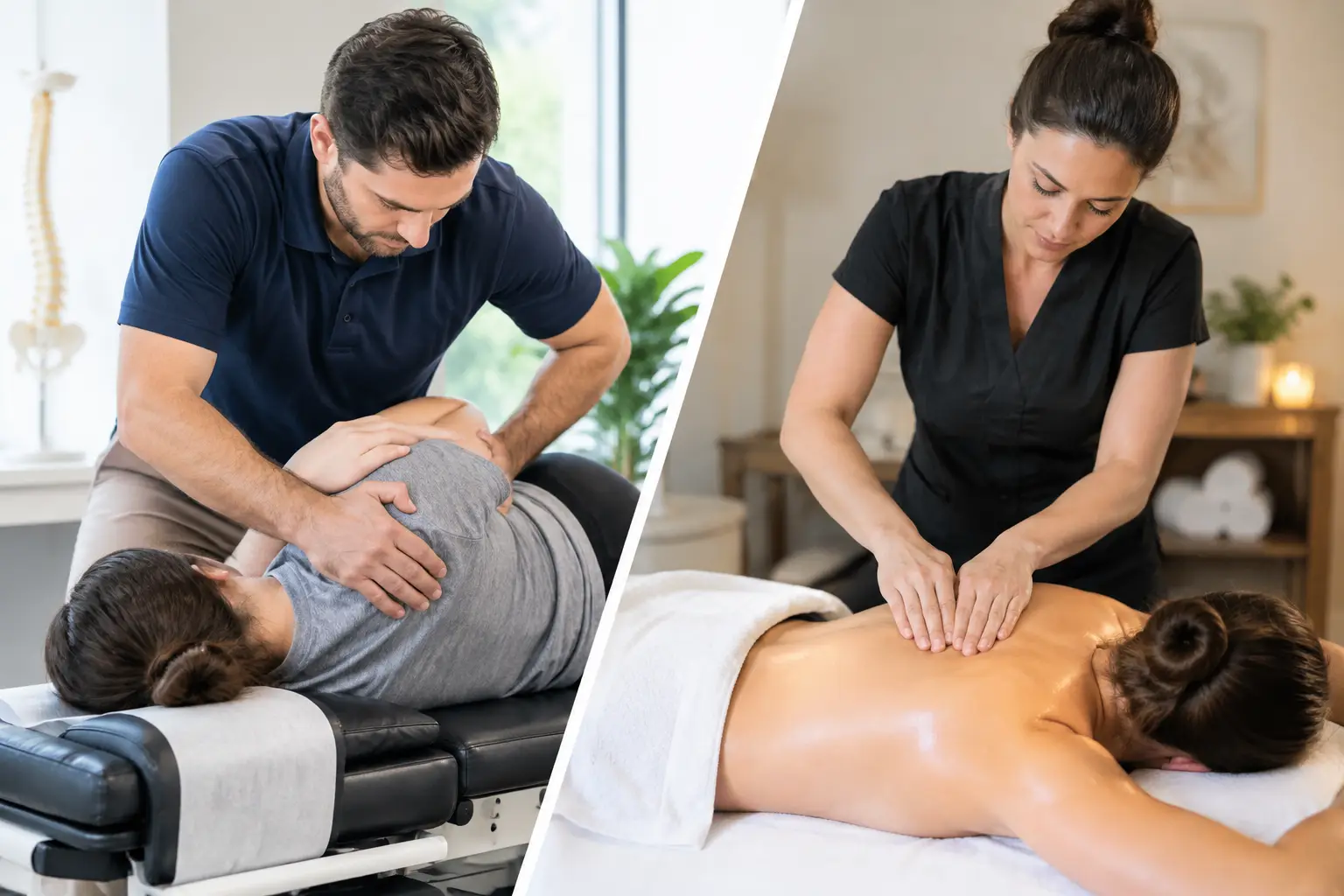
A tight lower back after a long week, a neck that will not turn comfortably, or a nagging sports injury can make any hands-on treatment sound appealing. But chiropractic adjustments versus massage therapy is not simply a choice between two ways to relax. Each approach works on different parts of the musculoskeletal system, and the right fit depends on what is driving your pain, stiffness, or movement limitation.
Massage therapy often focuses on muscles and other soft tissues. Chiropractic care focuses on joint motion, spinal mechanics, and the way the nervous and musculoskeletal systems work together. Both may play a valuable role in conservative care, particularly when treatment is paired with a plan to restore strength and healthier movement patterns.
Chiropractic Adjustments Versus Massage Therapy: The Core Difference
A chiropractic adjustment is a precise, hands-on technique used to improve movement in a restricted joint. While the spine is a common focus, adjustments may also be used for joints in the hips, shoulders, knees, ankles, and other areas when clinically appropriate. The goal is not simply to produce a popping sound. The goal is to reduce joint restriction, improve mobility, and help the body move with less irritation and compensation.
Massage therapy uses pressure, kneading, friction, stretching, and other techniques to address muscles, fascia, and surrounding soft tissues. It can reduce the feeling of muscle tightness, improve circulation to an area, and provide short-term relief from soreness or stress-related tension. Massage may range from gentle relaxation work to deeper, more targeted soft-tissue treatment.
Neither option is automatically better. A person whose neck is stiff because of prolonged computer use may benefit from soft-tissue work, a chiropractic evaluation, posture changes, and targeted exercises. Someone with muscle soreness after an unusually demanding workout may need recovery time and massage more than an adjustment. A careful assessment helps separate these situations.
When Chiropractic Care May Be the Better Starting Point
Chiropractic care may be especially helpful when pain is accompanied by restricted motion, recurring joint stiffness, or symptoms that appear connected to spinal or extremity mechanics. Many patients seek an evaluation for low back pain, neck pain, headaches, sciatica-like symptoms, disc-related discomfort, or pain that worsens with certain movements or positions.
For example, a person may feel sharp low back pain when standing up from a chair, turning, or bending forward. Muscle tension can be part of that picture, but it may be a response to an underlying movement problem rather than the whole problem. Improving joint mobility, identifying aggravating movements, and building stability through rehabilitation can offer a more complete path forward than repeatedly treating a tight muscle alone.
An adjustment should always be based on a clinical examination. At Bell District Spine and Rehab, care is designed around the patient’s condition, activity level, goals, and tolerance. Some people respond well to manual adjustments. Others may be better served by gentler mobilization, spinal decompression, soft-tissue techniques, laser therapy, functional dry needling, or a combination of services.
When Massage Therapy May Be the Better Fit
Massage can be a sensible first choice for general muscle soreness, stress-related tension, or temporary tightness after activity. It may be useful when the primary issue is muscular fatigue rather than a painful movement restriction. Many people also appreciate massage as part of recovery between workouts or during periods of high stress, when the shoulders, jaw, and upper back tend to hold tension.
It can also complement a rehabilitation plan. If protective muscle guarding makes it difficult to move comfortably, soft-tissue treatment may help a patient tolerate corrective exercise or manual care more easily. The benefit is often practical: less guarding can make it easier to restore normal movement.
Still, massage is not a substitute for evaluation when pain keeps returning, spreads into an arm or leg, causes numbness or weakness, follows a significant injury, or limits normal work and family activities. Temporary relief is valuable, but recurring symptoms deserve a closer look at why they are happening.
Why a Combined Approach Often Makes Sense
The body does not separate joints, muscles, nerves, and movement habits as neatly as treatment categories do. A restricted hip can change the way the low back works. A painful shoulder can cause the neck muscles to overwork. After an ankle injury, a person may walk differently for months and develop knee, hip, or back discomfort.
That is why chiropractic and soft-tissue care are often used together. An adjustment may improve a joint’s available motion, while soft-tissue work addresses the muscle tension that developed around that restriction. Rehabilitation then helps the body use that improved motion through strengthening, balance work, and movement retraining.
This sequence matters. Without rehab, it can be easy to return to the same positions, habits, or movement patterns that contributed to the problem. Without addressing stiff joints or irritated soft tissues, exercise may feel difficult or provoke symptoms. The best plan is not the one with the longest menu of treatments. It is the one that addresses the factors most likely to improve your function.
What Results Can You Expect?
Both chiropractic care and massage can help some people feel looser or more comfortable after an appointment, but the timeline depends on the condition. Recent muscle soreness may improve quickly. Long-standing neck stiffness, degenerative changes, disc irritation, or a sports injury usually require a more structured course of care.
A good treatment plan sets realistic goals beyond pain scores. Those goals may include sitting through a workday with fewer flare-ups, returning to the gym, walking without guarding, sleeping more comfortably, lifting a child with confidence, or getting back on the field. Pain relief matters, but durable improvement also depends on mobility, strength, and the ability to perform daily tasks without repeated setbacks.
Patients should also expect reassessment. If a treatment is not improving function, the plan should be adjusted. Conservative care is not one-size-fits-all, and a provider should explain what they are treating, why a particular approach is recommended, and how progress will be measured.
Safety and Situations That Need Medical Attention
Chiropractic adjustments and massage are generally considered conservative options when provided appropriately, but neither is right for every situation. Your provider should review your health history, current symptoms, medications, past injuries, and any relevant imaging or medical diagnoses before beginning care.
Seek prompt medical evaluation for severe or rapidly worsening pain after trauma, new loss of bowel or bladder control, numbness in the groin area, unexplained fever, significant unexplained weight loss, or new and progressive weakness. These symptoms may signal a problem that needs medical care beyond a chiropractic or massage setting.
For less urgent concerns, clear communication improves safety. Tell your provider about osteoporosis, blood-thinning medication, recent surgery, cancer history, pregnancy, joint replacements, or conditions that affect sensation. Treatment can often be modified, but those details matter.
How to Choose the Right Care for Your Symptoms
Start with the question behind the discomfort: Is the main problem muscle soreness, a movement restriction, an injury, or a pattern that keeps returning? If you are unsure, an evaluation is more useful than guessing based on the location of pain alone.
Massage may be a practical option for short-term muscle tension and recovery. Chiropractic care may be more appropriate when joint mobility, spinal mechanics, or recurring movement-related pain are part of the picture. For many Cedar Park patients, the most effective path includes both hands-on care and active rehabilitation that supports lasting mobility.
You do not have to accept recurring stiffness or build your routine around avoiding the movements you once enjoyed. A personalized assessment can identify what is limiting you now and create a sensible, drug-free plan for moving forward with greater comfort and confidence.