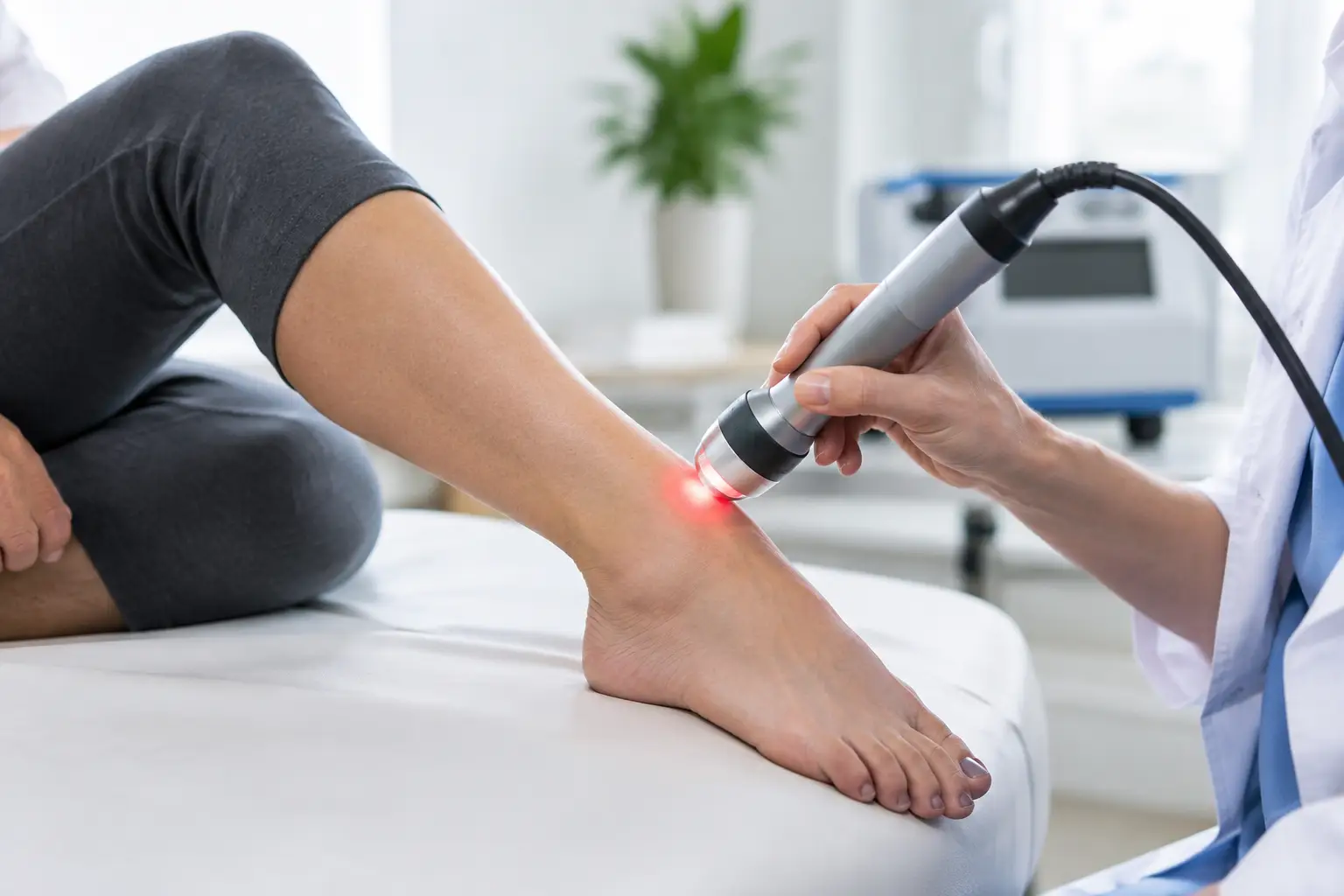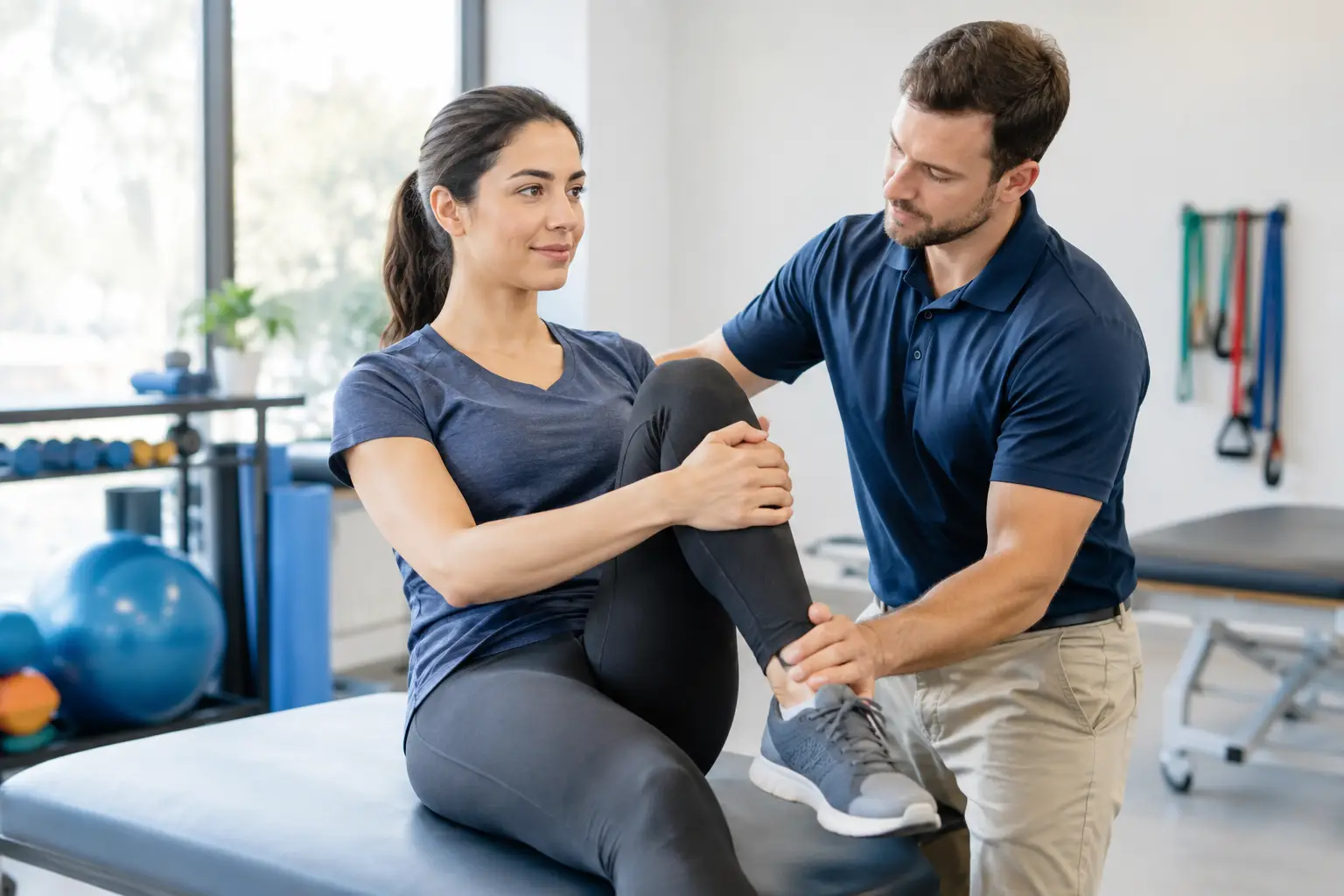
Knee arthritis can make everyday movement feel harder than it should. A morning walk may turn into stiffness after just a few minutes. Climbing stairs can become uncomfortable. Favorite activities like golf, tennis, gardening, fitness classes, or long neighborhood walks may start to feel less realistic over time.
For many active adults, the goal is not simply to mask pain for a few hours. It is to stay mobile, protect joint function, and keep doing the things that matter without immediately jumping to invasive procedures. That is why interest in knee decompression therapy in Cedar Park and other forms of non-surgical knee pain relief continues to grow.
When arthritis affects the knee, the joint often becomes irritated, compressed, and less tolerant of impact or repetitive use. Conservative care may help reduce stress on the area and support better movement. Among the options that may be discussed as part of a broader knee pain arthritis treatment plan is knee decompression therapy, sometimes combined with mobility work, strengthening, and other supportive therapies.
This article explains what knee decompression therapy is, how it may fit into care for arthritis-related knee pain, why active adults often look for non-surgical approaches, and what to consider when deciding whether this type of care may be appropriate.
Understanding knee arthritis and why it affects active adults
The knee is one of the body’s most heavily used joints. It absorbs force during walking, rising from a chair, exercising, and changing direction. Over time, wear and tear, old injuries, repetitive stress, or age-related joint changes can contribute to arthritis.
Arthritis in the knee commonly involves degeneration of the cartilage that helps the joint move smoothly. As the protective surfaces become less resilient, the joint may become inflamed, stiff, and painful. Some people notice symptoms only after exercise, while others begin to feel discomfort during ordinary daily movement.
Common signs of knee arthritis include:
- Pain during walking, standing, or stair use
- Morning stiffness or stiffness after sitting
- Swelling or a sense of fullness around the joint
- Reduced range of motion
- Clicking, grinding, or popping sensations
- Discomfort that increases after activity
- A feeling that the knee is less stable or less dependable
Active adults are often especially aware of these changes because they interfere with routines that support health and quality of life. Someone who enjoys hiking local trails, staying active with family, or maintaining a consistent fitness habit may feel the effects of arthritis sooner than someone with a more sedentary lifestyle. The challenge is finding relief without unnecessarily limiting movement.
What is knee decompression therapy?
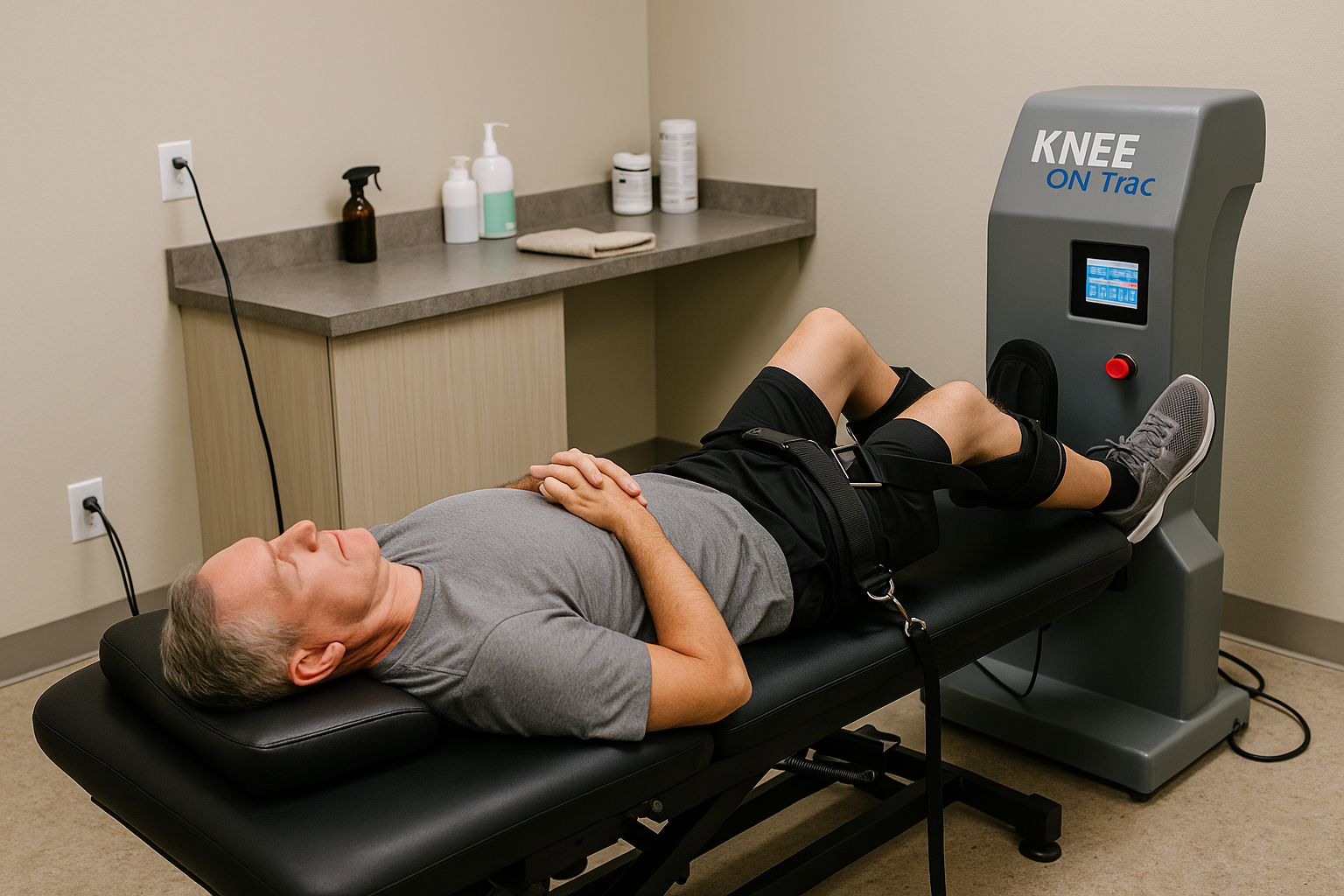
Knee decompression therapy is a conservative approach designed to reduce pressure within and around the knee joint. While treatment methods can vary, the general goal is to gently create space, decrease compressive stress, and support improved joint mechanics.
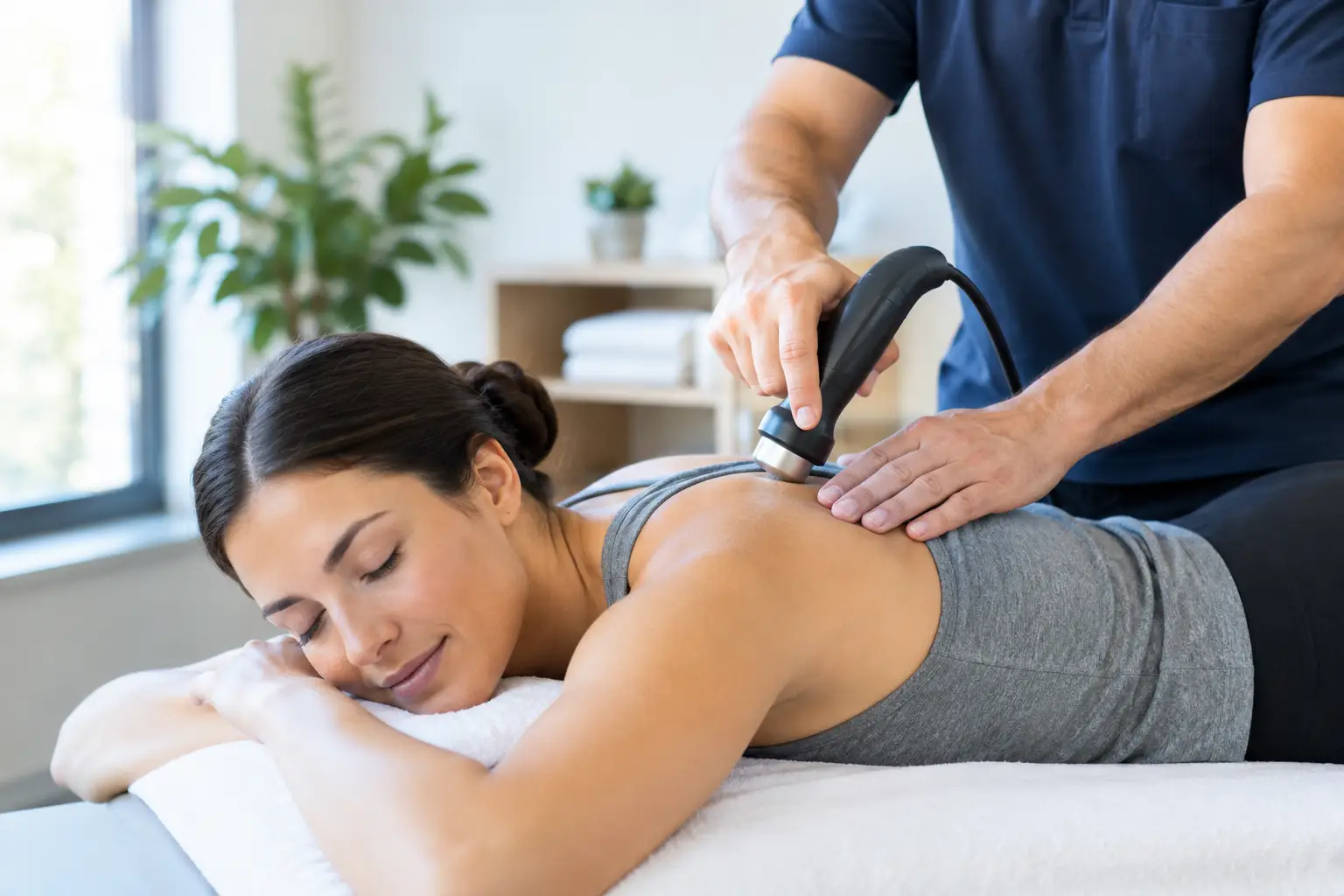
In practical terms, decompression therapy may involve specialized traction-style techniques or devices intended to apply a controlled, comfortable pull to the knee. This differs from high-impact treatment or forceful manipulation. The focus is usually on easing stress across the joint surfaces and surrounding soft tissues.
For people with arthritis, this matters because compression can aggravate an already irritated joint. When the knee is under constant stress, movement may become more painful and recovery after activity may take longer. By reducing some of that pressure, decompression-based care may help the joint tolerate movement better as part of an overall care plan.
It is important to understand that knee decompression therapy is not a cure for arthritis. Arthritis is a long-term joint condition. However, conservative support may play a useful role in symptom management, function, and activity tolerance for the right patient.
How decompression may support knee pain arthritis treatment
A good knee pain arthritis treatment strategy often focuses on more than one goal at a time. It may aim to calm irritation, improve movement quality, and help the surrounding muscles better support the joint. Knee decompression therapy may contribute to that process in several ways.
Reducing mechanical stress on the joint
Arthritic knees often become sensitive to load and compression. Even normal daily movement can feel uncomfortable when the joint surfaces are irritated. Gentle decompression may help reduce mechanical pressure during treatment sessions, which may allow the knee to move with less discomfort.
Supporting mobility
When pain increases, people often start guarding the knee. They shorten their stride, avoid bending the joint fully, or shift weight unevenly from one leg to the other. Over time, that protective pattern may contribute to stiffness and inefficient movement. If decompression helps the knee feel less restricted, it may be easier to work on restoring healthier motion.
Encouraging participation in active rehab
Many non-surgical treatment plans work best when passive care and active care are combined. In other words, symptom relief often needs to be paired with strengthening, stability training, stretching, and movement retraining. If decompression helps reduce pain enough for someone to participate more comfortably in exercise-based care, it may make the larger treatment plan more effective.
Addressing surrounding soft tissue tension
The knee does not function in isolation. Tightness or imbalance in the quadriceps, hamstrings, calves, hips, or lower back can change how forces travel through the joint. Decompression is often considered alongside soft tissue work and corrective exercise so the entire lower-body chain is addressed rather than focusing only on the painful spot.
Why active adults often seek non-surgical knee pain relief
Not every person with knee arthritis needs surgery, and many are not ready to consider it. For active adults, conservative care is often appealing because it may help them stay engaged in daily life with a lower level of disruption.
People commonly look for non-surgical knee pain relief when they want to:
- Remain active without relying only on temporary symptom masking
- Support joint function before discussing more invasive options
- Manage pain while continuing work, travel, or exercise
- Improve confidence in the knee during movement
- Use a structured care plan that includes mobility and strength
Non-surgical care does not mean doing as little as possible. In many cases, it means taking a proactive approach. That may involve modifying aggravating activities, improving joint mechanics, strengthening muscles that support the knee, and using therapies that reduce irritation so movement becomes more manageable.
For example, someone who enjoys pickleball may need to temporarily reduce high-volume play while working on hip strength and knee mobility. A person who walks every morning may benefit from shorter, more frequent walks instead of one longer walk that triggers swelling. A gym-goer may switch from deep loaded squats to lower-impact strengthening during a flare-up. In each case, the goal is not to stop moving altogether but to move more strategically.
Where chiropractic care may fit for knee arthritis
When people hear the phrase chiropractic care for knee arthritis, they sometimes think only about spinal treatment. In reality, many chiropractic-based musculoskeletal care plans take a broader view of joint function and movement patterns.
For arthritis-related knee pain, chiropractic care may focus on evaluating how the knee works in connection with the hips, ankles, pelvis, and lower back. If those areas are not moving well, the knee may absorb more stress than it should. A conservative treatment plan may include joint-focused therapies, soft tissue techniques, exercise guidance, mobility work, and strategies to improve overall movement efficiency.
This whole-body perspective can be especially relevant for active adults. For instance:
- A runner with limited ankle mobility may overload the knee with every stride.
- A golfer with hip stiffness may rotate poorly and stress the lead knee.
- A person with chronic low back tightness may shift weight unevenly while walking or exercising.
In those situations, addressing only the knee may not fully solve the problem. A broader plan that considers regional mechanics may be more useful than simply chasing symptoms.
What a conservative care plan may include besides decompression
Knee decompression therapy is often most helpful when it is part of a thoughtful, individualized program rather than a stand-alone service. Depending on the person’s symptoms, activity level, and exam findings, conservative care may include several components.
Mobility work
Gentle mobility exercises may help reduce stiffness and improve how the joint moves through daily activities. This can include guided range-of-motion work for the knee as well as mobility training for the hips and ankles.
Strengthening
Muscle support is critical for an arthritic knee. Strengthening often targets the quadriceps, hamstrings, glutes, calves, and core. Better muscular control may improve shock absorption and reduce unnecessary strain on the joint.
Movement retraining
Walking, rising from a chair, going up stairs, squatting, and lunging are all movement patterns that can be practiced and improved. Small technique changes may reduce irritation and increase confidence.
Soft tissue care
When surrounding muscles become tight or overworked, the knee may feel more restricted. Soft tissue approaches may be used to reduce tension and support more comfortable movement.
Activity modification
One of the most practical parts of care is knowing what to change temporarily. That does not always mean stopping activity. It may mean reducing impact, adjusting workout intensity, modifying range of motion, or rotating in lower-stress exercises while the knee settles down.
Home care strategies
Consistency between visits often matters. Home exercises, basic stretching, pacing strategies, and simple self-management habits can help people stay engaged in their recovery process.
Practical examples of how active adults may benefit
Arthritis affects people differently, but a few common scenarios help illustrate why non-surgical approaches are often worth considering.
The walker who develops pain after a mile
An adult who walks daily for fitness may notice that the knee feels acceptable at first but becomes stiff and sore after about a mile. A conservative plan may focus on reducing joint irritation, improving stride mechanics, increasing hip strength, and using decompression therapy to decrease stress on the knee. The goal is to help walking become more comfortable and sustainable.
The recreational athlete with flare-ups
Someone who plays tennis or pickleball may do well for short sessions but have pain later that day or the next morning. This pattern can suggest that the joint is not tolerating repetitive loading as well as it used to. A non-surgical plan may involve load management, mobility work, strengthening, and supportive therapies to help the person stay active with fewer setbacks.
The adult who wants to delay invasive procedures
Some people are not in severe crisis but can tell their knee is gradually becoming a bigger issue. They may want to explore conservative options before discussing injections or surgery. In that case, decompression and related therapies may be part of a function-focused plan designed to support activity and daily comfort.
Important considerations before starting treatment
Although conservative care is appealing, it should still begin with an appropriate clinical evaluation. Knee pain is not always caused by arthritis alone. Ligament injuries, meniscus problems, tendon irritation, inflammatory conditions, referred pain, and other issues can produce similar symptoms.
A proper assessment helps determine whether decompression-based treatment makes sense and whether other forms of care should be prioritized. Important considerations may include:
- How long the symptoms have been present
- Whether swelling is frequent or severe
- If the knee locks, gives out, or feels unstable
- Whether pain is worsening quickly
- If there was a recent injury
- Whether symptoms are affecting sleep or basic weight-bearing
- How the hips, ankles, and lower back may be influencing the knee
People should also understand that results from conservative care can vary. Arthritis severity, overall conditioning, activity demands, adherence to home recommendations, and the presence of other joint issues can all influence progress. The best approach is usually realistic, gradual, and focused on function rather than promises.
When movement is better than complete rest
One of the most common mistakes with arthritis-related knee pain is assuming that less movement is always better. While short-term rest may help during a flare-up, too little activity can contribute to more stiffness, weaker muscles, and lower joint tolerance over time.
In many cases, the more helpful strategy is controlled movement. That means choosing activities the knee can tolerate, building capacity gradually, and avoiding the cycle of overdoing it on good days and paying for it later.
Examples of knee-friendlier activity adjustments may include:
- Choosing cycling, swimming, or elliptical work instead of repetitive jumping
- Breaking long walks into shorter sessions
- Using strength exercises with controlled form and moderate depth
- Warming up more thoroughly before sports or workouts
- Allowing recovery time after higher-demand activities
This is where a structured care plan can be valuable. It gives active adults a clearer idea of what to continue, what to modify, and how to increase activity without constantly aggravating the joint.
Why an individualized approach matters
Two people can both have knee arthritis and need very different care. One person may have mild joint degeneration but significant muscle weakness and poor mechanics. Another may have more advanced arthritis yet still function fairly well because they are strong, mobile, and active within the right limits.
That is why a generic plan is often not enough. The most useful care usually takes into account:
- Activity goals
- Current pain triggers
- Movement limitations
- Strength deficits
- Past injuries
- Work and lifestyle demands
- How aggressively the person wants to return to activity
For someone in Cedar Park trying to stay active, these details matter. The right conservative plan should be practical for real life, not based on the unrealistic idea that all knee pain disappears if activity simply stops.
Conclusion
Knee arthritis can interfere with much more than comfort. It can limit confidence, consistency, and the ability to stay active in the ways that support long-term health. For many adults, the best next step is not rushing into invasive treatment but exploring a thoughtful conservative approach first.
Knee decompression therapy in Cedar Park may be one part of that approach. By aiming to reduce joint pressure and support more comfortable movement, it may complement broader care strategies that include strengthening, mobility work, activity modification, and whole-body movement assessment. As part of a complete knee pain arthritis treatment plan, it may help some individuals pursue non-surgical knee pain relief while staying engaged in daily life.
The key is choosing care that is individualized, function-focused, and realistic. For active adults managing arthritis, that often means looking beyond short-term symptom relief and building a plan that supports steadier, more confident movement over time. In that context, chiropractic care for knee arthritis and decompression-based therapies may offer a meaningful non-surgical option worth discussing with a qualified provider.