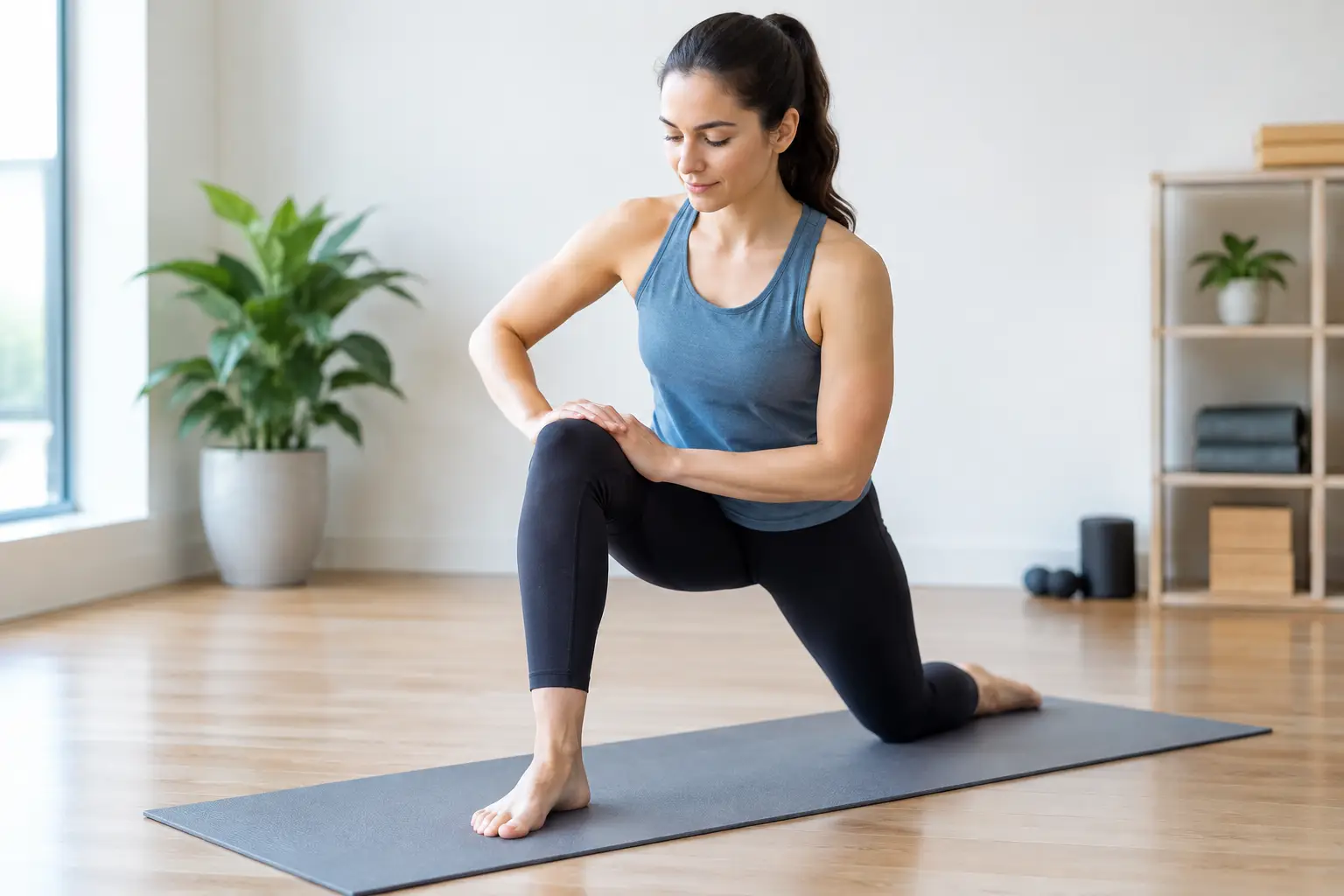
A knee that feels unreliable can change the way you move through an entire day. You may hesitate before taking the stairs, avoid kneeling to play with your children, or cut a walk short because the joint feels sore or unstable. Learning how to strengthen weak knees is not about pushing through pain or doing the hardest workout possible. It is about rebuilding support around the joint, improving how your hips, ankles, and feet work together, and progressing at a pace your body can tolerate.
Weak knees can affect active adults, athletes returning from an injury, and older adults managing arthritis or years of wear and tear. The right approach depends on why your knees feel weak in the first place.
Why Knees Feel Weak
The knee is a hinge joint, but it does not work alone. The quadriceps on the front of the thigh, hamstrings on the back of the thigh, calf muscles, and hip muscles all help control how force travels through the knee. When one or more of these areas are weak, tight, poorly coordinated, or recovering from injury, the knee often has to absorb more stress than it should.
A feeling of weakness may show up as wobbling when you stand on one leg, pain when rising from a chair, difficulty with stairs, or the sense that the knee might give way. Sometimes this is related to deconditioning after a period of inactivity. In other cases, it can follow a sprain, meniscus injury, patellar tracking problem, arthritis flare, or altered movement after back, hip, or ankle pain.
Pain can also cause the muscles around the knee to “switch off” temporarily. This protective response is common after swelling or injury, but it can leave the leg less stable if it is not addressed with appropriate rehabilitation.
How to Strengthen Weak Knees Safely
The goal is to create a knee that can handle everyday demands with less irritation. That requires both strength and control. Start with movements that feel manageable and build from there rather than jumping immediately to deep squats, running, or heavy leg presses.
Start with a pain-aware baseline
Mild muscle effort and temporary stiffness can be normal when beginning an exercise program. Sharp pain, catching, significant swelling, or a feeling that the knee is buckling are not signals to ignore. As a practical rule, exercises should stay in a tolerable range and should not cause symptoms that linger or significantly worsen later that day or the following morning.
If your knee is currently swollen, hot, recently injured, or painful enough to change your walking pattern, get evaluated before starting a strengthening routine. Training through an unstable or inflamed knee can turn a manageable issue into a longer recovery.
Build the quadriceps first
Your quadriceps are essential for standing, walking, stair climbing, and controlling the knee as you lower into a chair or squat. For many people, simple quad-focused movements are the right entry point.
A quad set is a low-impact place to begin. Sit or lie down with the leg straight, gently tighten the front of your thigh as if pressing the back of the knee toward the surface beneath it, hold briefly, and relax. Straight-leg raises can follow if you can keep the knee fully straight while lifting the leg. These exercises are not flashy, but they help restore the muscle activation that may be missing after pain or inactivity.
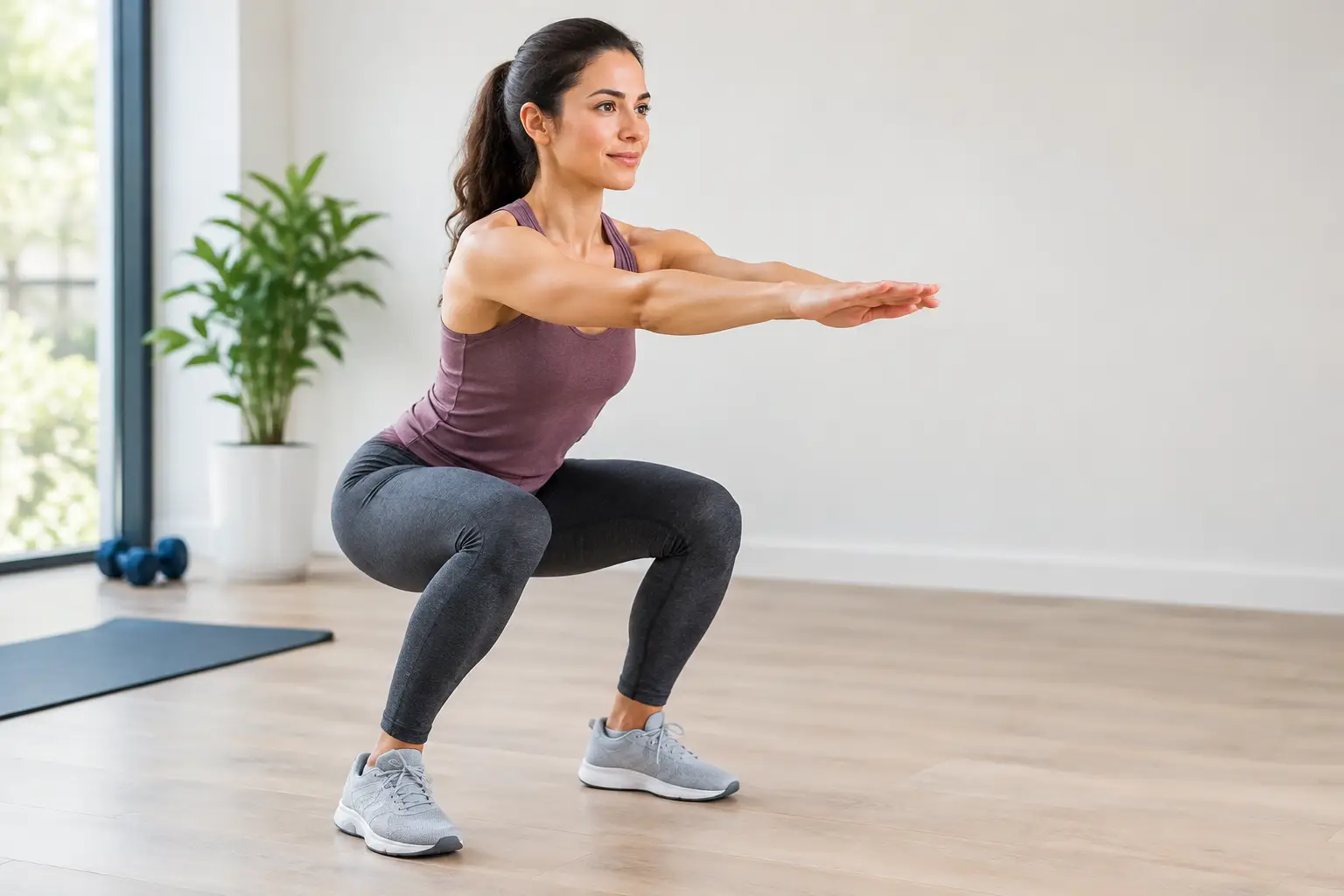
As control improves, practice sit-to-stands from a firm chair. Keep your feet about hip-width apart and move slowly, allowing your knees to track in the same direction as your toes. Use your hands for support if needed. Lowering with control is often just as valuable as standing up.
Do not neglect the hips and hamstrings
A knee that collapses inward during a step, squat, or landing may need more than stronger quads. Hip weakness can make it harder to control the thigh bone, changing the forces placed on the knee joint. Hamstrings help support the knee from the back and contribute to smoother movement during walking and bending.
Bridges are a useful starting exercise because they strengthen the glutes and hamstrings without placing substantial load directly through the knee. Side-lying leg raises or standing hip abduction can help build the outer hip muscles that support single-leg balance. When these movements become easier, controlled step-ups onto a low step can train the hips, thighs, and knee together in a practical pattern.
The height of the step matters. A step that is too high may cause the knee to cave inward or create pain at the front of the joint. Begin lower than you think you need to, then increase height only when your form stays steady.
Train balance and knee control
Strength on its own does not always translate to confidence during real-life movement. Your nervous system also needs practice sensing where the leg is and responding to small changes in position.
Standing on one leg near a counter or sturdy chair is a simple balance exercise. Keep a slight bend in the knee, level hips, and light fingertip support as needed. Once this feels comfortable, try a slow reach with the opposite foot in different directions. The working knee should remain aligned over the middle of the foot rather than drifting inward.
This type of training is particularly helpful for people who describe their knees as shaky, untrustworthy, or unstable during turns, uneven ground, or stair descent.
Choose Low-Impact Conditioning While You Rebuild
You do not have to stop moving while strengthening weak knees. In fact, appropriate movement often helps reduce stiffness and improve tolerance. The best option depends on your symptoms and current fitness level.
Walking on a flat surface can be effective if it does not increase pain or swelling. A stationary bike may be more comfortable for some people because it keeps the knee moving without repeated impact. Pool exercise can reduce joint loading while still allowing you to work the leg muscles. Elliptical training may be appropriate later for those who tolerate it well.
Running, jumping, deep lunges, and steep hills are not automatically off-limits, but they may not be the right first step for an irritated knee. Returning to higher-impact activity should come after you can walk, climb stairs, and perform controlled strengthening movements with good form and minimal symptom flare.
Progress Gradually Instead of Chasing Soreness
A common mistake is adding too much volume, resistance, or range of motion at once. Knees generally respond better to steady progression than occasional intense workouts followed by several days of pain.
Start with a level that feels challenging but controlled. You might begin with one or two sets of a few exercises two or three times per week, allowing a day between sessions for recovery. When that level becomes comfortable, change only one variable at a time: add a few repetitions, increase resistance slightly, use a lower chair, or improve the range of motion.
Form is your guide. If your knee caves inward, your trunk shifts dramatically, or you need momentum to complete the movement, scale it back. Quality repetitions build better movement patterns than forcing more repetitions with poor control.
When Weak Knees Need Professional Care
Home exercise can be helpful, but some symptoms call for a more thorough assessment. Seek care promptly after a significant twist, fall, or direct impact, especially if you cannot bear weight, fully straighten the knee, or notice rapid swelling. Locking, repeated buckling, redness, warmth, fever, calf swelling, or unexplained pain should also be evaluated.
For persistent knee pain, a movement-based examination can identify contributing issues beyond the knee itself. Limited ankle mobility, hip weakness, foot mechanics, low back dysfunction, and old injuries can all affect how the knee is loaded. A personalized rehabilitation plan can combine targeted exercise with hands-on care and appropriate non-invasive therapies when indicated.
At Bell District Spine and Rehab, care plans are designed around the cause of your symptoms and the activities you want to return to, whether that means walking Cedar Park trails, keeping up with your family, or getting back to the gym. The best knee program is not the most aggressive one. It is the one that helps you move with greater strength, control, and confidence week after week.