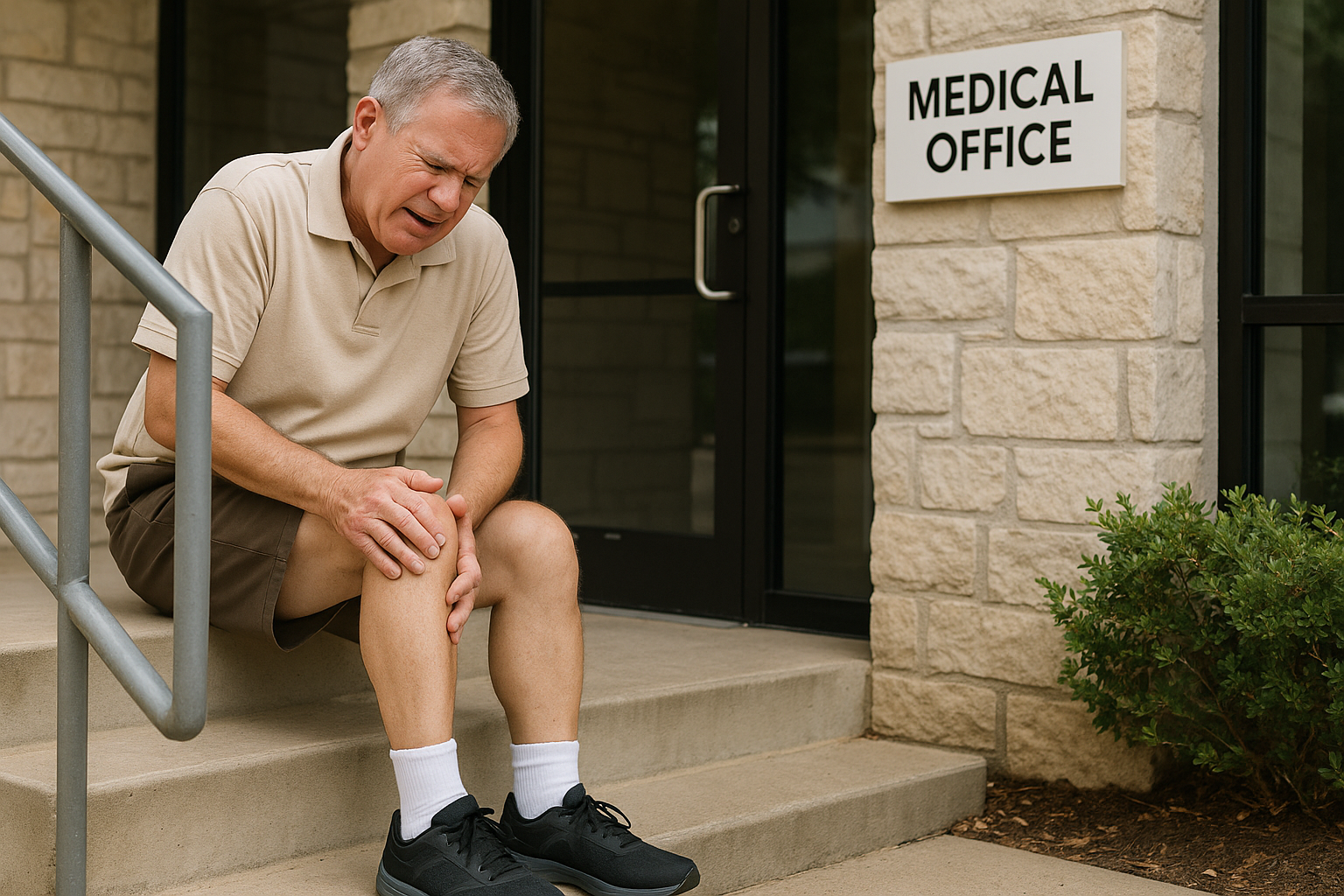
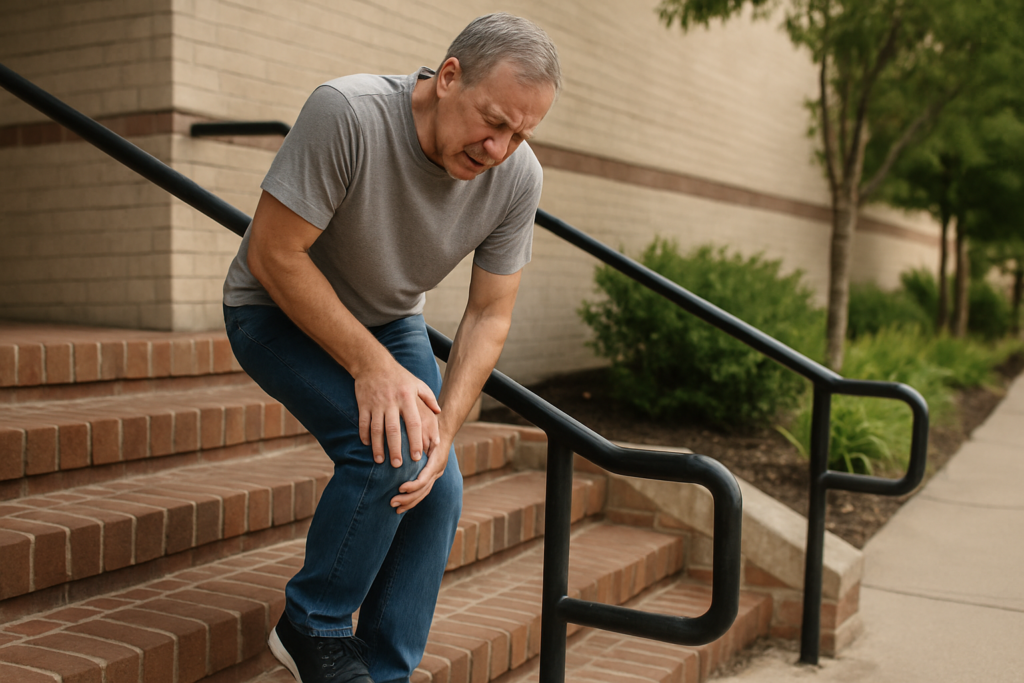
If you have knee pain going down stairs in Cedar Park, TX, you are not alone. Many people notice that stairs bring out knee symptoms more than walking on level ground. Going down steps places extra force through the knee joint, especially around the kneecap and the front of the knee. That is why a knee that feels mostly manageable during everyday walking may suddenly feel sharp, weak, stiff, or unstable on stairs.
Pain in the knee when using stairs does not always mean there is a serious injury, but it is a sign worth paying attention to. Sometimes it comes from overuse, muscle imbalance, or joint irritation. In other cases, it may be related to cartilage wear, tendon strain, inflammation, or changes in the way the kneecap tracks. Understanding what the symptom often means can help you decide whether simple self-care is reasonable or whether it is time to have the knee professionally evaluated.
This article explains common reasons stairs trigger knee pain, what symptoms may suggest, when the issue should be checked, and what non-surgical knee pain treatment in Cedar Park may involve. This is general educational information, not a diagnosis. For personal medical advice, consult a qualified clinician.
Why going down stairs stresses the knee more
Walking downstairs requires the knee to bend while also controlling body weight as you lower yourself from one step to the next. The thigh muscles, especially the quadriceps, must work eccentrically, meaning they are lengthening while still under load. This creates more pressure through the kneecap and the joint surfaces than many people realize.
As a result, stairs can expose problems that are less obvious during flat-ground walking, such as:
- Irritation behind or around the kneecap
- Weakness in the hip or thigh muscles
- Reduced shock absorption
- Joint inflammation
- Limited ankle or hip mobility that changes knee mechanics
- Early arthritic changes
If the pain is mostly noticeable when descending stairs rather than climbing them, that detail can be useful. It often points to conditions involving the front of the knee or the way force is distributed across the joint.
Common causes of knee pain going down stairs
Patellofemoral pain syndrome
One of the most common explanations for knee pain going down stairs in Cedar Park, TX is patellofemoral pain syndrome. This refers to pain around or behind the kneecap, often related to irritation where the kneecap moves over the thigh bone.
People often describe it as:
- A dull ache in the front of the knee
- Pain with stairs, squats, lunges, or getting up from a chair
- Discomfort after sitting for a long time with the knee bent
- Popping or grinding sensations
This can develop from overuse, poor movement patterns, muscle imbalance, increased training, or deconditioning. It is common in active adults, runners, and people returning to exercise too quickly.
Osteoarthritis
Knee osteoarthritis happens when the cushioning cartilage in the joint wears down over time. This can cause pain, stiffness, swelling, and reduced mobility. Stairs frequently aggravate arthritic knees because the joint must absorb higher forces during bending and weight transfer.
Symptoms may include:
- Morning stiffness or stiffness after rest
- Aching with activity
- Swelling that comes and goes
- Crunching or grinding sensations
- Reduced confidence on stairs
Osteoarthritis is more common with age, but prior injuries, body mechanics, repetitive stress, and body weight can also contribute.
Patellar tendinopathy or tendon irritation
The patellar tendon connects the kneecap to the shin bone. When this tendon becomes irritated from repetitive loading, people may feel pain just below the kneecap. Stairs, jumping, squatting, and getting up from low seats can make symptoms worse.
Tendon-related pain often feels more localized than joint-related pain. It may start mildly and worsen if activity keeps increasing without enough recovery.
Meniscus irritation or tear
The meniscus is a cartilage structure that helps cushion and stabilize the knee. A meniscus problem can develop from a twisting injury or from gradual wear over time. Pain with stairs may occur if the knee is irritated, catching, or not moving smoothly.
Meniscus-related symptoms can include:
- Pain along the inner or outer side of the knee
- Swelling
- Catching or locking sensations
- Pain with twisting or deep bending
- A sense that the knee is not moving normally
Not every meniscus issue requires surgery, but persistent mechanical symptoms should be evaluated.
Ligament sprain or instability
If the knee feels like it may buckle when going downstairs, instability may be part of the issue. This can happen after a ligament sprain, after a previous injury that never fully recovered, or when pain has led to weakness and poor control. A feeling of giving way deserves attention, especially if it is recurrent.
Iliotibial band or soft tissue irritation
Although often associated with pain on the outer side of the knee during running, surrounding soft tissue irritation can also change knee movement and make stairs uncomfortable. Tightness or poor control in the hips can shift extra load to the knee.
What the location and type of pain can suggest
The exact pattern of symptoms does not diagnose the problem by itself, but it can offer clues.
| Symptom pattern | What it may suggest | Why it should be checked |
|---|---|---|
| Pain in the front of the knee, worse going downstairs or squatting | Patellofemoral pain or kneecap tracking irritation | Often improves with targeted rehab and movement correction |
| Deep aching with stiffness, swelling, or grinding | Osteoarthritis or joint irritation | Needs evaluation to guide activity, strengthening, and symptom management |
| Pain below the kneecap with loading | Patellar tendon irritation | Early care may help prevent worsening overload |
| Pain on the inside or outside of the knee with catching or twisting pain | Meniscus irritation or tear | Mechanical symptoms may need professional assessment |
| Buckling, giving way, or instability on stairs | Weakness, ligament injury, or joint dysfunction | Important to assess fall risk and structural stability |
When knee pain on stairs may be more than simple overuse
Some stair-related knee pain settles with short-term activity modification, ice, gradual strengthening, and better movement habits. However, certain patterns suggest that the knee should be checked rather than ignored.
Consider an evaluation if:
- The pain lasts more than a couple of weeks
- Symptoms are getting worse instead of better
- The knee is swollen, warm, or visibly puffy
- You notice locking, catching, or limited range of motion
- The knee feels unstable or gives out
- You cannot go downstairs normally without holding the rail every time
- Pain interferes with work, exercise, sleep, or daily activities
- You recently increased activity or had a fall or twisting injury
It is also wise to get checked if you have a history of knee injury, previous surgery, or recurrent flare-ups that keep returning.
Urgent warning signs that should not wait
While many cases are not emergencies, some symptoms need prompt medical attention. Seek urgent care right away if you have:
- Severe pain after a fall, twist, or direct blow
- Inability to bear weight
- A visibly deformed joint
- Rapid, significant swelling after injury
- Fever, redness, and warmth with strong knee pain
- Calf swelling, chest pain, or shortness of breath
- Numbness, major weakness, or loss of circulation in the leg
These signs can point to a fracture, major ligament injury, infection, blood clot, or another serious problem. General educational articles cannot determine the cause.
How daily habits can contribute to pain in knee when using stairs
Sometimes the knee itself is not the only issue. Several everyday factors can increase stress on the joint:
Weak hips and thighs
If the glutes and quadriceps are not doing their share, the knee may absorb more force than it should. This is especially common after inactivity, prolonged desk work, or time off following an injury.
Poor movement mechanics
Knees that collapse inward during step-down movements, squats, or lunges often experience more irritation around the kneecap. Limited control at the hip and ankle can contribute.
Sudden activity increases
Starting a new exercise routine, adding hill workouts, taking longer walks, or increasing sports volume can overload tissues before they are ready.
Stiffness in nearby joints
Reduced hip or ankle mobility can shift stress toward the knee. The body works as a chain, so a movement problem above or below the knee can show up as knee pain.
Footwear and surfaces
Worn-out shoes or frequent stair use at work or home may aggravate symptoms, particularly if other contributing factors are already present.
What an evaluation may involve
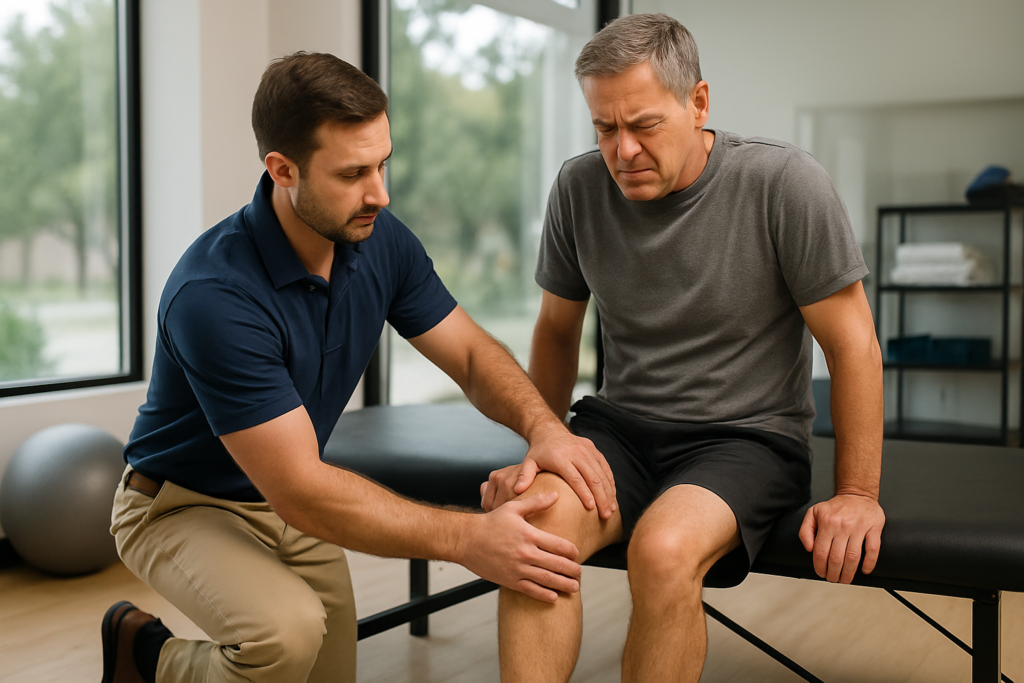
If you seek care for knee pain going down stairs in Cedar Park, TX, a clinician will typically look at more than the knee alone. A thorough evaluation may include:
- Review of when the pain started and what triggers it
- Assessment of swelling, tenderness, and range of motion
- Testing for ligament or meniscus involvement
- Observation of walking, stepping, and squat mechanics
- Strength testing for the quadriceps, hamstrings, hips, and core
- Screening of ankle and hip mobility
The goal is to determine whether the pain appears related to overuse, biomechanical stress, joint irritation, tendon strain, arthritis, or a more significant injury. In some cases, imaging may be appropriate, but not every person with knee pain needs it immediately.
Non-surgical knee pain treatment in Cedar Park
Many common causes of stair-related knee pain respond well to conservative care. Non-surgical knee pain treatment in Cedar Park often focuses on reducing irritation, restoring movement, improving strength, and addressing the mechanical reasons the knee is being overloaded.
Activity modification
This does not necessarily mean complete rest. It usually means temporarily reducing the activities that sharply aggravate the knee while staying as active as tolerated. For example, a person may scale back repetitive stair use, deep squats, or high-impact exercise for a period of time.
Targeted exercise and rehabilitation
Progressive strengthening is often central to recovery. Depending on the condition, treatment may target:
- Quadriceps strength
- Hip and glute stability
- Hamstring balance
- Core control
- Step-down mechanics
- Flexibility and joint mobility
Exercise selection should match the specific problem. What helps kneecap pain may not be identical to what helps tendon pain or arthritis.
Manual therapy and mobility work
Hands-on care and guided mobility strategies may be used to reduce stiffness and improve how the knee and surrounding joints move. This can be especially helpful when reduced flexibility or altered mechanics are contributing to symptoms.
Inflammation and pain management strategies
Short-term symptom relief may involve methods intended to calm irritated tissues and make movement more tolerable while the underlying issue is addressed. A qualified clinician can explain which approaches are appropriate based on your history and overall health.
Movement retraining
Learning how to descend stairs, squat, and lunge with better control can be an important part of long-term improvement. Small changes in alignment and muscle engagement can reduce unnecessary stress on the knee.
Weight management support when appropriate
For some people, even modest reductions in excess body weight can help reduce load on the knees. This is not the sole cause of knee pain, but it can be one part of a bigger plan.
Where knee decompression therapy may fit
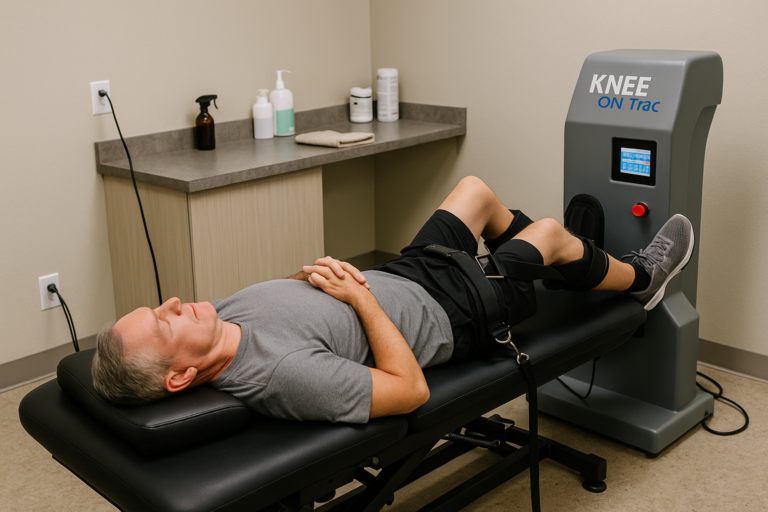
Some people searching for care also look into knee decompression therapy in Cedar Park. In general, decompression-related approaches are intended to reduce pressure across the joint, support mobility, and improve comfort as part of a broader non-surgical plan. Whether this type of therapy is appropriate depends on the underlying cause of the pain, the person’s symptoms, and the clinician’s assessment.
It is important to remember that no single therapy is right for every knee problem. For example, someone with front-of-knee pain from poor tracking mechanics may need a different emphasis than someone with significant arthritis, swelling, or tendon overload. That is why individualized evaluation matters.
Practical steps you can take now
If your symptoms are mild and there are no urgent warning signs, these steps may help while you monitor the knee:
- Use the handrail and take stairs more slowly
- Limit repeated trips up and down stairs for a few days
- Avoid deep knee bending if it sharply increases pain
- Apply ice after aggravating activity if it helps with soreness or swelling
- Choose supportive footwear
- Try gentle mobility and light strengthening if tolerated
- Pay attention to whether the knee caves inward during step-downs or squats
However, if symptoms persist, keep recurring, or affect your confidence and function, self-care alone may not be enough. Continuing to push through pain can prolong recovery in some cases.
Why early attention can make recovery easier
People often wait until knee pain becomes severe before seeking help. But early evaluation can be useful because it may identify manageable issues before they become more stubborn. A mild tracking problem, muscle imbalance, or tendon overload may be easier to address before compensations develop and pain starts affecting daily movement patterns.
Early attention can also help rule out more significant concerns and give you a clearer plan. Instead of guessing whether rest, exercise, or stretching is the right move, you can get guidance tailored to what the knee appears to need.
Conclusion
Knee pain going down stairs in Cedar Park, TX often points to increased stress on the front of the knee or irritation somewhere within the joint, tendon, cartilage, or supporting structures. Common causes include patellofemoral pain, arthritis, tendon irritation, meniscus problems, and movement-related overload. Because stairs place higher demands on the knee, this symptom can appear even when regular walking feels mostly tolerable.
If you have pain in the knee when using stairs that is persistent, worsening, swollen, unstable, or interfering with daily life, it is a good idea to have it checked by a qualified clinician. Many cases improve with non-surgical knee pain treatment in Cedar Park, which may include targeted rehabilitation, mobility work, movement retraining, and other conservative options. For some individuals, knee decompression therapy in Cedar Park may also be considered as part of a broader care plan, depending on the cause.
The most important step is not to ignore a pattern that keeps returning. Understanding what the symptom often means can help you make an informed decision about when to seek professional care and how to protect your knee function over time.