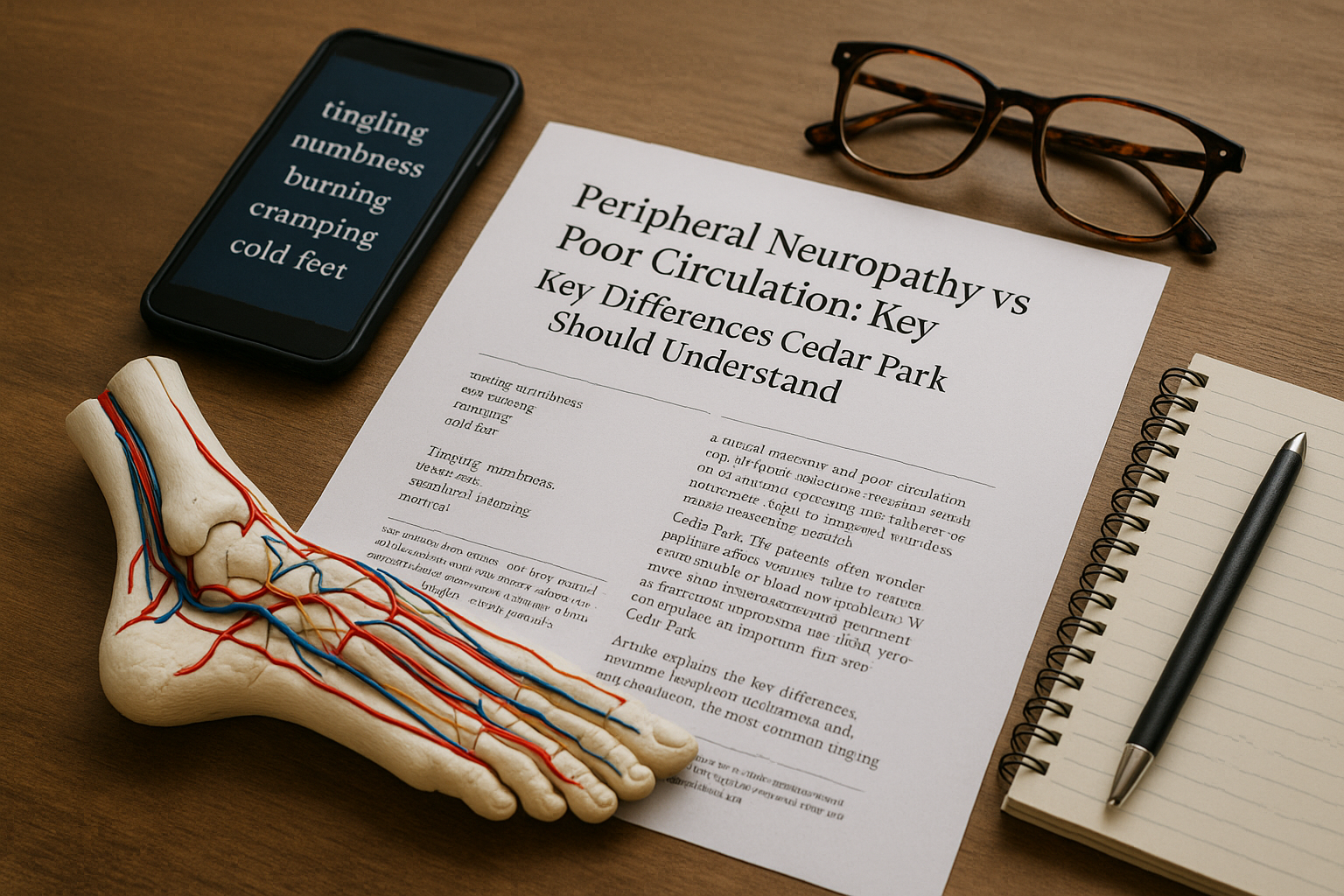
Tingling, numbness, burning, cramping, and cold feet are symptoms many people notice but do not always understand. In Cedar Park, TX, patients often wonder whether these changes point to nerve trouble or blood flow problems. While peripheral neuropathy and poor circulation can sometimes feel similar, they are not the same condition, and understanding the difference matters when symptoms begin to interfere with walking, sleeping, exercise, or daily comfort.
If you have been searching for neuropathy vs poor circulation Cedar Park TX, it helps to know that one problem primarily affects the nerves, while the other affects how blood moves through the body. Because the causes, warning signs, and treatment approaches can differ, recognizing the pattern of your symptoms is an important first step.
This guide explains the key differences between peripheral neuropathy and poor circulation, the most common tingling feet causes, and when ongoing symptoms deserve professional evaluation.
Why These Conditions Are Often Confused
Peripheral neuropathy and poor circulation can overlap in the feet and lower legs, which is one reason they are easy to confuse. Both can contribute to:
- Tingling in the feet or toes
- Numbness
- Pain in the lower legs
- Changes in walking tolerance
- Symptoms that worsen over time
However, the underlying mechanisms are different. Peripheral neuropathy develops when peripheral nerves are damaged or irritated. Poor circulation happens when blood flow is reduced, often due to narrowing of blood vessels, vascular disease, or other circulation-related issues.
In some cases, a person may even have both at the same time. For example, diabetes can raise the risk of nerve damage and circulation problems. That is why symptom patterns, medical history, and a physical examination all matter.
What Is Peripheral Neuropathy?
Peripheral neuropathy refers to damage or dysfunction involving the peripheral nerves, which carry signals between the brain, spinal cord, and the rest of the body. These nerves help control sensation, movement, and certain automatic body functions.
When nerves are not working properly, signals can become distorted or interrupted. This can lead to unusual sensations, pain, or weakness, especially in the feet and hands.
Common Peripheral Neuropathy Symptoms
Peripheral neuropathy symptoms often begin gradually and may include:
- Burning pain in the feet
- Tingling or “pins and needles” sensations
- Numbness that starts in the toes and spreads upward
- Sharp, stabbing, or electric-like pain
- Increased sensitivity to touch
- Weakness in the feet or ankles
- Trouble with balance or coordination
- A feeling like you are wearing socks when barefoot
Many people notice these symptoms more at night. Some describe discomfort even when bed sheets touch the feet.
Common Causes of Peripheral Neuropathy
There are many possible tingling feet causes related to nerve irritation or damage, including:
- Diabetes or blood sugar dysregulation
- Vitamin deficiencies, especially B vitamins
- Alcohol misuse
- Certain medications
- Nerve compression
- Injuries
- Autoimmune conditions
- Infections
- Exposure to toxins
- Idiopathic neuropathy, where no exact cause is identified
In addition, spine-related issues such as nerve root irritation may sometimes contribute to numbness, tingling, or radiating symptoms in the legs and feet. Although this is not the same as peripheral neuropathy in every case, it can produce sensations that patients describe in similar ways.
What Is Poor Circulation?
Poor circulation means blood is not moving through the body as effectively as it should. In the lower extremities, reduced blood flow can limit oxygen and nutrient delivery to tissues. This can create discomfort, delayed healing, and other noticeable changes in the legs or feet.
Poor circulation is often associated with vascular conditions, including peripheral artery disease, but it can also be linked to smoking, inactivity, blood vessel problems, heart-related conditions, and other health factors.
Common Signs of Poor Circulation
Symptoms of poor circulation in the feet and legs may include:
- Cold feet or toes
- Leg cramping with walking that improves with rest
- Skin that appears pale, bluish, or shiny
- Swelling in the lower legs or ankles
- Slow-healing cuts or sores
- Weak or hard-to-find pulses in the feet
- Heaviness or fatigue in the legs
- Hair loss on the legs
Unlike neuropathy, poor circulation often causes symptoms tied to physical activity or visible skin changes. A person may feel okay sitting still, but notice calf pain or tightness while walking certain distances.
Neuropathy vs Poor Circulation: The Key Differences
When comparing neuropathy vs poor circulation Cedar Park TX, the easiest way to understand the difference is to look at what type of tissue is affected and how symptoms behave.
1. Nerves vs Blood Flow
Peripheral neuropathy is a nerve problem. Poor circulation is a blood flow problem. Neuropathy changes how you feel sensation, while circulation issues affect how well tissues are nourished.
2. Sensation Pattern
Neuropathy often causes burning, tingling, stabbing pain, or numbness. The sensations may seem unusual or exaggerated and can happen even at rest.
Poor circulation is more likely to cause coldness, aching, heaviness, or cramping, especially with walking or exertion.
3. Timing of Symptoms
Neuropathy symptoms commonly worsen at night and may interfere with sleep.
Poor circulation symptoms may become more noticeable during activity because muscles need more blood flow when working.
4. Skin and Tissue Changes
Poor circulation is more likely to cause visible physical changes such as pale skin, a bluish tint, delayed wound healing, or reduced hair growth on the legs.
Neuropathy may not change the appearance of the skin early on, but it can reduce sensation enough that injuries go unnoticed.
5. Balance and Coordination
Neuropathy can affect your ability to feel the ground clearly, which may increase the risk of stumbling or balance problems.
Poor circulation does not typically cause the same sensory disconnect, though pain and weakness from reduced blood flow can still limit mobility.
Practical Examples Patients Often Notice
Real-world examples can make these differences easier to understand.
Example 1: Burning Feet at Night
A person notices both feet burn and tingle most evenings. They also feel numbness in the toes, but the feet are not especially cold and the skin looks normal. This pattern may fit peripheral neuropathy more closely than poor circulation.
Example 2: Calf Pain During Walks
Another person feels tight, cramping pain in the calves after walking a few blocks. The discomfort improves after resting, and the feet often feel cool. This pattern may be more suggestive of a circulation issue.
Example 3: Numbness With Balance Changes
A patient describes numb feet, occasional sharp zaps, and a growing sense of unsteadiness, especially in dim lighting. Because sensation helps with balance, this may point toward nerve involvement.
Example 4: Slow-Healing Foot Wound
If a small cut on the foot is slow to heal and the foot appears pale or cool, reduced circulation becomes a stronger concern.
These examples are not a diagnosis, but they show why symptom details matter. When symptoms persist, proper evaluation is important rather than guessing based on internet searches alone.
Can Tingling Feet Have Other Causes?
Yes. Not every case of tingling, numbness, or discomfort in the feet is caused by peripheral neuropathy or poor circulation. Other possible tingling feet causes can include:
- Sciatica or lower back nerve irritation
- Tarsal tunnel syndrome
- Prolonged sitting or crossing the legs
- Footwear that compresses nerves
- Electrolyte imbalances
- Anxiety-related physical sensations
- Inflammation
- Musculoskeletal dysfunction affecting nerve pathways
That is one reason a thorough history and exam are so valuable. Similar symptoms can come from very different conditions.
Why Early Evaluation Matters
Whether symptoms come from nerve changes, vascular issues, or another cause, early evaluation can help prevent the problem from becoming more disruptive. Ongoing numbness or reduced blood flow may increase the risk of falls, skin injury, activity limitation, and progressive discomfort.
Prompt attention is especially important if symptoms are getting worse, affecting both feet, or beginning to interfere with normal movement and daily routines. It also matters if you have known risk factors such as diabetes, smoking history, cardiovascular disease, or a history of back problems.
Important Warning Signs You Should Not Ignore
Some symptoms deserve timely medical attention. These include:
- Sudden weakness in the foot or leg
- A foot wound that is not healing
- Severe pain in the leg with walking or at rest
- Noticeable color changes in the foot
- Rapidly worsening numbness
- Loss of balance leading to falls
- New symptoms after an injury
If symptoms are intense, sudden, or accompanied by major weakness or skin changes, it is important to seek prompt medical care.
How These Conditions Are Commonly Evaluated
Diagnosis begins with listening carefully to symptom patterns. A healthcare provider may ask when symptoms began, whether they are constant or intermittent, what makes them worse, and whether there are related issues such as low back pain, diabetes, medication changes, or walking intolerance.

An evaluation may include:
- Review of medical history
- Physical examination of the feet and legs
- Reflex, strength, and sensation testing
- Pulse assessment
- Gait and balance observation
- Assessment for skin, temperature, or color changes
- Referral for additional testing when needed
Depending on the findings, further workup may involve lab testing, vascular studies, or nerve studies. The goal is to identify the actual source of symptoms rather than simply labeling every case of numbness as neuropathy.
General Approaches to Numb Feet Treatment in Cedar Park
When people search for numb feet treatment Cedar Park, the most important point is that treatment depends on the cause. There is no one-size-fits-all solution for tingling or numbness.
If Symptoms Are Related to Peripheral Neuropathy
Management may focus on addressing contributing factors such as blood sugar control, vitamin deficiencies, medication side effects, or nerve irritation. Supportive care may also include balance strategies, footwear guidance, activity modification, and symptom management.
If Symptoms Are Related to Poor Circulation
Care may focus on improving vascular health, managing underlying risk factors, and monitoring tissue health in the feet and legs. Walking tolerance, smoking cessation when relevant, and medical vascular evaluation can all be important parts of care.
If Symptoms Are Related to Spine or Nerve Compression Issues
When tingling or numbness is connected to mechanical nerve irritation, conservative musculoskeletal care may be part of a broader treatment plan, depending on the patient’s presentation and provider recommendations.
The key takeaway is simple: effective treatment starts with an accurate diagnosis.
Daily Habits That May Help Protect Foot Health
While treatment should match the underlying problem, several everyday habits can support foot and nerve health in general:
- Check your feet regularly for cuts, blisters, or skin changes
- Wear properly fitting shoes
- Stay physically active as appropriate for your condition
- Manage blood sugar if you have diabetes
- Avoid smoking
- Do not ignore persistent numbness or burning
- Seek evaluation for changes in walking, balance, or foot sensation
For many people in Cedar Park, symptoms start subtly. A little numbness in the toes, occasional tingling after sitting, or a sense that the feet are colder than usual may not seem urgent at first. But patterns that persist or progress are worth paying attention to.
What Cedar Park Patients Should Remember
If you are trying to sort out neuropathy vs poor circulation Cedar Park TX, remember that nerve-related symptoms usually feel more like burning, tingling, electric pain, or numbness, while circulation problems often show up as coldness, cramping with walking, skin changes, or delayed healing.
Still, symptoms do not always fit neatly into one category. Some patients have overlapping issues, and others have a completely different cause such as spine-related nerve irritation. That is why self-diagnosis can be misleading.
Understanding the difference helps you ask better questions, notice key warning signs, and seek the right kind of evaluation sooner rather than later.
Conclusion
Peripheral neuropathy and poor circulation can both affect the feet and lower legs, but they are different conditions with different underlying causes. Neuropathy primarily disrupts nerve signaling and often causes burning, tingling, numbness, and balance changes. Poor circulation reduces blood flow and is more likely to cause cold feet, leg cramping with activity, visible skin changes, and slow healing.
For Cedar Park, TX patients, paying attention to symptom patterns can make a meaningful difference. Persistent numbness, unexplained tingling, foot pain, or walking-related discomfort should not be brushed aside as a minor inconvenience. A careful evaluation can help identify the source of the problem and guide the next steps toward appropriate care.
The more clearly you understand your symptoms, the better prepared you are to protect your mobility, comfort, and long-term foot health.