A knee that aches after a long walk may settle down with rest. A knee that buckles on the stairs, swells after a simple workout, or keeps waking you up at night deserves closer attention. If you are asking, “when should knee pain be evaluated?” the answer often comes down to what the pain is preventing you from doing, how long it has lasted, and whether other warning signs are present.
Knee pain is common, but it is not something you should automatically push through. The knee is a weight-bearing joint that depends on coordinated movement from the foot, ankle, hip, pelvis, and lower back. Pain can start from a direct injury, repetitive strain, arthritis, poor movement mechanics, or a problem elsewhere that is changing how you walk. An early evaluation can help identify the likely source and create a plan to restore comfortable, confident movement.
When Should Knee Pain Be Evaluated?
Schedule an evaluation when pain lasts longer than a few days without improving, keeps returning, or interferes with normal activities such as walking, standing, squatting, sleeping, or getting in and out of a car. Mild soreness after a new activity can be normal, particularly if you have been inactive or increased your training quickly. However, soreness should steadily improve, not become a regular part of your routine.
You should also seek care if you are changing the way you walk to avoid pain. Limping can place extra stress on the opposite knee, hip, low back, and foot. What begins as a knee issue can gradually become a broader movement problem when the body compensates for too long.
Persistent pain is especially worth evaluating for adults with a history of knee injury, physically demanding work, arthritis, sports participation, or previous surgery. The goal is not simply to quiet the pain for a day or two. It is to understand why the joint is being overloaded and address the factors that may be limiting recovery.
Signs That Need Prompt Medical Attention
Some knee symptoms require urgent medical assessment rather than waiting for a routine appointment. Seek immediate care if you have any of the following:
- A visible deformity after a fall, collision, or twisting injury
- An inability to bear weight or take several steps
- Rapid, significant swelling after an injury
- A hot, red, swollen knee with fever or feeling unwell
- New calf swelling, shortness of breath, chest pain, numbness, or a cold or pale foot
These symptoms can be associated with a fracture, significant ligament or tendon injury, infection, circulation concern, or another condition that needs prompt medical treatment. When in doubt, err on the side of being evaluated quickly.
Symptoms That Suggest More Than Everyday Soreness
Not every knee issue is an emergency, but certain patterns suggest it is time to stop waiting. A popping sensation at the moment of injury, followed by swelling or instability, may occur with ligament or meniscus injuries. Catching, locking, or being unable to fully straighten the knee can also point to irritation or structural damage within the joint.
Pain going down stairs, rising from a chair, or squatting is often linked with kneecap mechanics, tendon irritation, muscle weakness, or joint wear. Pain along the inside or outside of the knee may be related to overuse, meniscal irritation, ligament strain, or altered hip and foot mechanics. The exact location matters, but it is only one piece of the picture.
Night pain deserves attention as well. Discomfort after a demanding day can happen, but pain that regularly wakes you, occurs at rest, or becomes progressively worse should be evaluated. The same is true for recurring swelling, a feeling that the knee will give out, or stiffness that does not ease once you get moving.
Common Reasons Knee Pain Starts
Knee pain is not always caused by one dramatic injury. For many people in Cedar Park, Austin, Leander, and Round Rock, it develops gradually from repetitive loading, long workdays on their feet, weekend sports, running, lifting, or changes in activity level.
A sudden increase in mileage, hill training, pickleball, or strength training can irritate tissues that were not prepared for the new demand. On the other hand, prolonged sitting and reduced activity can weaken the muscles that help control the knee, making everyday movement more difficult when activity resumes.
Osteoarthritis is another common contributor, particularly as adults get older or after prior injury. Arthritis does not mean that pain is inevitable or that surgery is the only path forward. Many people improve function by building strength, improving joint mobility, managing load, and addressing movement patterns that aggravate the knee.
Pain may also be referred from the hip or low back. For example, weakness around the hip can allow the knee to drift inward during stairs, running, or squatting. Restricted ankle mobility can change how force travels through the leg. A thorough assessment looks beyond the spot that hurts, because treating only the knee may miss the reason it continues to flare up.
What a Conservative Knee Evaluation Can Reveal
A useful knee evaluation begins with your story. How did the pain begin? Was there a twist, fall, new exercise routine, or slow buildup over time? Which movements trigger symptoms, and what helps? These details help distinguish between an acute injury, overuse problem, degenerative change, or a pain pattern influenced by surrounding joints.
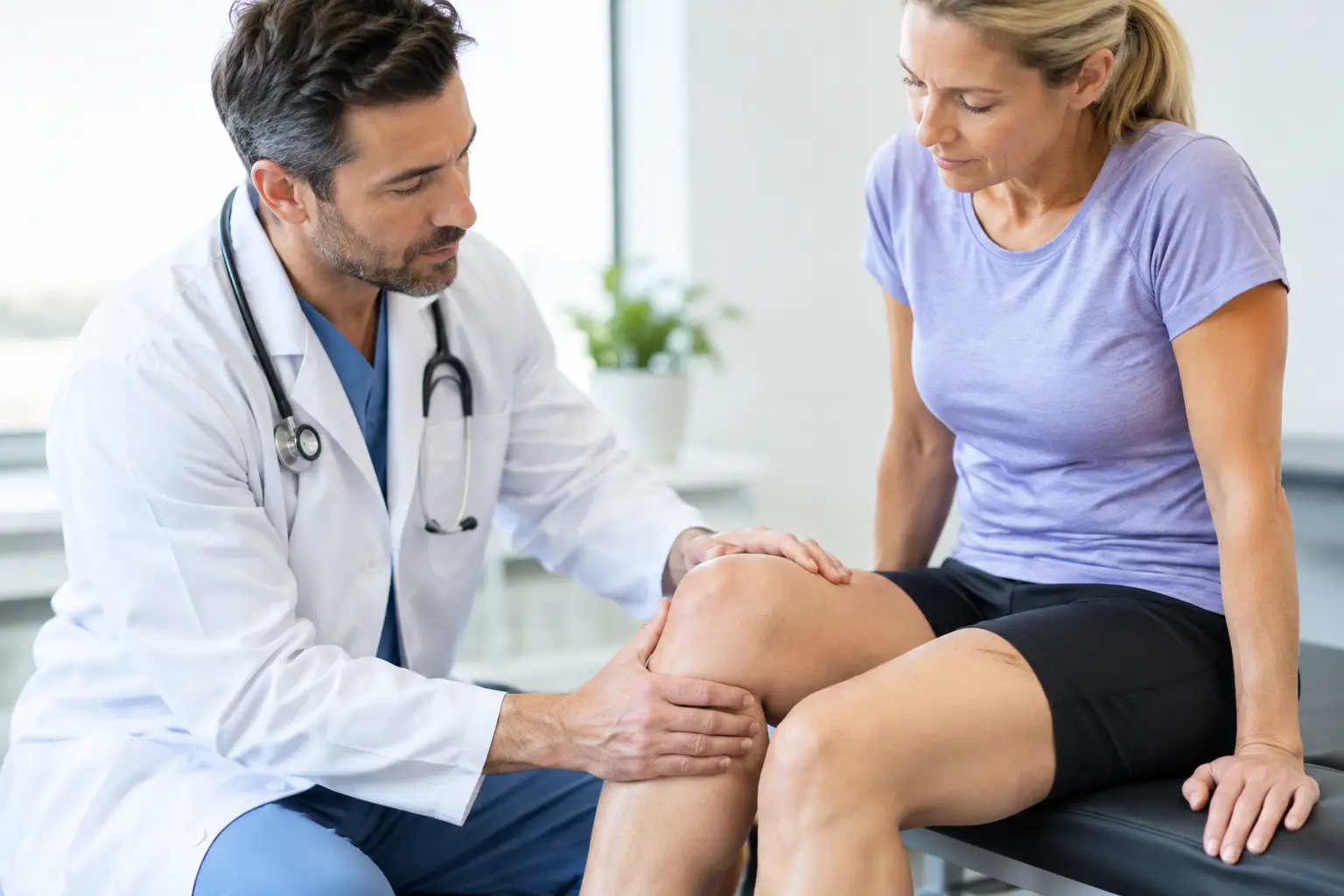
The physical exam should assess knee range of motion, swelling, tenderness, stability, strength, balance, and gait. It should also consider the hips, ankles, feet, and lower back. Movement testing can reveal whether poor control, limited mobility, or uneven loading is contributing to pain during a squat, step, lunge, or walk.
Imaging is sometimes appropriate, but it is not always the first step. X-rays, MRI, or other testing may be recommended when there is significant trauma, suspected fracture, persistent locking, major instability, severe swelling, or symptoms that do not improve with appropriate conservative care. Imaging can provide valuable information, but it should be matched to your symptoms and exam findings rather than ordered automatically.
Treatment Should Match the Cause and Your Goals
The right plan depends on the diagnosis, your activity level, and what you need your knee to do. Someone training for a race may need a different progression than someone who wants to climb stairs comfortably, return to work, or play with grandchildren without hesitation.
For many non-emergency knee conditions, conservative care may include hands-on treatment, targeted rehabilitation, mobility work, strength and balance exercises, and guidance on modifying activities without becoming completely inactive. Depending on the condition, options such as knee decompression, soft tissue techniques, shockwave therapy, laser therapy, and functional dry needling may be considered as part of an individualized plan.
At Bell District Spine and Rehab, care is designed around improving pain, movement, and day-to-day function while addressing the mechanical factors that can keep knee symptoms returning. If an exam suggests you need imaging, orthopedic care, or another medical referral, that should be part of the recommendation. Conservative care works best when it is appropriate for the condition and coordinated with the right next step.
What to Do While You Wait for an Appointment
Avoid the temptation to either ignore the pain completely or stop all movement indefinitely. Relative rest is often more helpful than total rest. Reduce the activities that clearly trigger sharp pain, swelling, or instability, but keep gentle, comfortable movement in your day when possible.
Ice may help after an acute flare or activity-related swelling, while heat can feel better for stiffness before movement. Supportive shoes and avoiding sudden jumps in exercise volume can also reduce unnecessary stress. Be cautious with pain medication, especially if you have medical conditions or take other medications, and speak with a qualified healthcare professional about what is safe for you.
Most importantly, pay attention to the trend. A knee that is gradually improving with simple adjustments may need time and a thoughtful return to activity. A knee that is worsening, swelling repeatedly, or changing the way you live is giving you useful information. Listening early can help protect your mobility and make the road back to comfortable movement much more manageable.