
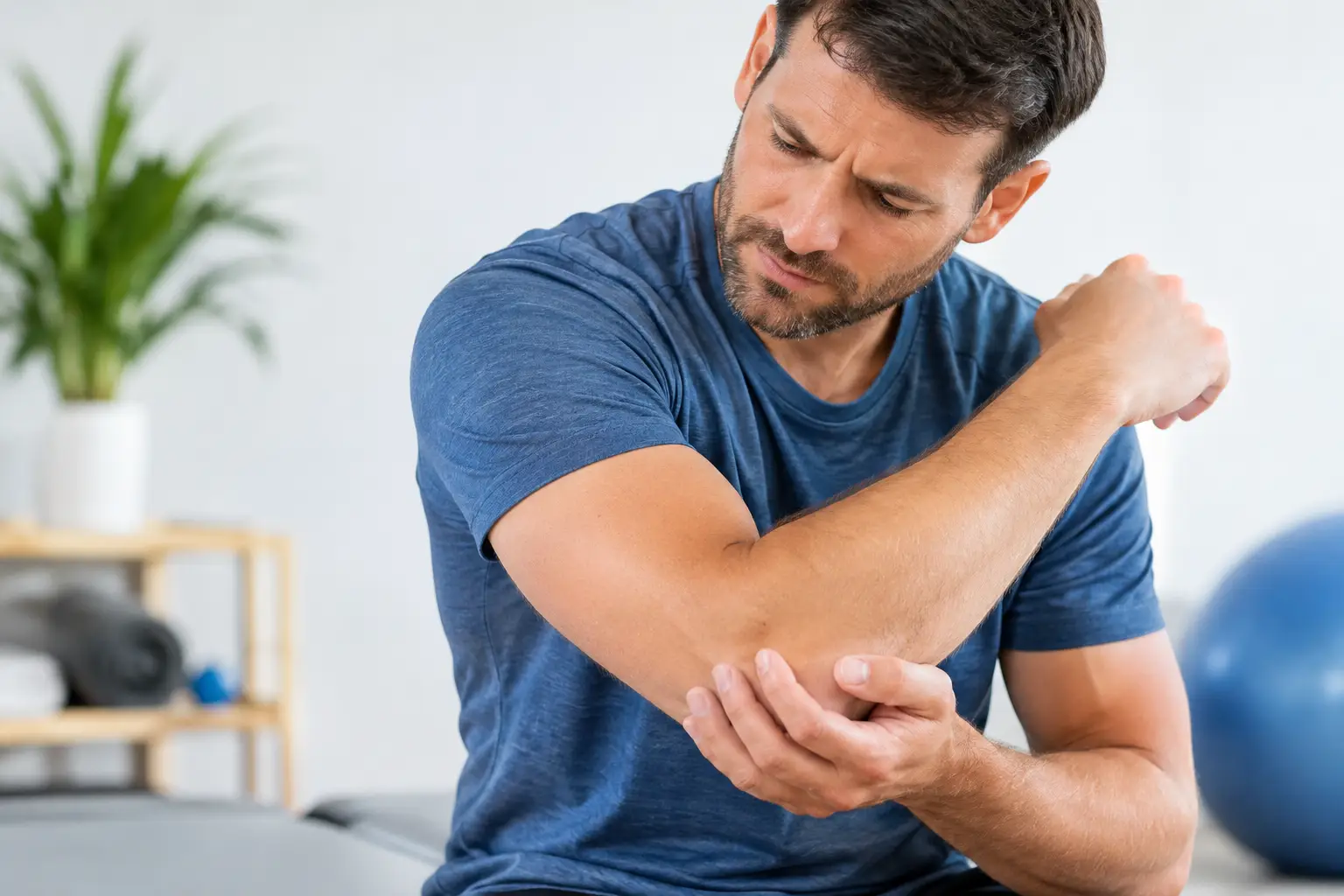
That sharp ache on the outside of the elbow can make an ordinary coffee mug, computer mouse, or handshake feel like a major task. Despite its name, tennis elbow affects far more than tennis players. Repetitive gripping, lifting, typing, tool use, and racquet sports can overload the forearm tendons over time. The best treatments for tennis elbow do more than temporarily numb the pain. They reduce irritation, rebuild tendon capacity, and correct the movement or workload that helped cause the problem.
Tennis elbow, clinically called lateral epicondylitis or lateral elbow tendinopathy, usually involves the tendons that attach forearm extensor muscles to the outside of the elbow. These tissues help stabilize the wrist during gripping and lifting. When they are repeatedly overloaded without enough recovery, pain and weakness can develop.
Start With the Right Diagnosis
Not every pain on the outside of the elbow is tennis elbow. Nerve irritation from the neck or forearm, arthritis, joint injury, and other conditions can create similar symptoms. A proper evaluation should look beyond the painful spot itself.
A clinician may assess grip strength, wrist and elbow motion, shoulder mechanics, neck mobility, work demands, sports technique, and the activities that trigger symptoms. This matters because a treatment plan built around the true source of the problem is far more likely to create lasting improvement.
Seek prompt medical evaluation if elbow pain follows a significant fall or injury, causes major swelling or deformity, comes with fever or redness, or is paired with persistent numbness, tingling, or sudden loss of strength.
The Best Treatments for Tennis Elbow Focus on Loading
The most effective conservative care usually starts with a balanced approach to activity. Complete rest may settle symptoms briefly, but it does not prepare the tendon to handle daily demands again. On the other hand, repeatedly pushing through sharp pain can prolong irritation.
The goal is relative rest. This means temporarily reducing or modifying the movements that provoke symptoms while maintaining comfortable activity. A person who develops pain from heavy lifting at work may need to adjust grip position, reduce the load, use two hands when possible, or take more frequent short breaks. An athlete may need a short-term change in training volume or technique rather than a complete stop.
Progressive Rehabilitation Exercises
Targeted rehabilitation is one of the most valuable tools for recovering from tennis elbow. Exercises should be individualized based on pain level, strength, job duties, and sport or fitness goals.
Early in recovery, isometric exercises can be useful. These involve contracting a muscle without moving the joint, such as pressing the back of the hand gently into resistance. They may help introduce load in a more tolerable way when the elbow is sensitive.
As symptoms improve, progressive wrist extension and grip-strengthening exercises help the tendon regain resilience. Slow, controlled resistance training is often more useful than random stretching alone. The program may also include forearm rotation, shoulder strengthening, posture-related work, and movement retraining. The elbow does not work in isolation. Poor shoulder control, limited wrist mobility, or a weak grip can all shift excess stress toward the painful tendon.
Mild discomfort during exercise can be acceptable, but sharp pain or a significant next-day flare is a sign the dose may be too high. Progress works best when it is measured and adjusted rather than rushed.
Hands-On Care for Pain and Mobility
Manual therapy can support the rehabilitation process when stiffness, muscle tension, or joint restrictions are contributing to elbow overload. Soft tissue techniques may address painful or tight areas in the forearm, while joint mobilization can help restore comfortable movement at the elbow, wrist, shoulder, or neck when appropriate.
Chiropractic care may also be part of a broader musculoskeletal plan when movement restrictions elsewhere are affecting arm mechanics. The purpose is not simply to chase pain. It is to help improve how the arm, shoulder, and spine move together so rehabilitation exercises can be performed more comfortably and effectively.
Hands-on care is most beneficial when paired with active rehab. Passive treatment alone may feel good in the moment, but lasting recovery requires the tendon and surrounding muscles to build capacity.
Advanced Therapies May Help in the Right Case
Some cases of tennis elbow respond slowly, especially when symptoms have lasted for months or repeatedly return. Advanced, non-invasive therapies can be considered as part of a personalized plan.
Shockwave Therapy
Shockwave therapy delivers acoustic waves to targeted tissue. It is often used for persistent tendon pain that has not improved with initial activity changes and rehabilitation. Research findings are mixed, but some patients with chronic lateral elbow tendinopathy experience meaningful improvement when shockwave therapy is combined with a structured exercise plan.
It is not an instant fix, and the treatment area can be temporarily sore afterward. Still, for the right patient, it may provide a useful non-surgical option that supports the tendon’s recovery process.
Laser Therapy
Laser therapy uses specific wavelengths of light intended to support cellular activity and reduce pain and inflammation. It may be helpful for some patients as an adjunct to hands-on care and progressive rehab. Results depend on the type of device, treatment parameters, the duration of symptoms, and whether the patient is also addressing the underlying overload.
Functional Dry Needling
Functional dry needling may be considered when trigger points or significant muscle tension in the forearm, shoulder, or upper back are contributing to pain and altered movement. It is not designed to replace exercise-based rehabilitation, but it can help some patients move with less discomfort and participate more fully in their treatment plan.
At Bell District Spine and Rehab, these therapies can be integrated with movement analysis and condition-specific rehabilitation rather than offered as one-size-fits-all solutions.
Braces, Medications, and Injections: Understand the Trade-Offs
A counterforce strap or wrist brace may reduce strain during specific activities. This can be useful for work, sports, or a temporary flare, particularly when a person cannot fully avoid repetitive gripping. A brace should fit properly and should not become a substitute for rebuilding strength and improving mechanics.
Over-the-counter anti-inflammatory medications may provide short-term symptom relief for some people, but they do not correct tendon capacity, muscle weakness, or repeated overload. Anyone with kidney disease, stomach ulcers, heart conditions, blood-thinning medication, or other health concerns should speak with a qualified medical professional before using these medications.
Corticosteroid injections can sometimes reduce pain quickly, but the longer-term picture is more complicated. Relief may be temporary, and repeated injections may not be the best choice for tendon health. Other injection options, including platelet-rich plasma, have mixed evidence and varying availability. These treatments should be considered carefully, particularly after a consistent course of conservative care has not delivered sufficient progress.
Fix the Daily Trigger That Keeps the Pain Going
A successful plan often includes small changes outside the treatment room. For desk work, this may mean keeping the wrist in a neutral position, reducing sustained mouse gripping, and alternating tasks. For manual labor, it may mean changing handle size, lifting technique, tool vibration exposure, or the frequency of repetitive tasks.
For racquet-sport athletes, grip size, string tension, stroke mechanics, training volume, and recovery habits can all matter. A return to play should be gradual. Being pain-free for one day does not necessarily mean the tendon is ready for a full match or a hard week of practice.
Sleep, recovery time, and overall training load matter as well. Tendons usually improve gradually, not overnight. Many people notice meaningful changes within weeks when they follow a well-designed plan, while longstanding cases may require several months of steady rehabilitation.
When Is Surgery Considered?
Surgery is rarely the first answer for tennis elbow. Most people improve with conservative care, especially when treatment includes progressive loading and a close look at the forces causing the problem. Surgery may be discussed when substantial symptoms continue after an extended, well-managed non-surgical program and daily function remains significantly limited.
Before considering an invasive option, it is worth confirming the diagnosis and ensuring that rehabilitation has been specific, progressive, and consistent.
The right treatment begins with understanding why your elbow hurts when it does and what your body needs to return to work, exercise, and everyday activities with confidence. A personalized plan can turn a stubborn elbow problem into a practical path back to comfortable movement.