Getting a spinal stenosis diagnosis can feel heavy, but the first thing you need to know is that surgery is rarely the only path forward. For residents of Cedar Park and the surrounding areas, effective, lasting spinal stenosis treatment without surgery is possible. At Bell District Spine and Rehab, we specialize in a smart combination of targeted, non-invasive therapies designed to relieve nerve pressure, reduce pain, and get you moving again.
Your Path To Lasting Spinal Stenosis Relief In Cedar Park
When you’re wrestling with the pain, numbness, or weakness that spinal stenosis brings, your only goal is finding a way back to a life with less pain. Here at Bell District Spine and Rehab, our specialty is creating that exact path for patients right here in Cedar Park, TX, using proven, drug-free approaches that actually work.
We understand the frustration and uncertainty you’re facing. As your local chiropractor, we’re here to provide clear answers and effective care that addresses your specific symptoms, from debilitating back pain to sciatica.
Understanding Your Condition: What is Spinal Stenosis?
In simple terms, spinal stenosis is a narrowing of the spaces within your spinal canal. This tightening puts a squeeze on the nerves that travel through your spine, leading to disruptive symptoms that can impact your daily life.
Think of it like a traffic jam on a highway—when the lanes narrow, everything slows down and gets backed up. In your spine, this “backup” creates nerve compression that can cause:
- Pain in your back or neck
- Sciatica-like pain that shoots down one or both legs
- Numbness or tingling in your hands, arms, feet, or legs
- Weakness or cramping in your limbs
- Trouble with balance or walking for very long
This condition is incredibly common. Lumbar spinal stenosis affects an estimated 103 million people worldwide, and it’s a leading cause of back and leg pain in older adults. In fact, about 11% of seniors in the US are impacted.
The good news? The standard of care overwhelmingly favors trying non-surgical treatment first, and for good reason—it works. Research shows that as many as one-third of patients see significant improvement in their symptoms without ever needing to go under the knife. You can read more about these encouraging findings on non-surgical outcomes.
At Bell District Spine and Rehab, our philosophy is simple: we address the root cause of the problem to deliver sustainable relief. We don’t just chase symptoms; we create a personalized plan to improve your spinal health and function for the long haul right here in Cedar Park.
To help you see the bigger picture, here’s a quick comparison of the two main treatment routes.
Comparing Surgical vs. Non-Surgical Approaches To Spinal Stenosis
This high-level comparison helps you quickly understand the fundamental differences between invasive surgery and the conservative care we offer at our Cedar Park clinic.
| Aspect | Non-Surgical Treatment (Our Approach) | Surgical Treatment |
|---|---|---|
| Invasiveness | Minimally invasive or non-invasive. No incisions, no anesthesia. | Highly invasive, requiring incisions, anesthesia, and hospital stays. |
| Recovery Time | Minimal to no downtime. You can often resume daily activities immediately. | Weeks to months of recovery, with significant restrictions on activity. |
| Risk of Complications | Very low. Side effects are typically mild and temporary, like muscle soreness. | Higher risks, including infection, nerve damage, and hardware failure. |
| Focus | Addresses the root cause of pain and improves overall function. | Structurally alters the spine to create more space for nerves. |
| Cost | Significantly more affordable and often covered by insurance. | Very expensive, involving surgeon fees, hospital costs, and anesthesia. |
| Long-Term Outcome | Aims to build strength and resilience to prevent future issues. | Can provide relief, but may lead to adjacent segment disease over time. |
While surgery certainly has its place for severe cases, it’s clear why starting with a conservative, non-surgical plan is the preferred approach for the vast majority of people.
A Trusted Local Chiropractor in Cedar Park for Neck & Back Pain
Led by Dr. John Tuggle, our clinic is committed to helping our neighbors in Cedar Park, Leander, and Round Rock find freedom from pain. We combine advanced therapies with truly personalized care to get you back to the activities you love.
If you’re looking for a back pain chiropractor who will listen, understand your goals, and provide a clear, non-surgical treatment plan, you’ve found the right place.
What A Spinal Stenosis Diagnosis Really Means For You
Hearing the words “spinal stenosis” from a doctor can be intimidating. It’s one of those medical terms that sounds serious. But understanding what’s actually going on inside your body is the first—and most powerful—step toward getting your life back.
Let’s cut through the jargon. At its core, spinal stenosis is simply a narrowing of the spaces within your spine.
Think of your spinal canal as a tunnel that protects the delicate nerves running from your brain down to the rest of your body. Over time, that tunnel can start to get a little smaller. This isn’t something that happens overnight; it’s usually the result of gradual, age-related changes.
The Two Main Types of Spinal Stenosis
Spinal stenosis can happen anywhere along the spine, but it’s most common in two key areas. Where the narrowing occurs determines the kind of symptoms you feel, which is why your diagnosis will usually specify either cervical or lumbar stenosis.
- Lumbar Stenosis: This is the most common form, affecting your lower back. When the canal narrows here, it puts pressure on the nerves that travel down into your legs and feet, often causing sciatica.
- Cervical Stenosis: This one occurs in the neck. A narrowing in the cervical spine can compress the nerves that branch out to your shoulders, arms, and hands, causing neck pain, tingling, or weakness.
Knowing which type you have is critical. It allows a knowledgeable chiropractor in Cedar Park, like Dr. Tuggle, to target treatment with laser-like precision right where it’s needed most.
What Causes The Narrowing?
So, what causes this spinal “tunnel” to shrink? It’s rarely one single culprit. Instead, it’s usually a combination of factors that have been developing for years.
Some of the most common contributors include:
- Degenerative Disc Disease: As we get older, the cushion-like discs between our vertebrae can dry out and lose height. This naturally reduces the amount of space available for your nerves.
- Bone Spurs (Osteophytes): Wear-and-tear from osteoarthritis can prompt the body to grow extra bits of bone along the spine. These spurs can start to intrude into the spinal canal.
- Thickened Ligaments: The tough cords that hold your spine together can become stiff and thick over time, bulging into the canal and compressing the nerves within it.
- Herniated Discs: Sometimes called a “slipped” or “ruptured” disc, this is when the soft inner gel of a disc pushes out through a tear in its tougher exterior, putting direct pressure on nearby nerves.
The crucial takeaway is this: spinal stenosis is a mechanical problem. A structural change is putting physical pressure on your nerves. This is exactly why a physical, non-surgical approach focused on creating space and improving spinal alignment can be so incredibly effective.
Connecting The Diagnosis To Your Symptoms
Now, let’s connect the dots between this narrowing canal and what you’re actually feeling every day. The symptoms of spinal stenosis are a direct result of that nerve compression.
When a nerve in your lower back is getting pinched, you might feel sciatica—that sharp, shooting pain that can travel from your buttock all the way down the back of your leg. You might also notice the pain gets worse when you stand or walk for a while, but feels much better when you sit down or lean forward. This is a classic sign, because leaning forward temporarily opens up the spinal canal, giving those crowded nerves a little more breathing room.
If the stenosis is in your neck, you might experience numbness or tingling in your hands, weakness in your arms, or even problems with your balance. These are clear signals your body is sending about nerve interference.
By understanding that your symptoms have a clear physical cause, you can see why our approach at Bell District Spine and Rehab works. Our targeted, non-surgical spinal stenosis treatment without surgery aims to gently relieve that pressure, reduce inflammation, and restore proper alignment, helping our patients in Cedar Park, Leander, and Round Rock find lasting relief.
How Our Cedar Park Chiropractor Treats Spinal Stenosis
Finding lasting relief from spinal stenosis isn’t about a single “magic bullet” treatment. True healing comes from a carefully orchestrated plan that addresses the condition from multiple angles. At Bell District Spine and Rehab, we don’t believe in a one-size-fits-all approach. Instead, we create a personalized recovery roadmap for each patient, combining advanced, evidence-based therapies to achieve the best possible outcome.
This integrated strategy does more than just manage your pain; it’s built to restore function, improve your mobility, and empower your body to heal itself. By layering different non-surgical treatments, we can reduce inflammation, decompress pinched nerves, release stubborn muscle tension, and correct the underlying spinal misalignments feeding your symptoms.
Unpacking Our Core Therapies
To give you a clearer picture of how we help our patients here in Cedar Park, let’s explore the powerful, non-invasive tools we use. Each one plays a specific and vital role in your journey toward a life with less pain.
Spinal Decompression Therapy
At the heart of our spinal stenosis treatment is non-surgical spinal decompression. This gentle, computer-controlled therapy is a genuine game-changer for anyone dealing with nerve compression from conditions like a disc injury or sciatica. You lie comfortably on a specialized table as it creates a subtle negative pressure within your spinal discs.
This process acts like a vacuum, gently drawing in bulging or herniated disc material that might be pressing on your nerves. It also floods the area with nutrient-rich fluids, which is essential for promoting natural healing in the disc. For patients who feel that classic stenosis pain when standing or walking, decompression can provide profound relief by creating the space your nerves desperately need.
We often recommend patients discover more about the benefits of spinal decompression therapy to understand how this foundational treatment really works.
Advanced Shockwave And Laser Therapy
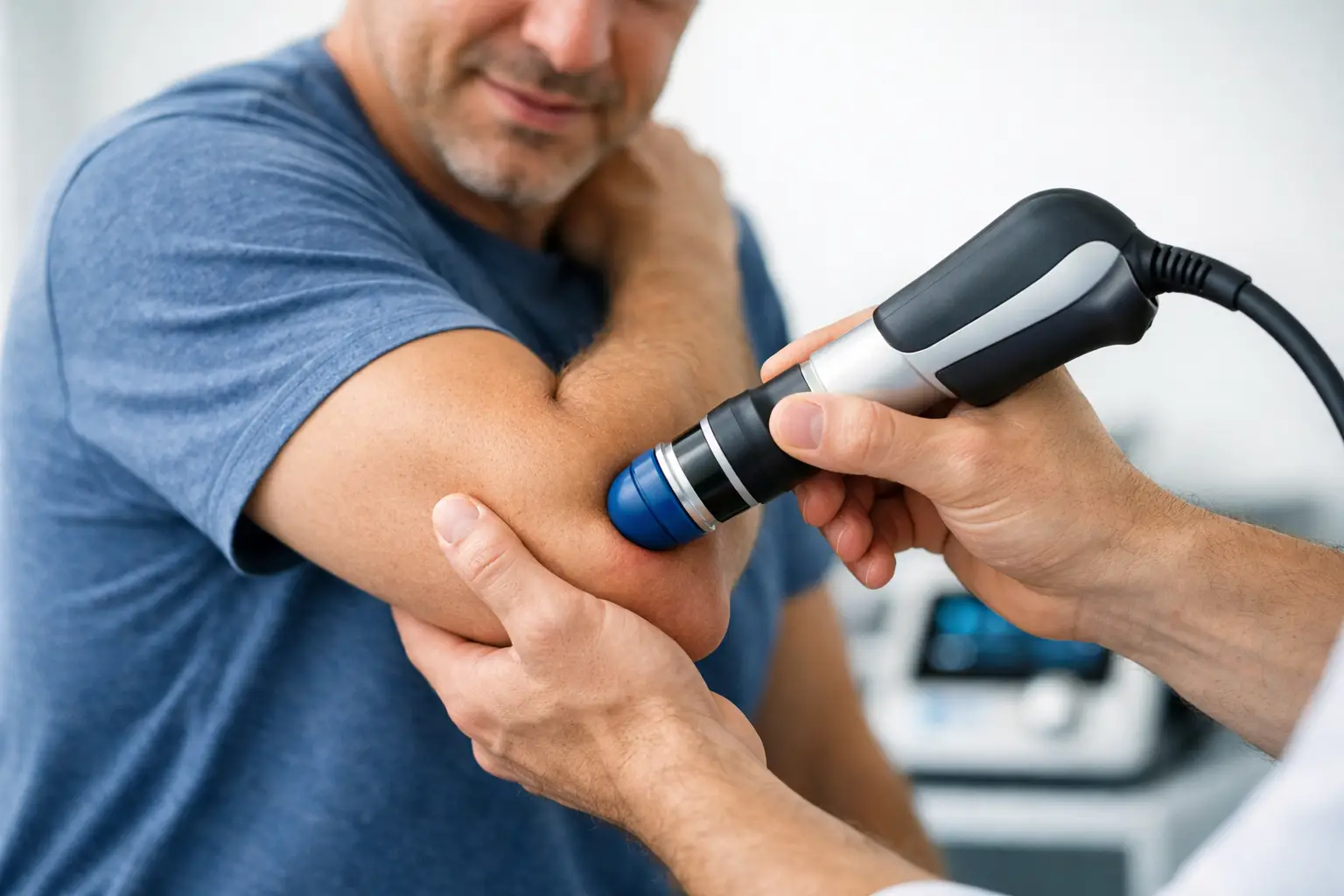
To accelerate healing at a cellular level, we bring in state-of-the-art therapies like Extracorporeal Shockwave Therapy (ESWT) and Class IV Laser Therapy. These treatments aren’t about masking pain—they’re about kickstarting your body’s own repair mechanisms, providing powerful headache and migraine relief in the process.
- Shockwave Therapy: This therapy uses acoustic waves to break down scar tissue and adhesions in chronically tight muscles and ligaments. It also stimulates the formation of new blood vessels, dramatically increasing blood flow to the affected area to speed up recovery.
- Laser Therapy: This painless treatment uses specific wavelengths of light to penetrate deep into tissues. It reduces inflammation, boosts cellular metabolism, and provides powerful pain relief without any drugs or side effects.
Restoring Foundational Alignment And Function
While advanced technology is crucial, we never lose sight of the fundamentals. Restoring proper movement and releasing muscular tension are key pieces of the puzzle.
Gentle Chiropractic Adjustments
Dr. Tuggle uses precise and gentle chiropractic adjustments to restore proper alignment to the vertebrae. For spinal stenosis, this is critical because even minor misalignments can contribute to the narrowing of the spinal canal. By improving joint mobility and taking mechanical stress off the spine, we help improve overall function and reduce nerve irritation.
The flowchart below illustrates how spinal degeneration leads to the narrowing that causes symptoms—a process our chiropractic care helps to counteract.
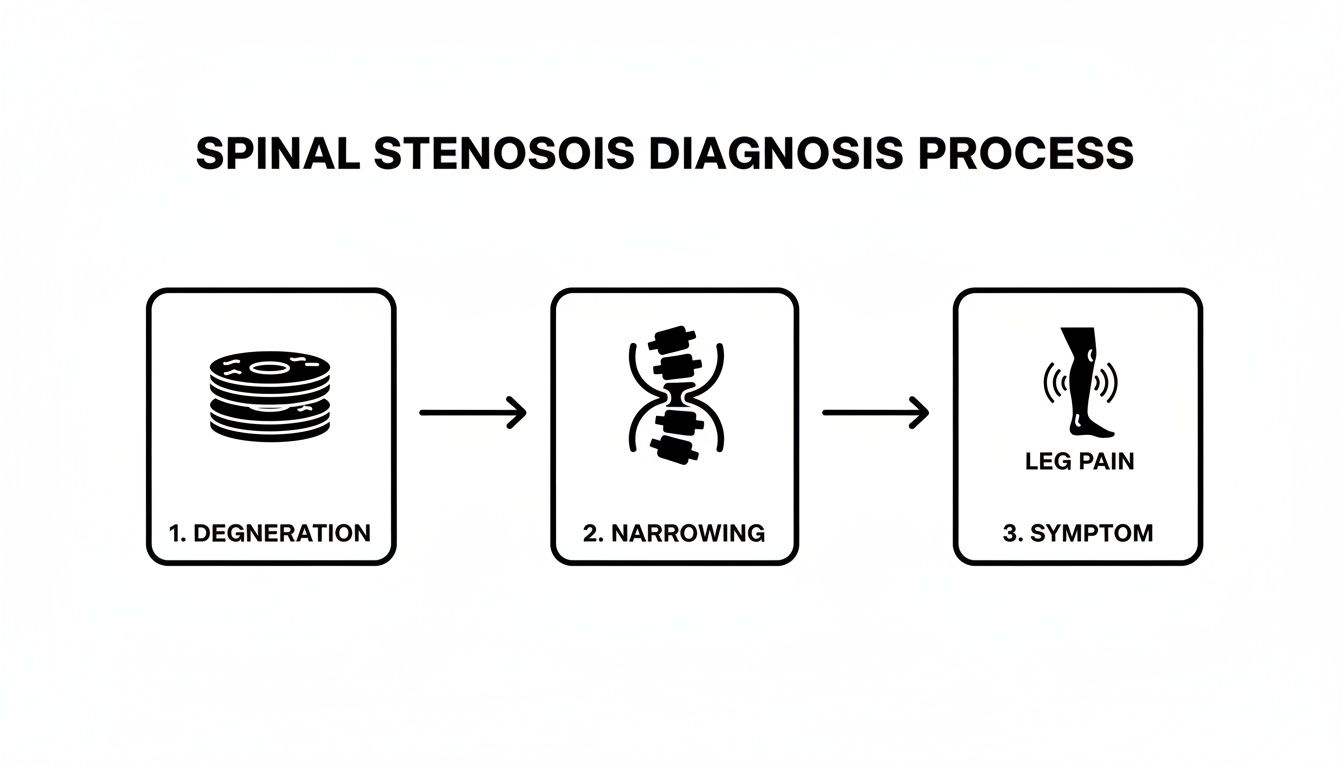
This visual shows that the journey from a healthy spine to symptomatic stenosis is a process, which is why our multi-faceted approach is designed to intervene effectively at each stage.
Functional Dry Needling And Soft Tissue Work
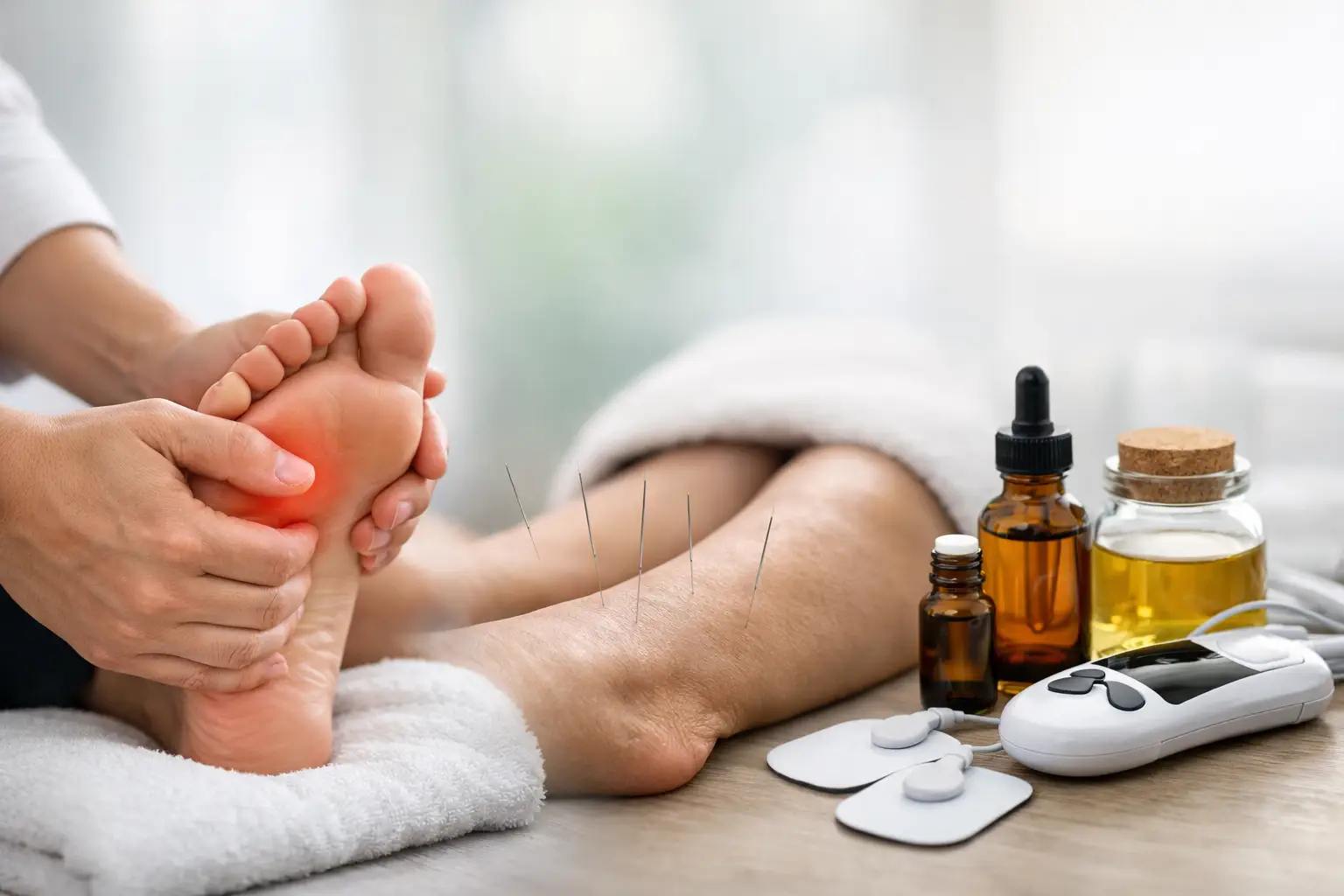
Spinal stenosis often causes surrounding muscles to become incredibly tight and painful as they try to guard the injured area. Techniques like Functional Dry Needling and specialized soft tissue work are essential for releasing this tension. By targeting trigger points and adhesions, we can alleviate muscle spasms, improve flexibility, and reduce the pain that comes from these compensating muscles.
Our commitment is to address every contributing factor. We combine creating space for the nerves (spinal decompression), accelerating tissue healing (laser/shockwave), restoring spinal alignment (adjustments), and releasing muscle tension (dry needling) to deliver results that last.
This integrated approach is supported by extensive research. A major Medicare study involving over 61,500 patients revealed that 63% chose non-operative management for spinal stenosis, highlighting that most people can manage symptoms effectively without surgery. Clinics that elevate standard care with advanced therapies like spinal decompression and laser therapy can offer more targeted relief that restores function faster than traditional methods alone.
For those seeking additional therapies to manage discomfort at home, exploring options like sauna for pain relief can be a valuable complement to professional care. By combining our in-clinic work with supportive at-home strategies, you create a powerful environment for healing.
What To Expect When Visiting Your Cedar Park Chiropractor
Taking that first step to address your pain can feel like a huge hurdle. We get it. That’s why we’ve designed the entire new patient experience here at Bell District Spine and Rehab to be as reassuring and straightforward as possible. From the moment you walk through our doors, our focus is completely on you and your path back to feeling good. We want our neighbors in Cedar Park, Leander, and Round Rock to feel comfortable, not intimidated.
Your first visit starts with a real conversation. Dr. Tuggle will sit down with you to listen—and we mean truly listen—to your story. He wants to know what you’re feeling, how it’s impacting your daily life, and what you want to get back to doing, whether that’s simply walking the dog without pain or getting back on the golf course.
Your Comprehensive Assessment
Once we understand your history, we’ll move into a thorough, hands-on assessment. This isn’t about guesswork; it’s a detailed examination designed to pinpoint the precise source of your pain. Dr. Tuggle will check your posture, test your range of motion, and evaluate your neurological function to see exactly how your body is moving and where the problem lies.
This diagnostic step is absolutely crucial. It’s what allows us to build a treatment plan that is 100% personalized to your body and your specific case of spinal stenosis. We don’t do cookie-cutter protocols here. We use our findings to recommend the right combination of therapies—from spinal decompression to laser therapy—that will deliver the fastest, safest, and most lasting results. To keep things moving smoothly, we’ve made sure our patient paperwork is clear and efficient, which is a key part of creating an effective new patient intake form that respects your time.
We believe patient education is the foundation of great care. After your assessment, Dr. Tuggle will walk you through his findings in plain English. You’ll see what’s causing your symptoms and understand exactly how our proposed treatment plan is designed to fix it.
Crafting Your Personalized Treatment Plan
With a clear diagnosis in hand, we’ll work together to map out your personalized treatment plan. This roadmap to recovery is a partnership. We’ll explain the “why” behind every therapy we recommend and give you a realistic timeline of what to expect. This collaborative approach ensures you feel confident and in control of your health right from day one.
Many of our patients are relieved to find out just how effective this kind of conservative care can be. In fact, major research has shown that the long-term outcomes for non-surgical care are often just as good as surgery. The famous SPORT trial revealed that by the eight-year follow-up, both surgical and non-surgical groups had achieved similar levels of pain relief and improved function. This really highlights that choosing a conservative path like ours is a powerful and proven strategy for long-term success.
Our team is also happy to verify your insurance benefits, and we accept Medicare and most major plans. We want every part of your visit to be stress-free, so you can focus on the only thing that matters—getting better. You can also learn more about what to expect during your first chiropractic clinic visit in our detailed guide.
Benefits of Choosing Non-Surgical Chiropractic Care

Choosing a non-surgical path for spinal stenosis is about much more than just avoiding an operation. It’s a strategic investment in your long-term mobility, your independence, and your overall quality of life. This approach is all about empowering your body’s natural ability to heal while systematically fixing the root causes of your pain.
For our patients here in Cedar Park—from active retirees to busy professionals—this means getting real, sustainable results. It’s about getting back to the things that matter most with confidence in your body’s strength and resilience, not just hoping for the best after a major procedure.
Avoiding The Downsides Of Surgery
Let’s be direct: the most obvious benefit of conservative care is sidestepping the risks and long recovery that come with surgery. An operation, while occasionally necessary, brings with it potential complications like infection, reactions to anesthesia, and the very real possibility of a long, painful rehab.
Opting for non-invasive spinal stenosis treatment without surgery means you get to skip all of that. No hospital stays, no significant downtime, and a dramatically lower risk profile. Instead of spending weeks or months sidelined, you can stay active in your daily life while your body heals and gets stronger with each therapy session.
Focusing On Function, Not Just A Fix
Surgical procedures are designed to structurally change your spine—for example, by removing bone to create more room for the nerves. While this can be effective, it often fails to address the functional problems that led to stenosis in the first place, like weak muscle support, stiffness, or flawed movement patterns.
Our conservative approach, on the other hand, is laser-focused on restoring function. We don’t just want to mask your pain; we want to improve your strength, boost your flexibility, and correct the biomechanical issues that put stress on your spine. This leads to far more durable, lasting relief because you’re not just patching the problem—you’re building a healthier, more resilient back from the ground up.
The goal of non-surgical care isn’t just to help you feel better in the short term. It’s to equip your body with the strength and stability needed to resist future problems, reducing your reliance on ongoing interventions.
Personalized Care That Adapts With You
One of the most powerful advantages of a non-surgical plan is how adaptable it is. Your treatment plan at our Cedar Park clinic isn’t some rigid, one-size-fits-all protocol. It’s a dynamic process that evolves right along with your progress.
As your pain levels drop and your mobility comes back, we can adjust your therapies to target new goals. We might shift the focus from initial pain relief using laser therapy to building core strength and endurance with specific exercises. This responsive approach ensures you’re always getting the precise care you need at every single stage of your recovery journey.
Here’s a quick look at how our primary therapies work together to provide comprehensive, non-surgical stenosis relief.
Our Key Therapies For Non-Surgical Stenosis Relief
By combining these advanced therapies, we can attack the problem from multiple angles, ensuring a more complete and lasting recovery.
| Therapy Offered At Bell District Spine And Rehab | How It Helps Spinal Stenosis | Primary Symptoms Addressed |
|---|---|---|
| Spinal Decompression | Gently creates negative pressure to draw in bulging discs and create more space for nerves. | Leg pain (sciatica), numbness, and pain that worsens with standing or walking. |
| Shockwave & Laser Therapy | Reduces deep-seated inflammation, breaks down scar tissue, and accelerates cellular repair. | Chronic lower back pain, muscle stiffness, and inflammation around nerve roots. |
| Chiropractic Adjustments | Restores proper spinal alignment and joint mobility, reducing mechanical stress. | General back and neck pain, stiffness, and reduced range of motion. |
| Functional Dry Needling | Releases tight muscle trigger points that contribute to nerve compression and pain. | Muscle spasms, deep muscular pain, and referred pain patterns. |
This multi-pronged strategy is what allows us to address every component of your condition. It’s how we help our patients from Cedar Park, Leander, and Round Rock achieve a level of relief that a single treatment alone simply can’t match. It’s a smarter, safer, and often more effective path to reclaiming your life from spinal stenosis.
Your Spinal Stenosis Questions Answered
It’s completely normal to have questions when you’re looking for ways to treat spinal stenosis without surgery. You want to feel confident and informed, and we’re here to give you clear, honest answers to the most common concerns we hear from patients right here in our Cedar Park clinic. We believe patient education is the foundation of great care.
How Long Does Non-Surgical Treatment Take To Work?
Everyone’s healing journey is a bit different, but it’s common for people to feel a noticeable improvement within just a few sessions. Some of our therapies, like non-surgical spinal decompression, can provide an almost immediate sense of relief from intense nerve pressure. For many, it feels like finally being able to take a deep breath after being squeezed for so long.
For more chronic and stubborn conditions, it may take several weeks of consistent care to calm deep-seated inflammation and retrain supportive muscles. During your first visit, Dr. Tuggle will perform a thorough assessment and give you a realistic timeline. We’ll set clear expectations based on your specific condition.
Is Chiropractic Care For Spinal Stenosis Safe?
Absolutely. When performed by an experienced Doctor of Chiropractic like Dr. Tuggle, our treatments are exceptionally safe. We use gentle, targeted techniques and advanced therapies that are specifically chosen and customized for your condition and comfort level.
This non-invasive approach helps you avoid the significant risks that come with surgery or the side effects of long-term medication use. We always perform a comprehensive examination first to ensure you are an excellent candidate for our care. Your safety is our top priority.
Our philosophy is simple: “conservative first, always.” We believe in using the safest, most effective methods to help your body heal itself, reserving more invasive options only as a last resort.
Will My Insurance Cover Treatment At Your Clinic?
We know that navigating insurance can be a headache, and our team is here to make it as simple as possible. We are in-network with Medicare and most major insurance plans, which makes our care accessible to many in the Cedar Park community.
Because coverage for specific therapies can vary between policies, our friendly team is always ready to help. Before you start care, we can perform a complimentary benefits check to verify your coverage and explain your policy in plain English. We want to remove any financial uncertainty so you can focus completely on getting better.
When Is Surgery Actually Necessary For Spinal Stenosis?
While the vast majority of our patients get lasting relief and return to their lives without ever needing an operation, surgery is the right choice in certain rare cases. Our primary goal is always to help you thrive with effective, conservative chiropractic care first—it’s simply the most successful and sustainable path for most people.
We typically recommend a surgical consultation only when a patient shows signs of severe and progressively worsening neurological issues. These are what we call “red flag” symptoms and include:
- Extreme muscle weakness that is rapidly getting worse.
- Loss of bowel or bladder control, which is a medical emergency known as cauda equina syndrome.
For nearly everyone else, a dedicated plan for spinal stenosis treatment without surgery is the superior starting point. It empowers your body to heal, improves your long-term function, and helps you build resilience against future problems.
Ready to explore a non-surgical path to relief? The team at Bell District Spine and Rehab is here to provide the answers and expert care you need in Cedar Park. Schedule your consultation today and take the first step toward a life with less pain.