

It often starts with a minor ache: a stiff neck after a long day at your desk, a twinge in your lower back when you lift something, or a headache that just won’t quit. For many of our neighbors in Cedar Park, Leander, and the greater Austin area, these nagging pains are too often dismissed as a normal part of life. But what if they aren’t? What if they are clear signals from your body that something is out of alignment and needs professional attention?
Ignoring these symptoms can lead to chronic conditions that limit your ability to work, enjoy your hobbies, and live your life to the fullest. When your spine and nervous system are imbalanced, it can affect everything from your posture and mobility to your overall wellness. Waiting for the pain to become unbearable is never the best strategy. The key is recognizing the early signs you need a chiropractor and taking proactive steps toward recovery.
Dr. John Tuggle and the team at Bell District Spine and Rehab believe you shouldn’t have to live with persistent pain. As a trusted chiropractor in Cedar Park, TX, we specialize in identifying the root cause of your discomfort and creating personalized, non-invasive treatment plans to restore your health and function. If you’ve been searching for a “chiropractor near me” who will listen and provide effective, patient-focused care, you’ve come to the right place.
This guide will help you understand your body’s signals. We will explore eight of the most common signs that it’s time to see a chiropractor, providing clear explanations for each. From persistent back pain and frequent headaches to reduced flexibility and auto accident injuries, you will learn when professional chiropractic care can provide lasting relief and help you get back to feeling your best.
1. Persistent Lower Back Pain
Chronic lower back pain is one of the most common reasons patients in Cedar Park look for a back pain chiropractor. This isn’t the temporary ache from a weekend of yard work; it’s a persistent, nagging pain that lasts for weeks or months, significantly impacting your mobility, work, and quality of life. This ongoing discomfort often signals underlying issues like poor posture, muscle strain, a disc injury, or spinal misalignments.

Unlike masking symptoms with medication, chiropractic care aims to address the root cause of your pain. At Bell District Spine and Rehab in Cedar Park, Dr. John Tuggle leverages over two decades of experience to diagnose the specific factors contributing to your discomfort. For many in our community, this approach provides a path to lasting relief without invasive procedures.
Who Experiences This?
Persistent lower back pain can affect anyone, but certain lifestyles increase the risk. Common patient examples include:
- Office workers in North Austin with poor ergonomics, leading to chronic strain.
- Warehouse or construction workers in Leander with injuries from repetitive lifting.
- Commuters driving long distances daily, causing spinal compression.
- Patients with disc bulges or herniations seeking non-surgical disc injury treatment.
Actionable Tips for Relief
While professional care is essential, you can take steps to manage your pain.
- Maintain proper ergonomics: Adjust your chair, desk, and monitor to support a neutral spine.
- Practice gentle stretching: Simple stretches can alleviate tension between appointments.
- Follow prescribed exercises: Dr. Tuggle often provides at-home rehabilitation exercises to speed up recovery.
- Inquire about advanced therapies: For disc-related issues, ask about non-invasive options like spinal decompression therapy.
If your back pain won’t go away, it’s a clear signal that your body needs professional attention. You can learn more about the top causes of low back pain and how a Cedar Park chiropractor can help to understand your condition better. To discuss your specific symptoms with a trusted local chiropractor, contact Bell District Spine and Rehab for a complimentary phone consultation.
2. Neck Pain and Stiffness
Constant neck pain and stiffness are another of the major signs you need a chiropractor. This goes beyond a simple “crick in the neck”; it’s a persistent ache that restricts your ability to turn your head, work comfortably, and can even lead to headaches or pain radiating down your arms. This ongoing discomfort often points to underlying issues like poor posture (“tech neck”), whiplash from an auto accident, or misalignments in the cervical spine.
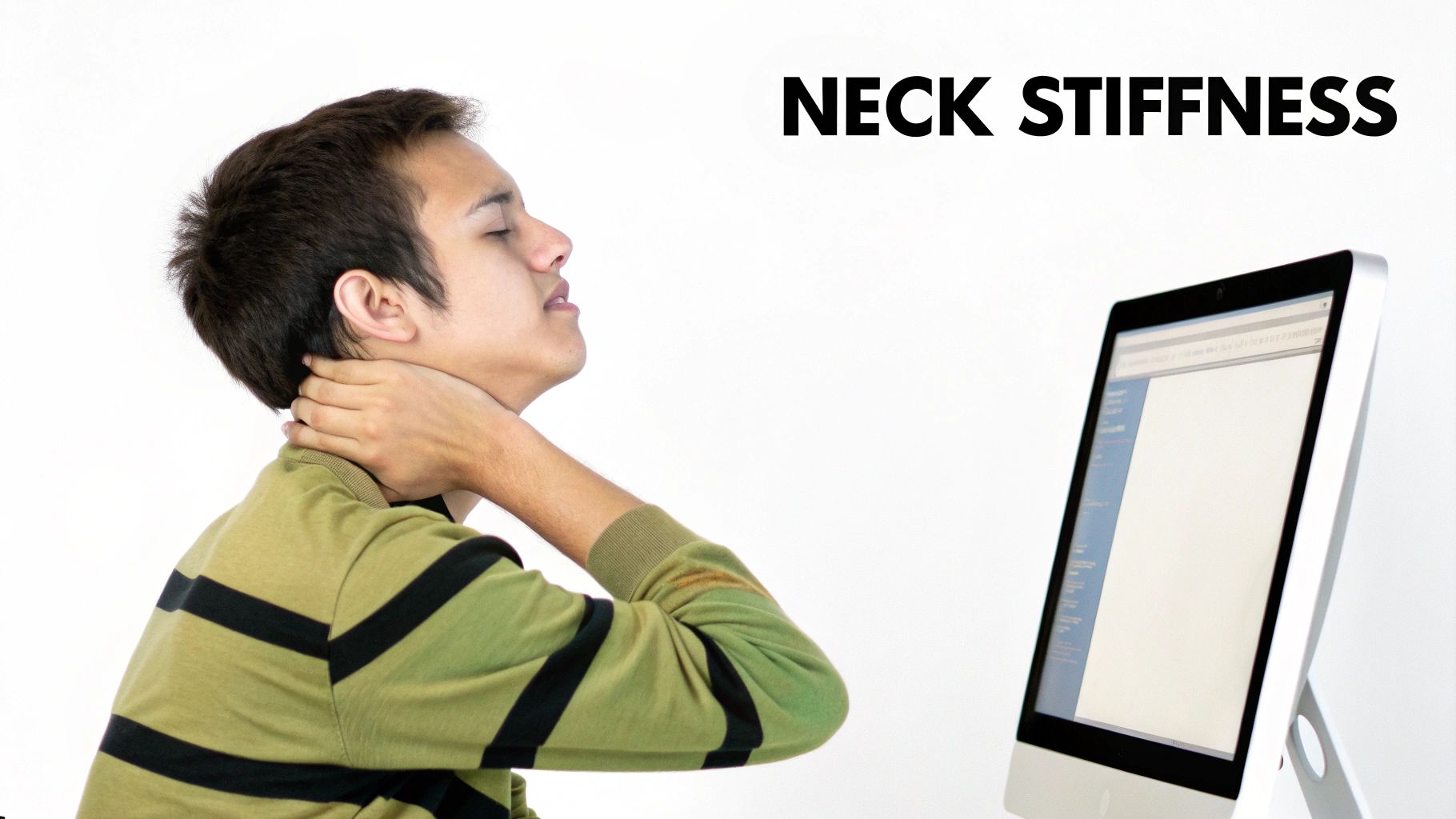
As a leading neck pain chiropractor in Cedar Park, we focus on correcting the root cause of the pain rather than just alleviating the symptoms temporarily. At Bell District Spine and Rehab, Dr. John Tuggle will accurately diagnose the source of your neck stiffness. For our patients in Cedar Park and the surrounding communities, this means finding a path to restored mobility and lasting relief without relying on medication or invasive treatments.
Who Experiences This?
Chronic neck pain and stiffness are increasingly common. We frequently see patients such as:
- Remote and office workers in Cedar Park dealing with “tech neck” from improper monitor height.
- Auto accident victims in Leander experiencing whiplash and residual stiffness.
- Athletes with neck strain from repetitive overhead movements or contact sports.
- Aging adults experiencing the effects of cervical arthritis and spinal degeneration.
Actionable Tips for Relief
While a professional evaluation is key, you can implement strategies to manage neck pain.
- Optimize your workspace: Adjust your monitor so the top third is at eye level.
- Take frequent screen breaks: Set a reminder to get up and stretch every 30 minutes.
- Use a supportive pillow: Choose a pillow that supports the natural curve of your cervical spine.
- Inquire about soft tissue therapies: Ask about treatments like functional dry needling, which can be highly effective for releasing deep muscle tension.
If you find yourself constantly rubbing your neck or struggling with stiffness, it’s a clear indication that your spine needs professional care. Dr. Tuggle can perform a detailed movement analysis to identify postural contributors and create a tailored treatment plan. Contact Bell District Spine and Rehab today to discuss your neck pain with a local expert.
3. Sciatica and Radiating Leg Pain
Sciatica is not just a pain in the leg; it’s a clear signal of nerve compression in your lower back. This condition arises when the sciatic nerve becomes irritated or pinched, resulting in sharp, burning, or tingling pain that travels from your lower back down one of your legs. This radiating discomfort can make simple activities like walking or sitting intensely painful, signaling that you need a sciatica chiropractor to address the underlying cause.

Unlike muscle soreness, sciatica points to a specific structural problem like a herniated disc, bone spur, or spinal misalignment. At Bell District Spine and Rehab, Dr. John Tuggle utilizes his 24+ years of experience treating nerve-related conditions to pinpoint the source of the compression. For our patients in Cedar Park, this means targeted, effective care aimed at relieving nerve pressure and restoring long-term function without relying on medication.
Who Experiences This?
Sciatica can be debilitating for people in various professions. Common patient examples include:
- Warehouse workers from Leander suffering from a disc herniation due to repetitive heavy lifting.
- Long-distance drivers who experience nerve compression from hours of prolonged sitting.
- Athletes with piriformis syndrome, which mimics sciatica symptoms.
- Patients in the North Austin area seeking non-surgical alternatives to relieve persistent leg pain.
Actionable Tips for Relief
While professional diagnosis is crucial, these at-home strategies can help manage flare-ups.
- Avoid prolonged sitting: Get up, stretch, and change positions frequently.
- Use gentle stretches: Hamstring and piriformis stretches can help release tension around the sciatic nerve.
- Sleep smart: Lie on your back with a pillow under your knees to reduce pressure on your lower back.
- Inquire about advanced treatments: Ask Dr. Tuggle if non-surgical spinal decompression therapy is a suitable option for you.
If you are experiencing radiating leg pain, understanding sciatica symptoms and relief is crucial. Don’t ignore this significant sign; contact Bell District Spine and Rehab today for a complimentary phone consultation to discuss how our advanced therapies can help.
4. Frequent Headaches and Migraines
Recurring headaches and migraines are often misinterpreted as an unavoidable part of life, but they can be one of the clearest signs you need a chiropractor. Many of these headaches, particularly cervicogenic ones, originate from dysfunction in the neck. Misalignments in the cervical spine, chronic muscle tension, and poor posture can all trigger persistent headache pain. While medication may offer temporary relief, it doesn’t address the structural source of the problem.

Chiropractic care for headache relief focuses on identifying and correcting these underlying causes. At Bell District Spine and Rehab, Dr. Tuggle assesses your cervical spine and posture to determine if mechanical issues are contributing to your headaches. By addressing the root cause with gentle adjustments and other therapies, our Cedar Park patients can achieve long-term relief and reduce their dependence on medication.
Who Experiences This?
Frequent headaches affect a wide range of individuals, especially those whose daily activities strain the neck. Patient examples include:
- Remote and office workers in Cedar Park with improper monitor height, leading to constant neck strain.
- Smartphone and tablet users who develop “tech neck” from looking down for extended periods.
- Individuals with forward head posture from driving or desk work, stressing the cervical spine.
- Patients in Leander seeking effective, non-pharmaceutical alternatives for migraine treatment.
Actionable Tips for Relief
While a professional evaluation is key, these strategies can ease neck tension.
- Optimize your ergonomics: Position your computer monitor at eye level and an arm’s length away.
- Take regular movement breaks: Every 30-45 minutes, stand up to stretch your neck and shoulders.
- Follow your prescribed exercises: Dr. Tuggle provides specific neck strengthening exercises to support proper spinal alignment.
- Ask about supportive therapies: Inquire if treatments like functional dry needling could help release trigger points contributing to your headaches.
If you are tired of your life being disrupted by constant headaches, it’s a strong signal to seek a professional diagnosis. To explore how targeted chiropractic care can provide lasting relief, contact Bell District Spine and Rehab for a complimentary phone consultation.
5. Reduced Range of Motion and Stiffness
A noticeable loss of mobility and persistent stiffness are clear signs you need a chiropractor. This isn’t just feeling tight after a workout; it’s a chronic inability to move freely, whether you’re trying to turn your head to check a blind spot or bend down to tie your shoes. This stiffness, especially in the neck, shoulders, hips, or lower back, often points to underlying joint restrictions, muscle tightness, or spinal misalignments.
Ignoring persistent stiffness allows these dysfunctions to worsen, potentially leading to degenerative changes and chronic pain. Chiropractic care directly addresses the root cause by restoring proper joint mechanics. At Bell District Spine and Rehab, Dr. Tuggle uses a functional movement approach, combining precise adjustments with soft tissue therapy and rehabilitation to help Cedar Park patients regain their mobility and get back to their daily activities without limitation.
Who Experiences This?
Reduced range of motion can impact people from all walks of life. Common patient examples include:
- Aging populations in our community with arthritis or degenerative disc disease.
- Desk workers in North Austin developing forward head posture and shoulder restriction.
- Athletes in Leander recovering from injuries that have led to scar tissue formation.
- Post-surgical patients seeking to restore normal movement patterns.
Actionable Tips for Relief
While a professional evaluation is key, these strategies can help manage stiffness.
- Perform prescribed exercises daily: Consistency with the mobility exercises Dr. Tuggle recommends is crucial.
- Take regular movement breaks: If you work at a desk, get up and move every 45-60 minutes.
- Use heat and ice strategically: Apply heat before stretching to warm up muscles; use ice after activity if you experience inflammation.
- Discuss your progress: Let Dr. Tuggle know how your movement feels so he can tailor your rehabilitation.
If you feel like your body is becoming less flexible, it’s a strong indicator that you need professional help. To understand how our functional approach can restore your mobility, contact Bell District Spine and Rehab for a complimentary phone consultation.
6. Sports Injuries and Joint Problems
Athletes and active individuals often push their bodies to the limit, leading to acute injuries or chronic joint problems. Whether it’s a sudden ankle sprain or nagging knee pain from a long run, these issues can sideline you from the activities you love. Incomplete recovery or recurring injuries often point to underlying biomechanical imbalances that require specialized care. This is a crucial sign you need a chiropractor, particularly one with expertise in sports medicine.
Chiropractic sports medicine focuses on restoring proper joint function, breaking down scar tissue, and correcting movement patterns to prevent re-injury. At Bell District Spine and Rehab, Dr. John Tuggle employs a comprehensive approach using adjustments, advanced soft tissue therapies like shockwave, and sport-specific rehabilitation to help Cedar Park athletes recover faster and perform better.
Who Experiences This?
Sports injuries can affect anyone from weekend warriors to competitive athletes. We often see:
- Runners in Cedar Park dealing with IT band syndrome, shin splints, or chronic knee pain.
- Weightlifters experiencing lower back strain or shoulder impingement from improper form.
- Tennis or baseball players suffering from rotator cuff strain or elbow tendonitis.
- Cyclists in the Leander area with neck strain or knee pain from their riding position.
Actionable Tips for Relief
While professional diagnosis is key, you can support your recovery with these strategies.
- Seek early evaluation: Don’t “play through the pain.” Early assessment can prevent minor issues from becoming chronic.
- Follow prescribed activity modifications: Dr. Tuggle will provide clear guidelines on which activities to avoid and which to continue safely.
- Ask about advanced therapies: Inquire if treatments like shockwave therapy are appropriate for chronic soft tissue issues.
- Incorporate sport-specific exercises: Engage in the strengthening and mobility exercises provided to rebuild resilience.
If a lingering injury is holding you back, it’s a clear signal to seek expert care. A chiropractor near me specializing in sports injuries can provide the targeted treatment needed to get you back in the game safely. To learn how we can help with your specific injury, contact Bell District Spine and Rehab.
7. Arthritis and Degenerative Joint Disease
Arthritis, especially osteoarthritis, leads to joint degeneration, chronic pain, inflammation, and stiffness. This isn’t just a minor ache of old age; it’s a condition that can severely limit your daily activities. While the degenerative process cannot be reversed, chiropractic care offers a powerful strategy to manage symptoms and improve function, making it a critical sign you need a chiropractor.
The chiropractic approach focuses on improving joint function and its effect on the nervous system. At Bell District Spine and Rehab, Dr. John Tuggle employs a multi-modal strategy to provide meaningful relief without long-term medication. By combining gentle adjustments with advanced therapies like laser and shockwave therapy, we help our Cedar Park patients maintain mobility and reduce the inflammation causing their pain.
Who Experiences This?
Degenerative joint disease is common with age but can affect anyone. We frequently help patients such as:
- Aging adults in Cedar Park with knee arthritis seeking non-surgical relief.
- Patients with cervical arthritis causing chronic neck pain and headaches.
- Individuals in Leander with lumbar arthritis and spinal stenosis.
- Seniors experiencing a functional decline due to hip or shoulder arthritis.
Actionable Tips for Relief
Managing arthritis requires a proactive approach both in and out of the clinic.
- Stay physically active: Engage in low-impact exercises like walking or swimming to keep joints mobile.
- Use temperature therapy: Apply heat before stretching and ice after activity if a joint becomes inflamed.
- Maintain a healthy weight: Reducing excess body weight lessens the load on your spine, hips, and knees.
- Inquire about advanced therapies: Ask Dr. Tuggle if laser therapy, shockwave therapy, or spinal decompression could help manage your specific type of arthritis.
If arthritis pain is controlling your life, it’s a clear signal that a new management strategy is needed. A chiropractor in Cedar Park, TX can offer effective, non-invasive options to restore your quality of life. Contact Bell District Spine and Rehab to find out how our arthritis management protocols can help you.
8. Auto Accident Injuries and Whiplash
Motor vehicle accidents can exert tremendous force on the body, leading to injuries that aren’t always immediately apparent. Whiplash is a classic example, where the head is jolted back and forth, straining the muscles and ligaments in the neck. This can cause spinal misalignments and soft tissue damage that manifest as pain, stiffness, and headaches days later. This delayed onset of symptoms is one of the key signs you need an auto injury chiropractor.
Seeking prompt chiropractic evaluation is crucial for preventing acute injuries from becoming chronic. At Bell District Spine and Rehab, Dr. John Tuggle specializes in diagnosing and treating auto accident injuries for patients in Cedar Park and the surrounding North Austin area. His expertise ensures you receive a comprehensive care plan focused on restoring alignment, reducing inflammation, and promoting proper healing.
Who Experiences This?
Auto accidents can impact anyone on the road. We frequently treat:
- Rear-end collision victims experiencing classic whiplash symptoms like neck pain and stiffness.
- Commuters in Cedar Park and Leander who suffer from back and neck strain due to collisions.
- Commercial drivers involved in work-related accidents who need care to safely return to their duties.
- Accident survivors with complex injuries involving the spine, shoulders, and hips.
Actionable Tips for Relief
If you’ve been in an accident, taking the right steps quickly is essential.
- Seek immediate evaluation: Get a professional assessment right away, even after a low-impact collision.
- Don’t wait for symptoms: Pain can be delayed. Proactive care helps prevent minor issues from becoming chronic problems.
- Follow your treatment plan: Consistent adherence to prescribed adjustments and therapies ensures optimal healing.
- Provide necessary documentation: Bring your police report and insurance information to your first visit.
After an accident, you may have questions about your recovery. Understanding the average settlement for a Car Accident Back And Neck Injury can provide clarity. To learn more, find out how Bell District Spine and Rehab can help if you’ve been in a car accident. Contact us for a complimentary phone consultation to discuss your case.
8-Point Comparison of Signs You Need a Chiropractor
| Condition | Implementation complexity | Resource requirements | Expected outcomes | Ideal use cases | Key advantages |
|---|---|---|---|---|---|
| Persistent Lower Back Pain | Moderate — diagnostic assessment and repeated sessions | Clinic visits, home exercises, possible spinal decompression equipment | Reduced lumbar pain and improved function over weeks to months | Chronic lumbar strain, disc bulge/herniation, sedentary workers, manual laborers | Non‑surgical root‑cause care; personalized plans; decompression option |
| Neck Pain and Stiffness | Moderate — careful cervical diagnosis and targeted interventions | Clinic visits, soft‑tissue work, cervical adjustments, functional dry needling, ergonomic changes | Improved range of motion, reduced neck‑related headaches and referral pain | Whiplash, posture‑related stiffness, desk/computer users | Restores cervical alignment; addresses soft tissue and trigger points; preventative benefit |
| Sciatica and Radiating Leg Pain | Moderate–High — may require imaging and longer treatment course | Spinal decompression, rehab exercises, soft‑tissue therapy, possible MRI for severe cases | Decreased nerve pain, improved walking/sitting tolerance; variable recovery time | Herniated disc, piriformis syndrome, prolonged sitting or heavy lifting cases | Targeted non‑invasive decompression for nerve relief; combined exercise therapy |
| Frequent Headaches and Migraines | Moderate — rule out red flags; multi‑modal approach | Cervical adjustments, soft‑tissue therapy, dry needling, ergonomic assessment | Reduced headache frequency/intensity for cervicogenic causes | Tension headaches, cervicogenic migraines, poor workstation ergonomics | Treats neck sources of headaches; can reduce reliance on daily meds |
| Reduced Range of Motion and Stiffness | Moderate — movement analysis and multimodal rehab required | Movement analysis tools, shockwave therapy, rehab exercises, clinic sessions | Improved mobility and function, often within weeks; may need maintenance | Aging, post‑injury stiffness, desk workers, athletes with scar tissue | Restores joint mobility via analysis + rehab; shockwave for chronic restrictions |
| Sports Injuries and Joint Problems | Moderate–High — sport‑specific protocols and possible specialist referral | Shockwave, laser, dry needling, movement analysis, tailored rehab programs | Accelerated return to activity, reduced pain, improved biomechanics (variable) | Acute sprains, tendon injuries, overuse syndromes in athletes | Sport‑specific rehab; modalities for tissue healing; performance optimization |
| Arthritis and Degenerative Joint Disease | Moderate — long‑term management and maintenance plans | Laser, shockwave, decompression (if nerve involvement), ongoing therapy | Pain reduction, improved function, slowed progression (not reversal) | Osteoarthritis of spine/hips/knees in older adults seeking non‑surgical options | Non‑pharmaceutical management; therapies to reduce inflammation and maintain mobility |
| Auto Accident Injuries and Whiplash | Moderate — urgent evaluation, documentation, and coordinated care | Early assessment, soft‑tissue treatment, imaging when needed, insurance/claims handling | Prevent chronic symptoms, restore function; timeline varies by severity | Recent motor vehicle collisions, delayed whiplash symptoms, multi‑trauma minor injuries | Early intervention prevents chronicity; insurance support; comprehensive documentation |
Your Next Step to a Pain-Free Life in Cedar Park
Recognizing the signals your body is sending is a powerful first step. Throughout this guide, we’ve explored several critical signs you need a chiropractor, from persistent lower back pain and sciatica to chronic headaches and frustrating stiffness. You’ve learned how seemingly unrelated issues like old sports injuries or the lingering effects of an auto accident are often deeply connected to the health and alignment of your spine.
These symptoms are not just minor inconveniences; they are direct communications from your body that something is out of balance. Ignoring them can lead to further complications, turning a manageable issue into a chronic condition that impacts your work, hobbies, and quality of life. The core takeaway is that proactive care is always more effective than reactive treatment.
From Recognizing Symptoms to Taking Action
Understanding these signs is crucial, but true progress comes from taking decisive action. The transition from awareness to relief begins with a professional evaluation from a chiropractor in Cedar Park, TX. You don’t have to guess about the source of your pain or hope it goes away on its own. A thorough chiropractic assessment can pinpoint the root cause of your discomfort and provide a clear roadmap for recovery.
At Bell District Spine and Rehab, we see patients from Cedar Park, Leander, and across North Austin who have experienced these exact signs. They often arrive feeling frustrated and resigned to living with pain, but they leave with hope and a concrete plan. The value of seeking care from a local provider lies in this personalized approach. You receive a treatment strategy tailored to your specific condition, lifestyle, and wellness goals. This might involve gentle spinal adjustments, advanced spinal decompression for disc issues, or targeted soft tissue therapies.
Embrace a Future of Wellness and Mobility
The ultimate goal of chiropractic care extends beyond simply silencing a symptom. It’s about restoring your body’s natural ability to heal and function optimally. Imagine waking up without that familiar neck stiffness, enjoying a round of golf without back pain, or getting through a workday without a tension headache. This is the reality for countless individuals in Cedar Park who have made the choice to address the underlying cause of their pain.
By partnering with a trusted local chiropractor, you are investing in your long-term health. You’re choosing mobility over stiffness, activity over limitation, and well-being over chronic discomfort. The journey to a pain-free life is within your reach, and it starts with listening to your body and seeking the expert care you deserve. Don’t let these signs dictate your future. Take control and make the decision to pursue a healthier, more active life today.
If you recognized yourself in any of the signs you need a chiropractor discussed in this article, the dedicated team at Bell District Spine and Rehab is here to help you find lasting relief. Dr. John Tuggle and our compassionate staff are committed to providing personalized, effective care to our neighbors in Cedar Park, Leander, and the surrounding communities. Schedule your comprehensive consultation today by visiting Bell District Spine and Rehab and take the definitive first step toward a life without pain.