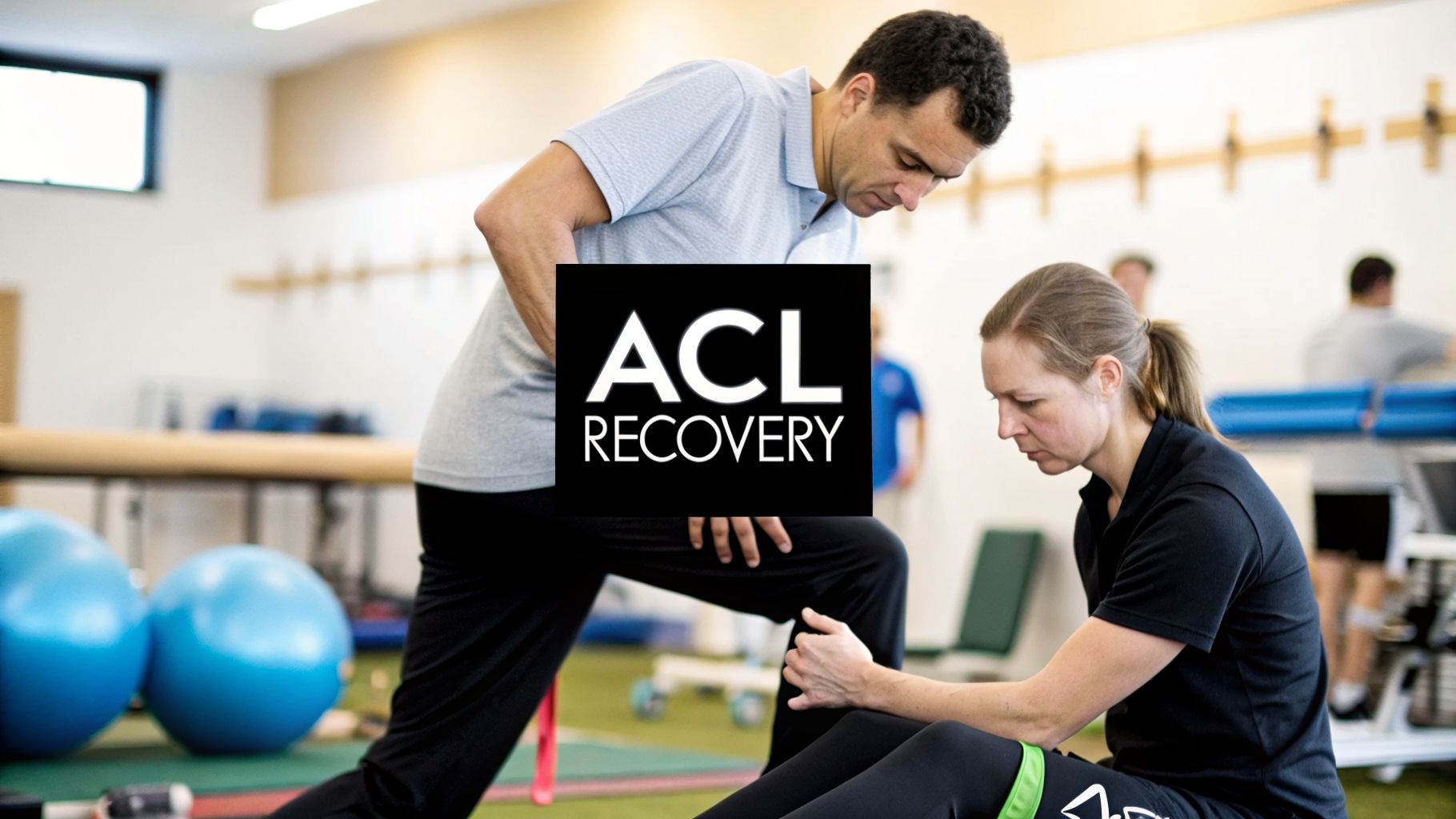
Facing an ACL tear can feel like your world just ground to a halt. The first thought for many is surgery, followed by fears of a long, grueling recovery. But for many people right here in Cedar Park, a non-surgical approach is an incredibly effective solution. If you’re looking for a chiropractor near you who specializes in this type of care, you’ve come to the right place. It’s entirely possible to achieve a full recovery without the risks and downtime of an operation, as long as you have a structured, evidence-based plan.
Your Path to Healing an ACL Tear Without Surgery
When you first hear “torn ACL,” it’s easy to assume surgery is the only real option. But what if there’s another way? The concept of ACL injury recovery without surgery is backed by solid research showing the body’s amazing ability to heal and adapt. This guide is here to cut through the noise, giving you a clear, confident path forward to a strong, stable knee—and to introduce you to the premier auto and sports injury chiropractor in Cedar Park, TX.

At Bell District Spine and Rehab, we’ve guided countless Cedar Park patients through this exact process. We understand the uncertainty and pain you’re feeling, which is why we’ve laid out this step-by-step plan to take the mystery out of the journey. This isn’t about just “waiting it out”—it’s an active process of rebuilding your strength and retraining your body with expert chiropractic care.
What Patients Can Expect from This Guide
Think of this as your personal playbook for a successful non-operative recovery. We’re going to walk you through the entire process, from getting a precise diagnosis to knowing exactly when it’s safe to get back to the activities you love, all under the care of a trusted local chiropractor.
We’re going to cover:
- Accurate Diagnosis: We’ll help you understand the specific nature of your tear and figure out if you’re a good candidate for non-surgical care.
- Phased Rehabilitation: We’ll break down the crucial stages, from getting that initial pain under control to rebuilding sport-specific strength and agility.
- Advanced Therapies: You’ll learn how treatments available at our Cedar Park clinic, like shockwave and laser therapy, can speed up your healing.
- Realistic Timelines: We’ll help you manage expectations to ensure a durable, long-term outcome and a healthy, functional knee you can trust.
This approach empowers you to take control of your recovery. Success isn’t just about what an MRI shows; it’s about getting back to your life without pain or limitations, fully trusting your knee’s strength and stability.
Our goal is simple: to show you that for many, the conservative route is the smartest one. It sidesteps the inherent risks of surgery while focusing on building a more resilient, functional knee for the long haul. Let’s start your path to healing.
Getting an Accurate Diagnosis for Your Knee Injury in Cedar Park
Before we can even begin to talk about a recovery plan, we have to know exactly what we’re dealing with. A successful ACL injury recovery without surgery hinges on getting a crystal-clear picture of what’s happening inside your knee. This first step isn’t just a formality; it’s the most critical part of your entire journey.
Is it a partial tear or a full rupture? Is the meniscus involved? What about the other ligaments? Getting definitive answers to these questions is non-negotiable. It’s the starting point for everything we do here at Bell District Spine and Rehab, your trusted chiropractor in Cedar Park.
The Comprehensive Knee Assessment Our Patients Receive
When you walk into our clinic, you’re not just getting a quick look. We dive deep into a thorough evaluation to gather hard evidence that lets us build a recovery plan tailored specifically to you. This is the standard of care our patients in Cedar Park, Leander, and the surrounding areas have come to expect.
Our assessment always includes:
- A Detailed History: We’ll talk about how the injury happened, what you felt in that moment, and every symptom you’re experiencing now. The little details matter—from which movements spark the pain to any feelings of instability you’ve noticed.
- A Hands-On Physical Examination: Dr. Tuggle will perform a series of specific orthopedic tests to manually check the stability of your knee joint. We use trusted assessments like the Lachman test and the pivot-shift test to get a real feel for the integrity of your ACL and the surrounding structures.
- Imaging Review: An MRI is the gold standard for seeing soft tissues like ligaments. We’ll either meticulously review the imaging you already have or refer you for a new one. This lets us see the precise location and severity of the tear.
This complete workup helps us determine if you’re a strong candidate for non-operative treatment. We’re looking for key signs—like your knee’s ability to cope and stay stable during certain movements—that tell us a conservative path is not just viable, but a powerful option for you.
Can Your ACL Heal on Its Own?
For decades, the conventional wisdom was that a complete ACL tear simply couldn’t heal without surgery. But the science is evolving, and recent research is starting to flip that old script on its head.
The exciting takeaway from new studies is that the ACL has a much greater capacity for healing than we ever gave it credit for. With the right combination of targeted rehab, proper bracing, and giving the body a chance to do its work, we’re seeing people achieve a stable, functional knee.
For instance, a recent University of Melbourne study found that 53% of patients achieved full healing through dedicated rehab alone. Even more striking, the British Journal of Sports Medicine published a study where a staggering 90% of participants showed signs of ACL healing when they followed a specific bracing protocol combined with structured exercise. You can read more about the ACL’s healing potential on livhospital.com.
This growing body of evidence is exactly why we champion this approach at Bell District Spine and Rehab. We focus on creating the optimal environment for your body to repair itself. With a precise diagnosis in hand, we can confidently guide our patients in Cedar Park down a non-surgical path that is backed by science and proven results.
Our Phased Rehabilitation Plan for Full Recovery
This is where your comeback story begins. A successful ACL injury recovery without surgery hinges on a structured, progressive plan built specifically for you. This isn’t a passive “wait and see” process; it’s an active, deliberate journey of rebuilding strength, stability, and trust in your knee.
At Bell District Spine and Rehab, we guide our Cedar Park patients through each distinct phase, making sure every step builds on the last for a durable, long-term outcome. Think of it as a dynamic map, not a rigid calendar. The plan evolves as your knee heals, adapting to your progress and ensuring you’re always challenged but never pushed beyond what your body is ready for.
The Initial Acute Phase: Calming the Knee
Immediately after an ACL injury, your knee is in a state of alarm. It’s often swollen, painful, and has a limited range of motion. The primary goal during this first phase is simple but critical: calm everything down. Pushing too hard, too soon is a recipe for setbacks.
The focus here is on creating the perfect environment for healing to begin.
- Pain and Swelling Management: We use proven techniques like ice, compression, and elevation (the RICE method) to get inflammation under control. We may also use gentle manual therapies to reduce joint effusion, which is just swelling inside the knee.
- Restoring Range of Motion: We’ll guide you through gentle, passive, and active-assisted exercises. Think heel slides or wall slides, which help you regain both flexion (bending) and extension (straightening) without putting stress on the healing ligament. Getting that full, straight-leg extension back is a top priority here.
- Gentle Muscle Activation: This involves simple, non-weight-bearing exercises like quad sets (tensing the thigh muscle) and glute squeezes. The goal is to prevent muscle atrophy and re-establish the mind-muscle connection that gets disrupted after an injury.
This initial diagnostic and planning process is crucial for setting the right foundation. This visual guide shows the key steps we take to understand your injury and create your personalized recovery plan.

From this thorough assessment, we can confidently chart the course for your rehabilitation, moving you from the acute phase into the next stage of rebuilding.
The Strength and Endurance Phase: Building a Muscular Brace
Once the initial pain and swelling have backed off and you’ve regained a good range of motion, the real work begins. The goal of this phase is to strengthen the key muscles surrounding your knee—the quadriceps, hamstrings, glutes, and calves. These muscles act as a “muscular brace,” providing the dynamic stability needed to compensate for the injured ACL.
This is the longest and most important part of your ACL injury recovery without surgery. Strong muscles are what will allow your knee to become a stable, functional joint again, capable of handling everything from daily life to intense physical activity. As you progress, incorporating essential strength training exercises will be crucial for rebuilding that stability and preparing your knee for more.
We introduce exercises that progressively challenge your muscles without compromising the knee joint.
- Closed-Chain Exercises: These are exercises where your feet stay on the ground, like squats, lunges, and leg presses. They’re safer for the ACL and incredibly effective at building functional strength.
- Hamstring and Glute Focus: Your hamstrings are a primary dynamic stabilizer for the ACL. We’ll incorporate targeted exercises like hamstring curls, bridges, and Romanian deadlifts to ensure they’re strong enough to protect your knee.
- Single-Leg Work: As you get stronger, we’ll introduce single-leg exercises to correct any imbalances and build unilateral stability. This could include single-leg squats or step-ups.
The objective isn’t just to make the muscles stronger, but to make them smarter. We are training them to fire at the right time with the right amount of force to protect your knee with every step you take.
The Neuromuscular Control Phase: Retraining Your Balance and Coordination
Strength alone isn’t enough. An ACL injury significantly disrupts proprioception—your body’s internal GPS for where it is in space. Your brain and knee temporarily lose their seamless communication, which is why a healed knee can still feel “unstable” or untrustworthy. This phase is all about rewiring that connection.
This is about retraining your balance, agility, and coordination so you can move confidently without having to consciously think about protecting your knee. Progress here is a huge mental boost and a key sign you’re on the right track. For a deeper dive into strategies that support joint health, you can learn more about relieving knee pain in our detailed guide.
We get this done through specific drills that build on each other:
- Balance Training: We start on stable surfaces and progress to unstable ones (like foam pads or balance boards) to challenge your ability to maintain control. This retrains the nerves to send faster, more accurate signals to your muscles.
- Agility Drills: Next, we introduce controlled, multi-directional movements. This starts with simple ladder drills and moves toward more complex patterns that simulate real-world movements.
- Plyometrics: Once a solid strength and control base is established, we may bring in low-level jumping and landing exercises. The focus here is 100% on proper technique—landing softly with bent knees and hips to absorb impact safely.
To give you a clearer picture of the journey, here’s a breakdown of what each phase of non-operative ACL rehab typically involves.
Phased ACL Rehabilitation Timeline Without Surgery
| Rehab Phase | Primary Goals | Example Activities & Therapies | Estimated Duration |
|---|---|---|---|
| Acute Phase | Reduce pain & swelling, restore full knee extension, regain early range of motion, activate muscles. | Ice, compression, heel slides, quad sets, glute squeezes, gentle manual therapy. | 0-4 Weeks |
| Strength & Endurance | Build strength in quads, hamstrings, glutes; improve endurance; begin functional movement. | Squats, lunges, leg press, hamstring curls, single-leg balancing, stationary bike. | 4-12 Weeks |
| Neuromuscular Control | Improve balance, proprioception, agility; introduce controlled dynamic movements. | Balance board exercises, ladder drills, box jumps, light jogging, controlled cutting drills. | 12-24 Weeks |
| Return to Activity | Develop sport-specific power, speed, and agility; ensure safe return to full activity. | Sport-specific drills (e.g., pivoting, sprinting), plyometrics, functional strength testing. | 6-9+ Months |
This timeline is a guide, not a guarantee. Everyone’s recovery is unique, and we tailor the pace to your individual progress and goals.
The Return to Activity Phase: Sport-Specific Training
The final phase is all about getting you back to the specific activities you love, whether that’s playing basketball, running trails around Cedar Park, or just chasing your kids in the backyard. This stage bridges the gap between the clinic and your real life.
We break down the movements required for your sport or activity and build drills that replicate them in a controlled, progressive way.
- For a runner: We might start with a walk-to-run program and progress to drills involving changes in pace and direction.
- For a soccer player: This would involve controlled cutting, pivoting, and kicking drills, gradually increasing the intensity and unpredictability.
- For a weekend warrior: We would focus on the movements common to their activities, like the explosive jumping in basketball or the lateral movements in tennis.
Before clearing you to return to full activity, we conduct a series of functional tests to make sure your knee is truly ready. We measure your strength, balance, and agility, comparing your injured leg to your uninjured one. This data-driven approach removes the guesswork, giving both you and us the confidence that you can get back to your activities safely and with minimal risk of re-injury.
How Advanced Therapies Can Accelerate Healing
While a structured exercise plan is the undeniable foundation of a successful ACL injury recovery without surgery, we can significantly boost your body’s natural healing capabilities with advanced, non-invasive therapies. This is an area where Bell District Spine and Rehab truly stands apart for patients in Cedar Park.
These treatments aren’t just add-ons; they are strategic tools we use to solve specific problems that pop up during recovery, helping to relieve pain and restore function quickly.

Think of your rehab exercises as the engine of your recovery. These therapies are like the high-performance fuel and precision tuning that make the engine run faster, smoother, and more efficiently. They help you heal more completely and with a lot less pain along the way.
Shockwave Therapy to Break Down Scar Tissue
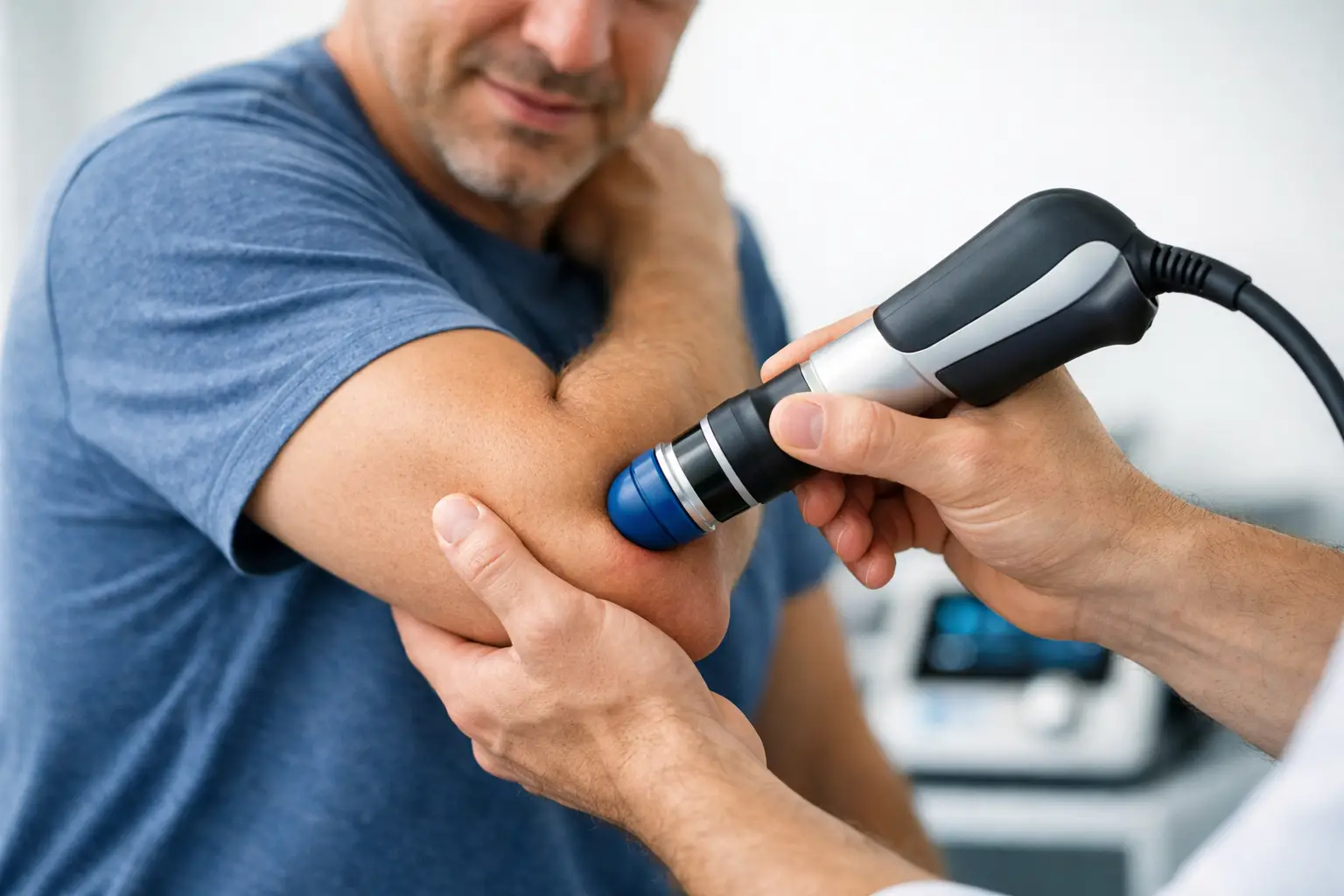
One of the most common roadblocks in soft tissue healing is the formation of adhesions and scar tissue. This can limit your range of motion and cause persistent pain. Extracorporeal Shockwave Therapy (ESWT) is a cutting-edge technology that uses acoustic waves to target and break down these problematic tissues.
This process jump-starts a powerful healing response in the treated area. It increases blood flow, ramps up metabolic activity, and kick-starts your body’s own repair mechanisms. For an ACL tear, we can use shockwave to address chronic inflammation in surrounding tendons and break up scar tissue that’s locking up your knee, paving the way for more effective strengthening.
Laser Therapy to Reduce Deep Inflammation
Deep, stubborn inflammation can be a major source of pain and will definitely slow down your progress. This is where Class IV Laser Therapy becomes a game-changer. Unlike creams or ice packs, this therapy uses specific wavelengths of light that penetrate deep into the tissues of your knee joint.
This light energy gets absorbed by your cells, triggering a process that dials down inflammation at a cellular level and speeds up tissue regeneration. For our Cedar Park patients, this means:
- Significant pain relief without needing medication.
- Reduced swelling and improved joint mobility.
- Faster healing of the supportive tissues around the knee.
The therapy is completely painless and provides a powerful boost to your body’s natural healing cascade. We often find it helps patients push through frustrating plateaus in their recovery. You can learn more about this technology in our detailed article: https://belldistrictspineandrehab.com/what-is-laser-therapy-for-pain/.
Functional Dry Needling for Muscle Activation
As you work to strengthen the muscles around your knee, you might run into stubborn trigger points—those tight, painful knots in the muscle. These can prevent a muscle from firing correctly, leading to weakness and compensation patterns that can completely derail your rehab.
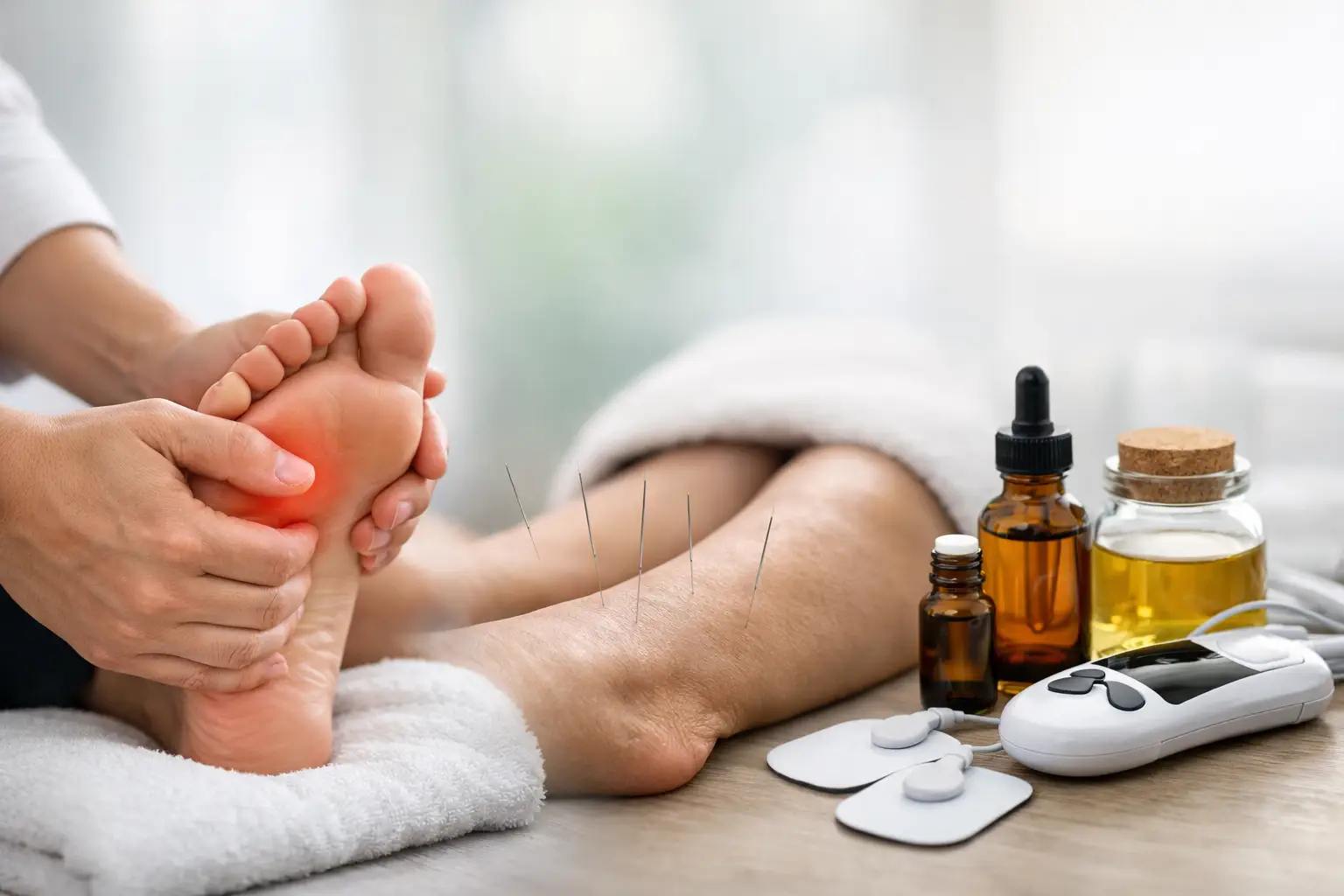
Functional Dry Needling is a precise technique we use to release these trigger points. By inserting a very thin needle into the affected muscle, we can cause a twitch response that effectively “resets” the muscle, releasing tension and restoring its proper function. This allows you to get so much more out of your strengthening exercises, ensuring your quads, hamstrings, and glutes are all firing on schedule to protect your knee.
These therapies work with your active rehabilitation. They address the biological roadblocks—scar tissue, inflammation, and muscle dysfunction—that your exercises alone might not overcome, creating a more direct and efficient path to a full recovery.
For active people pursuing a non-surgical recovery, research shows that over 50% can succeed with intensive rehab. One key study found that achieving a quadriceps strength limb symmetry index of ≥90% doubled the odds of a successful outcome. This just shows how crucial it is to use every tool available, like dry needling, to maximize muscle strength and function.
For those interested in exploring cutting-edge treatments that could accelerate healing, it’s worth examining the latest trends in hyperbaric therapy as another field making strides in tissue repair. By integrating the right combination of therapies at Bell District Spine and Rehab, we give our Cedar Park patients the best possible advantage for a swift and complete recovery.
Managing Expectations for Long-Term Knee Health
One of the biggest questions we hear from our Cedar Park patients is, “Will my knee ever truly feel normal again?” It’s a valid concern, and we believe in tackling it head-on with honesty and real-world data.
For most people who commit to a dedicated rehabilitation program, the answer is a resounding yes. A successful ACL injury recovery without surgery means you can absolutely get back to a highly active life. The goal isn’t a “perfect” MRI; it’s building a strong, stable, and functional knee you can trust, whether you’re navigating daily life or pursuing your favorite activities.
Understanding the Risk of Future Osteoarthritis
It’s important to have a transparent conversation about the long-term health of your knee. Any significant joint injury—whether treated with surgery or not—can increase the risk of developing osteoarthritis (OA) down the road. OA is the classic “wear and tear” arthritis that can cause stiffness and pain over time.
However, this is not a guaranteed outcome, and you have a significant amount of control here. A properly executed rehab program does more than just get you back on your feet; it actively works to protect the future of your joint.
By methodically strengthening the muscles around the knee—your quads, hamstrings, and glutes—you essentially create a “muscular brace.” This living support system absorbs shock and dramatically reduces stress on the cartilage. This is your single best defense against premature joint degeneration.
A Data-Backed Look at Long-Term Success
Modern research gives us a very optimistic outlook for those who choose a non-operative path. The evidence is clear: long-term function and stability are highly achievable.
A groundbreaking study followed patients for an average of 33.2 years after their initial ACL tear. Here’s what they found:
- Despite a 75% prevalence of radiographic OA on imaging, only 38% actually experienced painful, symptomatic OA.
- 65% of patients achieved good or excellent functional scores.
- An impressive 71% never needed a late ACL reconstruction surgery.
These findings are incredible. They show that structured rehabilitation can foster decades of stability and high function without invasive procedures. You can read the full long-term study on ACL tears at pmc.ncbi.nlm.nih.gov.
This data highlights a crucial point: success is measured by your ability to live your life, not by what an X-ray shows decades later. A functional, pain-free knee is the ultimate goal, and it’s well within reach.
At Bell District Spine and Rehab, we focus on that functional outcome. We guide our Cedar Park patients through programs designed for durable, long-term joint health. It’s about making a strategic choice today that pays dividends for the rest of your life. By building a stronger, more resilient knee, you are actively investing in your future mobility and comfort, ensuring you can stay active and pain-free for years to come.
Start Your Recovery with a Chiropractor Near You
If you’re ready to explore a proven, non-surgical path to heal your ACL, you don’t have to go it alone. Bell District Spine and Rehab is your dedicated local partner, right here in the Cedar Park and Leander community, committed to helping you hit your recovery goals.
We’ve laid out the evidence-based approach in this guide, but the real journey begins with a plan built specifically for you.
Your Local Partner in Healing
Every injury is different, and so is every patient. That’s why we don’t use one-size-fits-all plans.
Led by Dr. John Tuggle, who brings over 24 years of clinical experience to the table, our team combines expert diagnosis, phased rehabilitation, and advanced therapies to ensure you get the best possible outcome. We’re not just another clinic; we’re part of the Cedar Park community, deeply invested in the long-term health of our neighbors.
Our entire approach is built on trust and one-on-one care. We take the time to actually listen to your story, understand what you want to get back to doing, and create a roadmap that gets you there safely and effectively.
Your recovery is a collaborative effort. We provide the expertise, the tools, and the guidance, but your commitment is what turns the plan into a reality. Together, we can build a strong, stable knee you can depend on for years to come.
Take the First Step Today
We believe starting your recovery should be as straightforward as possible. That’s why we offer complimentary phone consultations, giving you a chance to talk with our team and see if our approach feels right for you. We also provide flexible scheduling to work around your busy life.
Don’t let uncertainty keep you from reclaiming an active, pain-free life. Contact Bell District Spine and Rehab today to book your initial assessment. Take that first confident step toward a full recovery and discover just how strong your knee can become—without the need for surgery.
Your Questions About Non-Surgical ACL Recovery, Answered
Deciding to pursue a non-surgical recovery for an ACL injury is a big step, and it naturally comes with a lot of questions. Here in our Cedar Park clinic, we believe in giving clear, straightforward answers so you can move forward with total confidence.
Let’s dive into some of the most common concerns we hear from patients just like you.
How Long Does Non-Surgical ACL Recovery Take?
This is probably the number one question we get, and the answer is refreshingly different from the surgical route. Instead of being locked into a rigid calendar, your recovery is measured by hitting key functional milestones.
Most of our patients achieve significant functional recovery within 3-6 months. That’s often a whole lot faster than the typical 9-12 month timeline required after a surgical reconstruction, which means you get back to your life much sooner.
Am I Too Old for Non-Surgical ACL Treatment?
Let’s be clear: age is almost never the deciding factor. In fact, non-operative care is an outstanding choice for adults who aren’t planning to return to elite-level sports that involve a lot of intense pivoting and cutting.
This approach lets you sidestep the physiological stress and potential complications that come with major surgery.
The real decision comes down to your activity goals and your knee’s overall stability, not the number on your driver’s license. A dedicated, well-designed rehab plan can build a strong, highly functional knee for people at any age.
What Are the Signs I Might Still Need Surgery?
Our goal is always to help you avoid the operating room, but we’re also vigilant about tracking your progress for any red flags. The single biggest warning sign is persistent, functional instability.
What does that mean? It means your knee continues to “give way” or buckle during normal daily activities, even after you’ve put in the work with dedicated rehab. If you find you’re unable to progress through the rehab phases or if instability just won’t go away, we’ll have an open and honest conversation about all your options. We’ll make sure you have the information to make the best choice for your long-term health.
Can a Torn ACL Actually Heal on Its Own?
Yes, it absolutely can. This is one of the most exciting areas of recent research. We now have compelling evidence showing the body has a remarkable capacity for healing these ligaments.
With the right protocols in place—including specific bracing techniques and a highly targeted exercise program—a significant number of torn ACLs show clear signs of healing on follow-up MRIs. The result is a knee that feels both stable and strong, all without a single incision.
Ready to take control of your recovery? The team at Bell District Spine and Rehab is here to guide you with an expert, personalized plan. Schedule your assessment at our Cedar Park clinic today!