A stiff turn of the neck when backing out of the driveway, a sharp pull in the low back when lifting laundry, or a knee that no longer feels reliable on stairs can make ordinary routines feel much harder than they should. Understanding how manual adjustments improve mobility starts with recognizing that restricted movement is often more than a flexibility problem. Joints, muscles, nerves, movement habits, and pain can all affect how confidently your body moves.
Manual adjustments are hands-on techniques used by chiropractors to address joints that are not moving well or are contributing to discomfort. They are not a one-size-fits-all fix, and they are not meant to force the body into a position it cannot tolerate. When used as part of an individualized care plan, adjustments can help reduce mechanical barriers to movement and create a better starting point for rehabilitation.
How Manual Adjustments Improve Mobility in the Body
A joint needs a certain amount of motion to do its job. In the spine, hips, shoulders, knees, and other areas, that motion helps distribute forces during walking, bending, reaching, and exercise. After an injury, long periods of sitting, repetitive work, arthritis-related changes, or simply guarding because of pain, a joint may become stiff or move differently than it should.
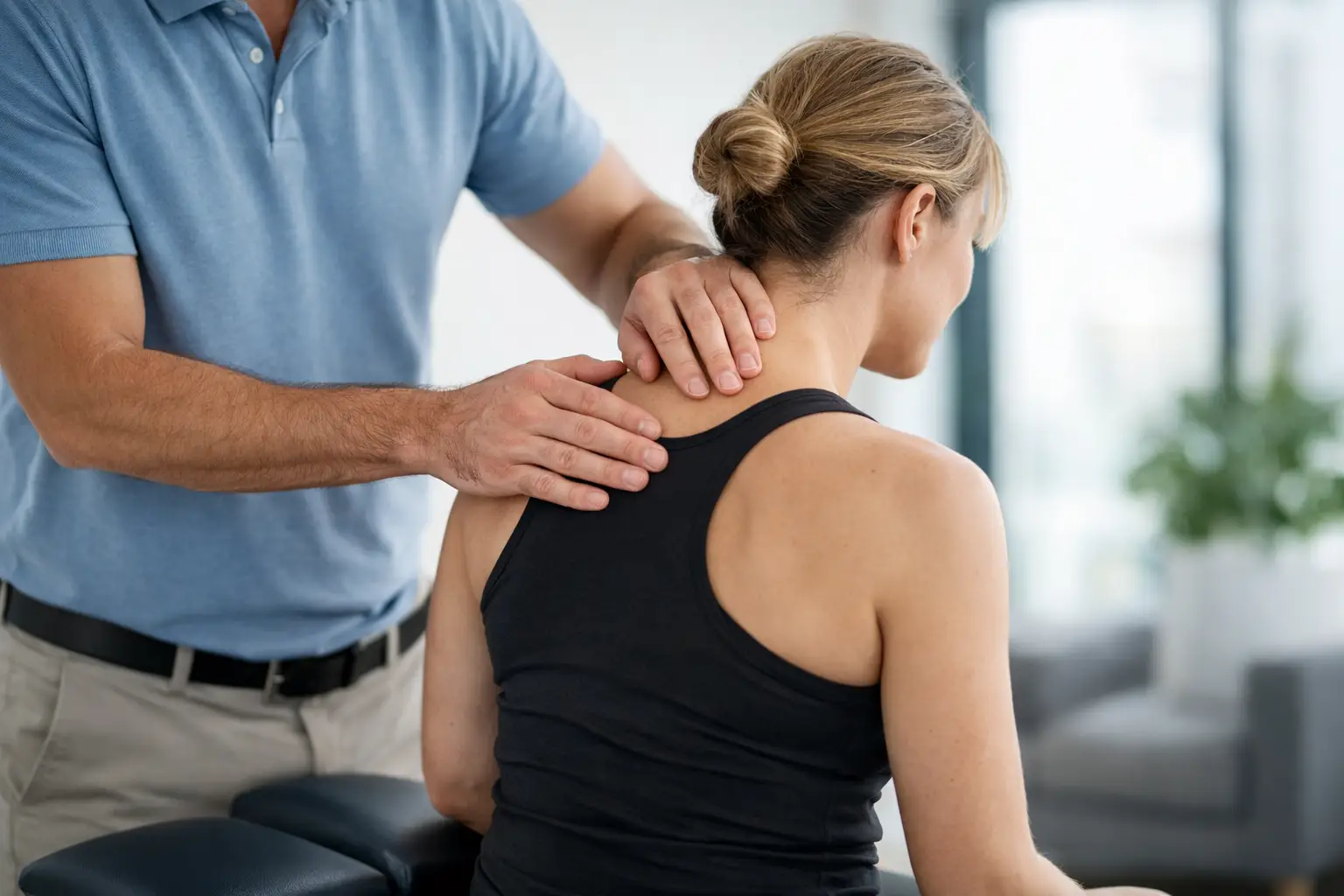
A manual adjustment applies a controlled force to a specific joint. Depending on the area and the patient, this may involve a quick, gentle thrust or a slower mobilization technique. The goal is to improve joint motion, reduce irritation around the area, and help the nervous system receive clearer input about movement and position.
Some patients notice an immediate feeling of looseness after an adjustment. Others experience progress gradually over several visits as pain settles and they begin moving with less hesitation. The response depends on the underlying problem. A recent low back strain may respond differently than longstanding hip stiffness, a disc injury, or mobility loss connected to degenerative changes.
Better Joint Motion Can Make Daily Tasks Easier
When a spinal segment, shoulder joint, or hip is restricted, nearby muscles often compensate. That compensation can create extra tension, fatigue, and strain. For example, limited hip motion may cause a person to rotate more through the low back while walking or squatting. Restricted upper-back movement can make the neck and shoulders work harder during computer use or overhead reaching.
By improving motion at the involved joint, manual care may reduce the need for those compensations. This can make it easier to look over a shoulder, stand upright after sitting, reach into a cabinet, get on and off the floor, or return to a preferred workout. The benefit is not merely feeling more flexible. It is being able to use the available movement more efficiently.
Less Pain Can Restore Confidence in Movement
Pain changes behavior. When bending, rotating, or climbing stairs hurts, the body naturally becomes protective. Muscles may tighten, movement becomes smaller, and normal activity can start to feel risky. Over time, avoiding those movements can lead to more stiffness and reduced conditioning.
Manual adjustments may help modulate pain signals and reduce joint-related discomfort for appropriate patients. With less pain, many people can begin moving more normally again. That matters because comfortable, repeated movement is part of recovery. It helps maintain circulation, joint nutrition, muscle function, and confidence.
Pain relief alone is not the finish line, however. If a patient returns immediately to the same poor movement pattern, work demand, or training load that contributed to the issue, symptoms may return. That is why a mobility-focused plan should look beyond the adjustment itself.
Manual Adjustments Work Best With Rehabilitation
An adjustment can improve the opportunity for movement, but rehab helps the body keep and use that movement. At Bell District Spine and Rehab, manual chiropractic care can be combined with movement analysis, soft tissue techniques, decompression therapies, and structured rehabilitation when clinically appropriate.
After mobility improves, targeted exercises help strengthen the muscles that support the area. A patient with recurring low back pain may need improved hip strength and core control. Someone with neck stiffness may benefit from upper-back mobility, postural endurance, and shoulder-blade strengthening. An athlete recovering from a sports injury may need progressive loading and sport-specific movement retraining before returning to full activity.
This combination is especially valuable because the source of restriction is not always just the joint. Tight or irritated soft tissue, reduced muscle control, inflammation, poor lifting mechanics, and previous injuries can all play a role. A complete plan addresses the contributors that are most relevant to the individual rather than repeating the same treatment at every visit.
What a Personalized Visit May Include
Before recommending an adjustment, a qualified provider should evaluate your symptoms, movement tolerance, health history, and functional goals. The examination may include posture, range of motion, strength, neurological screening, and observing movements such as walking, squatting, bending, or reaching.
That assessment helps determine whether manual care is appropriate and which technique is best. Some patients prefer or need a lighter, low-force approach. Others may respond well to traditional chiropractic adjustments. For a painful acute injury, treatment may initially focus on comfort and gentle motion before progressing to more active rehabilitation.
The plan should also reflect what you want to get back to doing. Mobility means something different for a parent lifting a child, a professional sitting through a workday, an older adult trying to walk safely, and a runner preparing for a race. Clear functional goals make treatment more practical and measurable.
When Mobility Problems Need More Than an Adjustment
Manual adjustments can be useful for many musculoskeletal concerns, including certain cases of back pain, neck pain, headaches, joint stiffness, and movement restrictions after minor injuries. Still, they are not appropriate for every condition, and no responsible provider should promise that an adjustment will solve every mobility issue.
Mobility loss related to severe arthritis, a significant disc condition, fracture, infection, inflammatory disease, or neurological involvement may require additional medical evaluation or a different treatment approach. New or worsening weakness, numbness, loss of coordination, bowel or bladder changes, fever, unexplained weight loss, or severe pain after major trauma should be assessed promptly.
Even in less urgent situations, the right approach depends on the cause. A knee that feels stiff because of muscle weakness and poor mechanics may need a rehab-centered program. A patient with radiating leg pain may need a careful evaluation for nerve irritation. Someone with chronic pain may benefit from pacing activity and gradually rebuilding tolerance rather than pushing through aggressive treatment.
Supporting Mobility Between Visits
The habits between appointments influence results. Your provider may recommend short walks, specific mobility drills, strength exercises, heat or ice guidance, workspace changes, or temporary adjustments to training. Consistency matters more than doing an intense routine once a week.
Avoid treating mobility as a contest to see how far you can stretch or how much discomfort you can tolerate. Productive movement should be controlled and progressive. Mild soreness can happen when returning to activity, but sharp pain, increasing symptoms, or new radiating pain should be discussed with your provider.
Sleep, hydration, stress, and recovery time also affect how the body feels and moves. These factors do not replace hands-on care or rehabilitation, but they can make it easier for the body to respond to treatment and maintain progress.
A Practical Path Back to Easier Movement
Manual adjustments are most helpful when they are used with a clear purpose: improve a restricted movement, reduce pain that is limiting activity, and help you participate more fully in rehabilitation. The best care does not chase temporary relief alone. It helps identify why movement became difficult and builds a realistic path toward walking, working, exercising, and living with greater confidence.
If stiffness or pain is changing the way you move, a thorough evaluation can clarify whether manual adjustments, rehabilitation, or a combination of conservative treatments may help you regain comfortable motion.